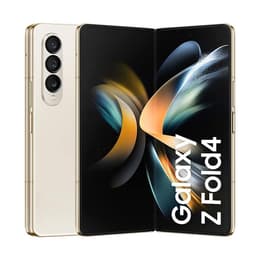
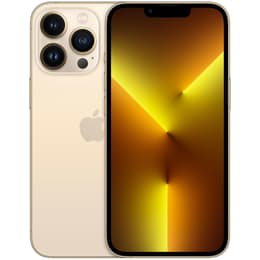

Galaxy Z Fold4 • Unlocked vs iPhone 13 Pro • Unlocked

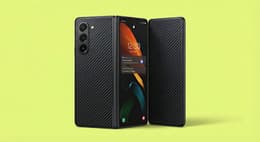
Galaxy Z Fold4 • Unlocked
Starting at

Refurbished price:$364.00

Versus $2,000.00 new

See options
iPhone 13 Pro • Unlocked
Starting at

Refurbished price:$299.99

Versus $899.00 new

See options

Ratings

The Samsung Galaxy Z Fold4 (released August 2022) and the Apple iPhone 13 Pro (released September 2021) represent distinct approaches in the premium smartphone market. The Galaxy Z Fold4 offers a unique foldable design with an expansive internal display, prioritizing multitasking and a tablet-like experience. In contrast, the iPhone 13 Pro provides a refined, traditional smartphone experience, focusing on consistent performance and advanced camera capabilities. These devices operate on Android and iOS, respectively, catering to different user ecosystems and interaction preferences.

Scores

Durability

These two smartphones offer different expectations for long-term use based on their release dates and physical designs.

  • Software Longevity: The iPhone 13 Pro typically benefits from Apple's long-term software support, often providing updates for six to seven years from its release in late 2021. The Galaxy Z Fold4, launched in 2022, is promised four major Android OS updates and five years of security patches, ensuring it remains current for a significant period.
  • Physical Resilience: The iPhone 13 Pro features a stainless steel frame and a Ceramic Shield front cover, offering a sturdy feel and high resistance to dust and water with an IP68 rating. The Galaxy Z Fold4 utilizes a complex hinge mechanism and a flexible internal screen; while it is water-resistant (IPX8), its moving parts and specialized display materials may require more careful handling compared to a standard flat-screen device, and it lacks official dust resistance.
  • Repairability: The iPhone 13 Pro received a repairability score of 5 out of 10 from iFixit, noting that while display and battery replacements are prioritized, software limitations can complicate third-party repairs, particularly for Face ID functionality. The Galaxy Z Fold4 involves a more intricate internal layout due to its folding nature, which can make certain repairs more specialized and has been noted by some users as potentially more prone to hardware issues without physical drops.

Release Year

2022

2021

Last OS Compatibility

Yes

Yes

OS

Android

iOS

Foldable

Yes

No

Performance

Both devices are engineered to handle demanding tasks, though they distribute their power differently to suit their specific form factors and operating systems.

  • System Responsiveness: The Galaxy Z Fold4 is optimized for heavy multitasking, allowing users to run multiple apps simultaneously on its large screen without noticeable lag. Its internal hardware ensures fluid transitions between the cover screen and the main display. The iPhone 13 Pro focuses on consistent, smooth animations and rapid app launching, maintaining a high level of performance even during intensive tasks like video editing or high-frame-rate gaming.
  • Battery Behavior: The iPhone 13 Pro is noted for its efficient power management, often lasting through a full day of varied use, with some users reporting extended usage. The Galaxy Z Fold4 houses a larger battery system to support its two displays; it generally provides enough energy for a standard workday, though heavy use of the large internal screen will naturally increase power consumption.
  • Storage and Multitasking: Both models offer generous storage capacities ranging from 128GB to 1TB. The Galaxy Z Fold4 includes 12GB of memory to support its advanced multitasking features, while the iPhone 13 Pro uses 6GB of memory efficiently to keep background processes ready for immediate access.

Memory (GB)

12 GB

6 GB

Screen quality

The display technology is a significant point of divergence between these two devices, impacting how users consume content and interact with apps.

  • Display Versatility: The Galaxy Z Fold4 features a dual-screen setup, including a 6.2-inch outer display for quick tasks and a massive 7.6-inch internal AMOLED screen that provides a tablet-like experience. This larger canvas is well-suited for reading documents, editing spreadsheets, or watching cinematic content. The iPhone 13 Pro utilizes a 6.1-inch OLED display that prioritizes color accuracy and high pixel density for a sharp, clear viewing experience in a more compact size.
  • Smoothness and Brightness: Both smartphones incorporate high refresh rate technology, reaching up to 120Hz, which makes scrolling and navigating the interface feel fluid. They also offer high peak brightness levels, ensuring that text and images remain clearly visible even when used outdoors under direct sunlight.
  • Practical Viewing: The iPhone 13 Pro provides a traditional aspect ratio that fits most social media and video content effectively. The Galaxy Z Fold4's internal display, with its squarer aspect ratio, excels in multitasking and browsing web pages, though some video content may not fully utilize the screen due to aspect ratio differences.

Resolution

1812 x 2176

1170 x 2532

Screen type

Foldable Dynamic AMOLED 2X

Super Retina XDR OLED

Audiovisual

Photography and video capabilities are central to both devices, though they offer different strengths for creators and casual users.

  • Versatile Photography: The Galaxy Z Fold4 features a triple-lens system with a 50MP main sensor, a 12MP ultrawide, and a 10MP telephoto lens with 3x optical zoom. The iPhone 13 Pro also uses a triple-camera array, consisting of three 12MP sensors (main, ultrawide, and 3x telephoto), which is highly regarded for its natural color reproduction and consistent performance across all lenses.
  • Low-Light Performance: Both devices excel in night-time photography, using sophisticated software processing to brighten dark scenes while maintaining detail and reducing visual noise. The iPhone 13 Pro's sensors are adept at capturing light quickly, while the Galaxy Z Fold4 uses its updated sensor to improve clarity in dim environments.
  • Video Production: The iPhone 13 Pro is a preferred choice for mobile videographers due to its advanced recording formats and stable video capture, including features that allow for shifting focus after a video has been recorded. The Galaxy Z Fold4 offers high-quality video recording as well, with the added benefit of using the cover screen as a viewfinder for high-quality selfies using the main rear cameras.

Main camera

50 megapixels

12 megapixels

Front camera

4 megapixels

12 megapixels

Miscellaneous

Beyond core features, several practical elements differentiate the user experience of these two devices.

  • Connectivity and Ports: Both devices support 5G networks. The Galaxy Z Fold4 features a USB-C port, a common standard across many electronic devices. The iPhone 13 Pro utilizes Apple's proprietary Lightning port.
  • Biometric Security: The Galaxy Z Fold4 incorporates a fingerprint sensor for secure unlocking. The iPhone 13 Pro relies on Face ID, an advanced facial recognition system.
  • Form Factor and Handling: The Galaxy Z Fold4 weighs 263g and has a folded thickness of 14.2–15.8 mm, making it a substantial device in hand and pocket. The iPhone 13 Pro is lighter at 203g and thinner at 7.65 mm, offering a more traditional smartphone feel. The Galaxy Z Fold4 also supports S Pen input, which the iPhone 13 Pro does not.

Weight

7 oz

6 oz

Screen size (inches)

7.6

6.1

Network

5G

5G

SIM card

Physical SIM + eSIM

Physical SIM + eSIM

Carrier compatibility

Unlocked

Unlocked

User sentiment for the Galaxy Z Fold4 often highlights its innovative folding design and the enhanced productivity offered by its large internal screen, making it suitable for extensive multitasking and media consumption. Users appreciate having a tablet-like experience in a pocketable form factor. However, some common criticisms include concerns about the durability of the inner display, its bulkier nature, and the fact that some Android applications are not fully optimized for the foldable screen, appearing as simply scaled-up versions.

The iPhone 13 Pro is frequently praised for its consistent and reliable performance, exceptional camera system (especially for video recording), and robust battery life. Users often value the polished iOS ecosystem and the overall smooth user experience. Criticisms sometimes point to its less versatile display compared to a foldable and the more closed nature of its operating system.

Users prioritizing a versatile, large-screen experience for productivity, media consumption, and a unique form factor may find the Galaxy Z Fold4 well-suited to their needs. Those who value a highly refined, consistent, and reliable smartphone experience with a strong camera and long battery life in a traditional form factor may lean toward the iPhone 13 Pro. Both devices offer compelling features, and considering a quality-assured refurbished option can be an eco-friendly alternative for either model.


See all articles

Our recent comparisons