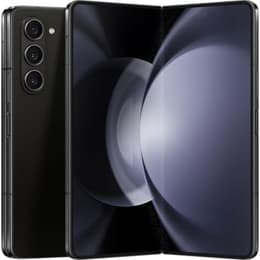
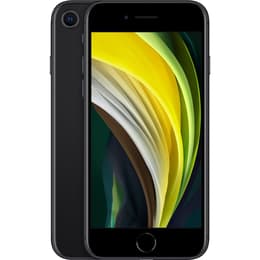

Galaxy Z Fold5 • Unlocked vs iPhone SE (2020) • Unlocked

Galaxy Z Fold5 • Unlocked
Starting at

Refurbished price:$399.99

Versus $1,849.00 new

See options
iPhone SE (2020) • Unlocked
Starting at

Refurbished price:$105.00

Versus $449.00 new

See options

Ratings

The Samsung Galaxy Z Fold5, released in 2023, and the iPhone SE 2020, launched in 2020, represent distinct approaches to smartphone design and functionality. The Z Fold5 offers a unique foldable form factor running on the Android operating system, providing an expansive screen experience. In contrast, the iPhone SE 2020 is a traditional, compact slab phone operating within the iOS ecosystem. These devices cater to different user preferences, primarily differing in their physical design, display technology, and overall user interaction.

Scores

Durability

The practical lifespan of a smartphone is influenced by its physical resilience and ongoing software support.

  • Release Timeline and Software Support: The Galaxy Z Fold5, released in 2023, benefits from a more recent launch, typically receiving 4-5 years of major Android OS updates and 5 years of security updates from its release. The iPhone SE 2020, launched in April 2020, generally receives iOS updates for approximately 5-6 years from its release, potentially extending its software longevity until 2025-2026 for current iOS versions.
  • Physical Durability: The Galaxy Z Fold5 features an Armor Aluminum frame and Gorilla Glass Victus 2 on its cover screen, along with IPX8 water resistance, meaning it can withstand submersion in fresh water. Its foldable mechanism is tested for 200,000 folds. The iPhone SE 2020 has an aluminum frame with glass on the front and back, offering IP67 water and dust resistance, protecting against immersion in up to 1 meter of water for 30 minutes.
  • Repairability: The iPhone SE 2020 has been noted by iFixit as moderately repairable, scoring 6 out of 10, with common components like the display and battery being relatively accessible for repair. The complex design of a foldable device like the Z Fold5 generally presents more challenges for repair.

Release Year

2023

2020

Last OS Compatibility

Yes

Yes

OS

Android

iOS

Foldable

Yes

No

Performance

Performance differences between these two devices are substantial, reflecting their respective release years and target segments.

  • Processing Power: The Galaxy Z Fold5 is equipped with a current-generation, high-performance processor, designed to handle demanding applications and intensive multitasking with ease. The iPhone SE 2020 utilizes a processor that, while powerful for its time, is now several generations older.
  • Multitasking and Responsiveness: With 12GB of RAM, the Galaxy Z Fold5 offers significant headroom for running numerous applications simultaneously and switching between them smoothly, particularly benefiting from its large, foldable display for enhanced productivity. The iPhone SE 2020, with 3GB of RAM, provides a responsive experience for everyday tasks and most applications, but may show limitations when handling very demanding apps or extensive multitasking compared to newer devices.
  • Storage Options: Both devices offer various internal storage configurations to suit different user needs for apps, photos, and media.

Memory (GB)

12 GB

3 GB

Screen quality

The display experience is a primary differentiator between the Galaxy Z Fold5 and the iPhone SE 2020.

  • Display Technology and Size: The Galaxy Z Fold5 features two Dynamic AMOLED 2X displays: a large 7.6-inch main foldable screen and a 6.2-inch cover screen. These OLED panels deliver deep blacks and vibrant colors. The iPhone SE 2020 has a single 4.7-inch Retina IPS LCD display, offering good color accuracy and viewing angles for a traditional LCD panel.
  • Resolution and Clarity: The Z Fold5's main screen has a resolution of 2176 x 1812 pixels, and its cover screen is 2316 x 904 pixels, providing sharp and detailed visuals across both displays. The iPhone SE 2020 features a 750 x 1334 pixel resolution, which is clear for its size but offers a lower pixel density compared to the Z Fold5's displays.
  • Refresh Rate and Brightness: The Galaxy Z Fold5's screens boast an adaptive 120Hz refresh rate, contributing to smoother scrolling and more fluid animations, along with high peak brightness levels up to 1750 nits for excellent outdoor visibility. The iPhone SE 2020 has a standard 60Hz refresh rate and a typical brightness of 625 nits.

Resolution

1812 x 2176

750 x 1334

Screen type

Foldable Dynamic AMOLED 2X

Retina IPS LCD

Audiovisual

The camera capabilities of these two smartphones reflect their different design philosophies and target audiences.

  • Rear Camera System: The Galaxy Z Fold5 is equipped with a versatile triple-camera system on the rear, including a 50-megapixel main sensor, a 12-megapixel ultrawide lens, and a 10-megapixel telephoto lens with 3x optical zoom. This setup allows for a wide range of photographic scenarios, from expansive landscapes to detailed zoomed-in shots. The iPhone SE 2020 features a single 12-megapixel wide rear camera.
  • Photography Features and Video: The Z Fold5 offers advanced computational photography features, improved low-light performance, and video recording capabilities up to 8K resolution at 30 frames per second, or 4K at 60 frames per second. The iPhone SE 2020 benefits from its processor to enable features like Portrait Mode and Smart HDR, and can record 4K video at 24, 30, or 60 frames per second, but it lacks advanced features such as Night Mode or Deep Fusion.
  • Front Cameras and Audio: The Z Fold5 includes multiple front-facing cameras, offering flexibility for selfies and video calls. Both devices feature stereo speakers, with the Z Fold5 also supporting Dolby Atmos for an enhanced audio experience.

Main camera

50 megapixels

12 megapixels

Front camera

4 megapixels

7 megapixels

Miscellaneous

Beyond core specifications, several practical elements distinguish the Galaxy Z Fold5 and the iPhone SE 2020.

  • Form Factor and Handling: The Galaxy Z Fold5 is a larger and heavier device, weighing 253 grams, with dimensions of 154.9 x 129.9 x 6.1 mm when unfolded. Its foldable design allows for a tablet-like experience when open and a narrower, more manageable form when closed. The iPhone SE 2020 is a compact and lighter traditional smartphone, weighing 148 grams and measuring 138.4 x 67.3 x 7.3 mm, designed for easy one-handed use.
  • Connectivity and Ports: The Z Fold5 supports modern connectivity standards including 5G, Wi-Fi 6E, and Bluetooth 5.3, and features a USB-C port. The iPhone SE 2020 supports 4G LTE, Wi-Fi 6, and Bluetooth 5.0, utilizing Apple's proprietary Lightning port.
  • Biometrics and Unique Features: The Galaxy Z Fold5 incorporates a side-mounted fingerprint sensor and offers S Pen support for enhanced productivity and creative tasks. It also provides advanced multitasking features like Flex Mode and Samsung DeX for a desktop-like experience. The iPhone SE 2020 features a front-mounted Touch ID fingerprint sensor integrated into its home button for secure authentication.

Weight

7 oz

5 oz

Screen size (inches)

7.6

4.7

Network

5G

LTE

SIM card

Physical SIM + eSIM

Physical SIM + eSIM

Carrier compatibility

Unlocked

Unlocked

Connector

USB-C

Lightning

The Galaxy Z Fold5 and iPhone SE 2020 cater to distinct user needs, reflecting their fundamental differences in design and ecosystem. Users frequently praise the Z Fold5 for its innovative foldable display, which offers an expansive canvas for productivity, media consumption, and multitasking, effectively combining a smartphone and a small tablet into one device. Its powerful internal components and versatile camera system are also commonly highlighted as strengths. Some users, however, note its larger size and weight as factors requiring adjustment.

Conversely, the iPhone SE 2020 is often lauded for its compact form factor, making it comfortable for one-handed use and easy to carry. Its integration within the familiar iOS ecosystem and reliable performance for everyday tasks are consistent points of praise. Users appreciate its straightforward approach to smartphone functionality and its capable single camera for general photography. Criticisms sometimes point to its smaller, lower-refresh-rate display and its more traditional design compared to contemporary smartphones.

Users prioritizing a large, adaptable screen for advanced productivity, immersive media, and cutting-edge technology will find the Galaxy Z Fold5 well-suited to their needs. Those who prefer a compact, traditional smartphone experience, value the long-term software support of iOS, and require a dependable device for daily communication and casual photography may lean toward the iPhone SE 2020. Both devices, whether new or as a quality-assured refurbished option, offer distinct advantages depending on individual preferences and usage patterns.

See all articles

Our recent comparisons