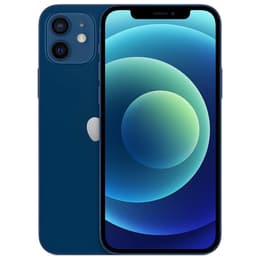

Google Pixel 7 Pro • Unlocked vs iPhone 12 mini • Unlocked

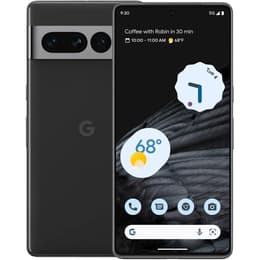
Google Pixel 7 Pro • Unlocked
Starting at

Refurbished price:$221.00

Versus $899.99 new

See options
iPhone 12 mini • Unlocked
Starting at

Refurbished price:$149.00

Versus $459.00 new

See options

Ratings

The Google Pixel 7 Pro, released in October 2022, and the iPhone 12 Mini, launched in November 2020, represent distinct approaches to smartphone design and user experience. While the Pixel 7 Pro offers a larger display and a comprehensive camera system running on Android, the iPhone 12 Mini provides a compact form factor with Apple's iOS ecosystem. These devices cater to different user preferences, primarily differing in their physical size, operating system, and camera capabilities.

Scores

Durability

The expected lifespan of a smartphone is influenced by its release date and the manufacturer's commitment to software updates, alongside physical durability.

  • Release Timeline: The Google Pixel 7 Pro was released in October 2022, making it a newer device compared to the iPhone 12 Mini, which launched in November 2020. This difference in release year impacts their respective software support windows.
  • Software Longevity: Google typically provides five years of security updates and three years of operating system updates for the Pixel 7 Pro, meaning OS updates are expected until October 2025 and security updates until October 2027. The iPhone 12 Mini, being an Apple device, generally receives iOS updates for five to six years from its release, suggesting support likely until late 2025 or 2026.
  • Physical Durability: Both devices feature robust construction. The Pixel 7 Pro uses Gorilla Glass Victus for its front and back, with an aluminum frame, and carries an IP68 rating for dust and water resistance. The iPhone 12 Mini features a Ceramic Shield front cover and a glass back, also with an aluminum frame, and boasts an IP68 water and dust resistance rating.

Release Year

2022

2020

Last OS Compatibility

Yes

Yes

OS

Android

iOS

Foldable

No

No

Performance

Performance in smartphones is about how smoothly tasks are handled, from everyday app usage to more demanding activities like gaming and multitasking.

  • Storage Options: The Google Pixel 7 Pro is available with 128GB, 256GB, or 512GB of internal storage, offering ample space for applications, media, and files. The iPhone 12 Mini comes with 64GB, 128GB, or 256GB storage options.
  • Battery Behavior: The Pixel 7 Pro is equipped with a 5000 mAh battery, and users often report it lasting through a full day of mixed usage, with some achieving 6 to 8 hours of screen-on time. However, heavy camera use or intense gaming can lead to faster battery drain. The iPhone 12 Mini has a smaller 2227 mAh battery, and users frequently note that it may require more frequent charging, especially with heavy use, often not lasting a full day for active users.
  • System Responsiveness: The Pixel 7 Pro handles demanding applications and multitasking smoothly, benefiting from its current-generation processor and 12GB of RAM. The iPhone 12 Mini, with its capable processor and 4GB of RAM, also delivers excellent performance for daily tasks and gaming, though its smaller RAM capacity might show limitations in very heavy multitasking compared to the Pixel.

Memory (GB)

8 GB

4 GB

Screen quality

The display is a primary interface for smartphone interaction, and differences in technology and specifications can significantly impact the visual experience.

  • Display Technology and Clarity: The Google Pixel 7 Pro features a 6.7-inch LTPO AMOLED display with a resolution of 1440 x 3120 pixels, providing a sharp and detailed viewing experience. The iPhone 12 Mini has a 5.4-inch Super Retina XDR OLED display with a resolution of 1080 x 2340 pixels, offering clear visuals in a more compact size.
  • Brightness and Refresh Rate: The Pixel 7 Pro's display can reach up to 1500 nits peak brightness, making it suitable for outdoor visibility, and features a 120Hz refresh rate for smoother scrolling and more fluid animations. The iPhone 12 Mini offers a typical maximum brightness of 625 nits and a peak of 1200 nits for HDR content, with a standard 60Hz refresh rate.
  • Viewing Experience: The larger, higher-resolution, and higher refresh rate screen of the Pixel 7 Pro provides an expansive and immersive viewing experience, particularly for media consumption and gaming. The iPhone 12 Mini's smaller screen prioritizes one-handed usability and portability, offering a vibrant OLED experience in a compact form.

Resolution

1440 x 3120

1080 x 2340

Screen type

LTPO AMOLED

Super Retina XDR OLED

Audiovisual

Both devices offer capable camera systems, but they differ in their hardware configurations and computational photography strengths.

  • Camera System Capabilities: The Google Pixel 7 Pro features a versatile triple-camera setup, including a 50 MP main sensor, a 12 MP ultrawide lens with a wide field of view, and a 48 MP telephoto lens capable of 5x optical zoom. The iPhone 12 Mini has a dual 12 MP camera system, comprising a wide and an ultrawide lens.
  • Photography Performance: The Pixel 7 Pro excels in computational photography, offering features like Magic Eraser, Photo Unblur, and enhanced low-light performance across its lenses. Its telephoto lens provides significant zoom capabilities. The iPhone 12 Mini also delivers strong image quality with features like Night mode, Deep Fusion, and Smart HDR 3, providing good results in various lighting conditions.
  • Video Recording and Audio: Both phones support 4K video recording at various frame rates. The Pixel 7 Pro offers 10-bit HDR video and Cinematic Blur for video. The iPhone 12 Mini supports HDR video recording with Dolby Vision. Both devices provide clear audio recording for calls and videos.

Main camera

50 megapixels

12 megapixels

Front camera

10.8 megapixels

12 megapixels

Miscellaneous

Beyond core features, several practical elements contribute to the overall user experience and daily convenience of these smartphones.

  • Connectivity and Ports: The Google Pixel 7 Pro supports 5G connectivity, Wi-Fi 6E, and Bluetooth 5.2, and features a USB-C 3.2 port for charging and data transfer. The iPhone 12 Mini also offers 5G connectivity, Wi-Fi 6, and Bluetooth 5.0, utilizing Apple's proprietary Lightning port.
  • Biometric Security: The Pixel 7 Pro includes an under-display optical fingerprint scanner and face unlock for secure access. The iPhone 12 Mini relies on Face ID for biometric authentication.
  • Physical Characteristics: The Pixel 7 Pro is a larger and heavier device, measuring 162.9 x 76.6 x 8.9 mm and weighing 212 grams. The iPhone 12 Mini is significantly more compact and lighter, with dimensions of 131.5 x 64.2 x 7.4 mm and a weight of 135 grams, making it highly suitable for one-handed use and pocketability.

Weight

7 oz

7 oz

Screen size (inches)

6.7

5.4

Network

5G

5G

SIM card

Physical SIM + eSIM

Physical SIM + eSIM

Carrier compatibility

Unlocked

Unlocked

The Google Pixel 7 Pro and the iPhone 12 Mini cater to distinct user needs, primarily differentiated by their size, operating system, and camera focus. Users frequently praise the Pixel 7 Pro for its advanced camera system, offering versatile photography options and computational enhancements, alongside its large, high-refresh-rate display. Some users, however, have noted that its battery life can be inconsistent with heavy usage, particularly for demanding tasks like extensive camera use.

Conversely, the iPhone 12 Mini is often lauded for its exceptionally compact size, making it comfortable for one-handed operation and easy to carry. Its performance is generally considered excellent for its size, and its camera system delivers reliable results. A common criticism, however, revolves around its battery life, which many users find insufficient for a full day of heavy use.

Users prioritizing a large, immersive display, a highly capable and versatile camera system with advanced zoom, and the Android ecosystem may find the Google Pixel 7 Pro well-suited to their needs. This device is ideal for those who consume a lot of media, enjoy mobile photography, and prefer a larger form factor. On the other hand, users who value extreme portability, comfortable one-handed use, and the streamlined iOS experience will likely prefer the iPhone 12 Mini. It is a strong choice for individuals who prioritize a compact device that still offers robust performance for everyday tasks.

For those considering either of these devices, exploring quality-assured refurbished options can be an eco-friendly alternative to purchasing new, providing access to these technologies sustainably.

See all articles

Our recent comparisons