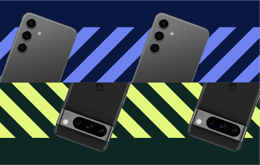

Google Pixel 7 • Unlocked vs iPhone 12 Pro • Unlocked

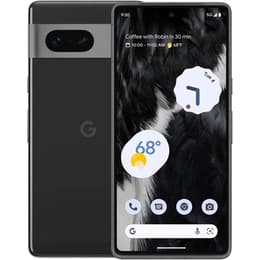
Google Pixel 7 • Unlocked
Starting at

Refurbished price:$185.00

Versus $599.99 new

See options
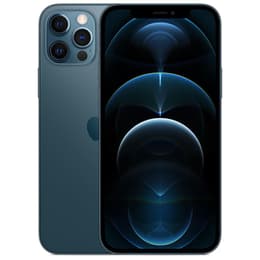
iPhone 12 Pro • Unlocked
Starting at

Refurbished price:$229.00

Versus $799.00 new

See options

Ratings

The Google Pixel 7, released in October 2022, and the iPhone 12 Pro, launched in October 2020, represent distinct approaches to the premium smartphone experience from their respective manufacturers. While the Pixel 7 operates on Google's Android platform, the iPhone 12 Pro runs on Apple's iOS, offering users different software ecosystems. Key differentiators between these two devices include their processor generations, camera philosophies, and display technologies, catering to varied user preferences.

Scores

Durability

When considering the long-term usability of these devices, their release timelines and software support play a significant role.

  • Release Timeline: The Google Pixel 7 was released in October 2022, making it two years newer than the iPhone 12 Pro, which launched in October 2020. This difference in age impacts the expected duration of software updates and overall practical lifespan.
  • Software Support: Google has committed to providing five years of OS and security updates for the Pixel 7 series, extending its support until 2027. The iPhone 12 Pro, while older, typically receives iOS updates for approximately 5 to 7 years from its release, with security updates potentially extending further. This suggests the iPhone 12 Pro may receive major iOS updates until around 2027-2028.
  • Repairability: The iPhone 12 Pro received a repairability score of 6 out of 10 from iFixit, noting that display and battery replacements are prioritized, and many components are modular. The Google Pixel 7 has a repairability score of 6.5 out of 10, with screen replacements being relatively easy, though battery replacements can be more complex due to strong adhesive.

Release Year

2022

2020

Last OS Compatibility

Yes

Yes

OS

Android

iOS

Foldable

No

No

Performance

The performance of a smartphone is crucial for daily tasks, from app navigation to demanding applications.

  • Processor Capabilities: The Google Pixel 7 features a newer generation processor designed by Google, which efficiently handles everyday applications, computational photography tasks, and offers smooth multitasking. The iPhone 12 Pro is powered by an earlier generation Apple-designed processor, known for its robust performance in its time, providing a responsive experience across various apps and games.
  • System Responsiveness: Users of the Pixel 7 generally report a fluid and responsive experience, with apps loading quickly and smooth transitions. The iPhone 12 Pro also delivers a highly responsive user interface, characteristic of its operating system, ensuring a consistent and quick interaction.
  • Multitasking and Storage: The Pixel 7 typically comes with 8GB of RAM, supporting efficient multitasking and keeping more applications active in the background. The iPhone 12 Pro, with 6GB of RAM, manages multitasking effectively within its ecosystem. Both devices offer various internal storage options, with the iPhone 12 Pro having a 512GB option not available on the standard Pixel 7.

Memory (GB)

8 GB

6 GB

Screen quality

The display is a primary interface for user interaction, and both devices offer distinct viewing experiences.

  • Display Technology and Size: The Google Pixel 7 features a 6.3-inch OLED display, providing deep blacks and vibrant colors. The iPhone 12 Pro has a slightly smaller 6.1-inch Super Retina XDR OLED display, also known for its excellent contrast and color accuracy.
  • Resolution and Clarity: Both phones offer high-resolution displays, with the Pixel 7 at 1080 x 2400 pixels and the iPhone 12 Pro at 1170 x 2532 pixels, resulting in sharp text and clear images for typical viewing distances.
  • Refresh Rate and Brightness: The Pixel 7 offers a 90Hz refresh rate, contributing to smoother scrolling and a more fluid visual experience compared to the iPhone 12 Pro's 60Hz refresh rate. The iPhone 12 Pro's display can reach high brightness levels, particularly for HDR content, while the Pixel 7 also provides ample brightness for outdoor visibility.

Resolution

1080 x 2400

1170 x 2532

Screen type

AMOLED

Super Retina XDR OLED

Audiovisual

Both smartphones are recognized for their camera capabilities, though they approach photography with different strengths.

  • Camera System: The Google Pixel 7 features a dual-camera setup with a 50MP main sensor and a 12MP ultrawide lens, excelling in computational photography. The iPhone 12 Pro offers a triple-camera system, including a 12MP wide, 12MP ultrawide, and a 12MP telephoto lens, along with a LiDAR scanner for improved depth sensing.
  • Photography Performance: The Pixel 7 is often praised for its consistent image quality, particularly in challenging lighting conditions, and its advanced software features like Magic Eraser and Photo Unblur. The iPhone 12 Pro delivers strong performance in various scenarios, with its telephoto lens offering optical zoom capabilities and features like Night mode portraits.
  • Video Recording and Audio: Both devices are capable of recording high-quality video. The iPhone 12 Pro supports Dolby Vision HDR video recording, providing enhanced dynamic range. Both phones offer good microphone quality for calls and recordings, and their stereo speakers provide a satisfactory audio experience for media consumption.

Main camera

50 megapixels

12 megapixels

Front camera

10.8 megapixels

12 megapixels

Miscellaneous

Beyond core features, several practical elements contribute to the overall user experience.

  • Connectivity: Both the Pixel 7 and iPhone 12 Pro support 5G networks, offering faster mobile data speeds where available. The Pixel 7 includes Wi-Fi 6E for enhanced wireless performance, while the iPhone 12 Pro supports Wi-Fi 6.
  • Ports and Biometrics: The Pixel 7 utilizes a USB-C port for charging and data transfer, a common standard across many modern devices. The iPhone 12 Pro features Apple's proprietary Lightning port. For security, the Pixel 7 offers an under-display optical fingerprint sensor and Face Unlock, while the iPhone 12 Pro relies solely on Face ID.
  • Design and Materials: The Pixel 7 features a glass front and back (Gorilla Glass Victus) with an aluminum frame, and an IP68 rating for dust and water resistance. The iPhone 12 Pro uses a Ceramic Shield front, a glass back, and a stainless steel frame, also with an IP68 rating. The Pixel 7 is slightly larger and heavier than the iPhone 12 Pro.

Weight

6 oz

7 oz

Screen size (inches)

6.3

6.1

Network

5G

5G

SIM card

Physical SIM + eSIM

Physical SIM + eSIM

Carrier compatibility

Unlocked

Unlocked

User feedback for the Google Pixel 7 often highlights its exceptional camera performance, particularly its computational photography features, and a clean Android experience with timely updates. Some users have noted concerns regarding battery life in certain scenarios and occasional issues with cellular reception or the fingerprint sensor. The iPhone 12 Pro is frequently praised for its robust build quality, consistent performance, and the seamless integration within the Apple ecosystem. Common criticisms have included its 60Hz display refresh rate compared to newer phones, and some users reported issues with battery drain and connectivity in its earlier days.

For users prioritizing the latest Android features, a strong emphasis on computational photography, and a higher display refresh rate, the Google Pixel 7 may be a more suitable choice. Its newer processor and extended software support also offer a longer runway for future updates. Conversely, individuals deeply integrated into the Apple ecosystem, who value a telephoto camera lens, and prefer Face ID for biometric security, might find the iPhone 12 Pro aligns better with their needs. Both devices offer a premium smartphone experience, and choosing between them often comes down to personal preference for operating system, camera features, and design. Exploring quality-assured refurbished options for either model can provide an eco-friendly alternative for those seeking a premium device.

See all articles

Our recent comparisons