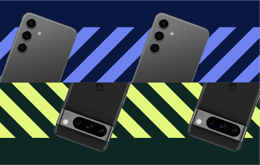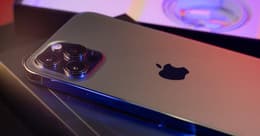
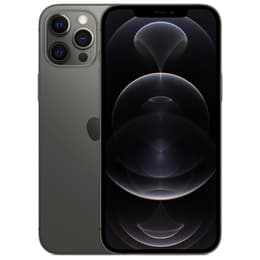

Google Pixel 7 • Unlocked vs iPhone 12 Pro Max • Unlocked

Google Pixel 7 • Unlocked
Starting at

Refurbished price:$185.99

Versus $599.99 new

See options
iPhone 12 Pro Max • Unlocked
Starting at

Refurbished price:$314.00

Versus $899.00 new

See options

Ratings

The Google Pixel 7, released in October 2022, and the iPhone 12 Pro Max, launched in November 2020, represent distinct approaches to high-end smartphone design and functionality from their respective manufacturers. While the Pixel 7 operates on Google's Android ecosystem, the iPhone 12 Pro Max runs on Apple's iOS. Key differentiators include their camera philosophies, display refresh rates, and overall software integration.

Scores

Durability

When considering the long-term usability of these devices, their release timelines and software support policies are important factors.

  • Release Timeline: The iPhone 12 Pro Max was released in November 2020, making it approximately two years older than the Google Pixel 7, which launched in October 2022. This age difference impacts the remaining duration of official software support.
  • Software Longevity: The Google Pixel 7 is guaranteed to receive five years of OS and security updates from its release, extending to at least October 2027 for security updates and potentially Android 17 or 18 for OS updates. The iPhone 12 Pro Max, while older, typically receives iOS updates for a minimum of five years, often longer, with current projections suggesting support until at least 2027 for iOS updates.
  • Repairability: The Google Pixel 7 has a repairability score around 6-7 out of 10, with screen replacements being relatively straightforward, though battery removal can be complex due to strong adhesive, and the USB-C port is soldered. The iPhone 12 Pro Max features a Ceramic Shield front cover for improved drop performance and an IP68 rating for water and dust resistance, similar to the Pixel 7.

Release Year

2022

2020

Last OS Compatibility

Yes

Yes

OS

Android

iOS

Foldable

No

No

Performance

Both devices offer robust performance for daily tasks, though their underlying hardware architectures differ.

  • Processing Power: The Google Pixel 7 is powered by Google's Tensor G2 processor, designed for efficient multitasking and advanced AI capabilities, ensuring smooth operation for demanding applications and gaming. The iPhone 12 Pro Max features Apple's A14 Bionic chip, which provides strong performance for a wide range of tasks, from everyday app usage to intensive gaming and video editing.
  • Multitasking and Responsiveness: The Pixel 7 comes with 8GB of RAM, contributing to fluid app switching and handling multiple applications simultaneously. The iPhone 12 Pro Max is equipped with 6GB of RAM, which, combined with iOS optimization, delivers a highly responsive user experience.
  • Battery Behavior: The Google Pixel 7 has a 4355 mAh battery, with users reporting it can last a full day with moderate to heavy use. The iPhone 12 Pro Max, with its 3687 mAh battery, is noted for its extended battery life, often lasting over 48 hours between charges for some users, making it a strong performer in this regard.

Memory (GB)

8 GB

6 GB

Screen quality

The visual experience on both smartphones is characterized by vibrant displays, though with differences in size and refresh rate.

  • Display Technology and Size: The Google Pixel 7 features a 6.3-inch AMOLED display, offering deep blacks and vibrant colors. The iPhone 12 Pro Max boasts a larger 6.7-inch Super Retina XDR OLED display, providing an expansive viewing area.
  • Resolution and Clarity: The Pixel 7 has a resolution of 1080 x 2400 pixels at 416 pixels per inch (ppi), delivering clear and sharp images. The iPhone 12 Pro Max offers a higher resolution of 2778 x 1284 pixels at 458 ppi, resulting in a very detailed and crisp visual output.
  • Refresh Rate and Brightness: The Pixel 7 features a 90Hz refresh rate, providing a smoother scrolling experience and more fluid animations compared to standard 60Hz displays. It can reach a peak brightness of 1400 nits. The iPhone 12 Pro Max has a standard 60Hz refresh rate, which is still considered smooth for most applications, and offers a typical brightness of 800 nits, peaking at 1200 nits for HDR content.

Resolution

1080 x 2400

1284 x 2778

Screen type

AMOLED

Super Retina XDR OLED

Audiovisual

Both devices are recognized for their advanced camera systems, each with distinct strengths in photography and videography.

  • Rear Camera System: The Google Pixel 7 features a dual-camera setup with a 50MP main sensor and a 12MP ultrawide lens, excelling in computational photography and delivering bright, detailed images with ample shadow detail. The iPhone 12 Pro Max has a triple 12MP camera system, including Ultra Wide, Wide, and Telephoto lenses, along with a LiDAR Scanner for improved low-light focusing and Night Mode portraits.
  • Low-Light and Everyday Photography: The Pixel 7's larger main sensor and Google's processing contribute to strong low-light performance and natural background blur. The iPhone 12 Pro Max also offers improved low-light performance, particularly with its Wide camera and Night Mode capabilities.
  • Video Recording Quality: The Pixel 7 supports 4K video recording at up to 60 frames per second, with good stabilization. The iPhone 12 Pro Max records 4K video at up to 60 frames per second, notably with Dolby Vision HDR support, providing enhanced dynamic range and color.

Main camera

50 megapixels

12 megapixels

Front camera

10.8 megapixels

12 megapixels

Miscellaneous

Beyond core features, several practical elements contribute to the overall user experience of these smartphones.

  • Connectivity and Ports: Both devices support 5G connectivity for faster mobile data speeds. The Google Pixel 7 utilizes a USB-C 3.2 Gen 2 port for charging and data transfer, while the iPhone 12 Pro Max uses Apple's proprietary Lightning port. Neither phone includes a 3.5mm headphone jack.
  • Biometric Security: The Pixel 7 incorporates an under-display optical fingerprint sensor for secure unlocking, alongside facial recognition. The iPhone 12 Pro Max relies on Face ID, Apple's facial recognition system, for secure authentication.
  • Design and Handling: The Pixel 7 measures 155.6 x 73.2 x 8.7 mm and weighs 197g, offering a comfortable feel for many users. The iPhone 12 Pro Max is a larger device at 160.8 x 78.1 x 7.4 mm and weighs 228g, providing a substantial feel and a larger screen footprint.

Weight

6 oz

7 oz

Screen size (inches)

6.3

6.7

Network

5G

5G

SIM card

Physical SIM + eSIM

Physical SIM + eSIM

Carrier compatibility

Unlocked

Unlocked

The Google Pixel 7 and iPhone 12 Pro Max cater to users with differing priorities, reflecting their distinct operating systems and design philosophies. Users often praise the Pixel 7 for its exceptional camera capabilities, particularly its computational photography features that deliver consistent and high-quality images across various conditions. Its smooth 90Hz display and clean Android experience are also frequently highlighted. Some criticisms occasionally point to its battery life, though many users find it sufficient for a full day.

The iPhone 12 Pro Max is frequently lauded for its expansive and vibrant OLED display, offering an immersive viewing experience. Its robust build quality with Ceramic Shield and its impressive battery longevity are also common points of praise. User feedback sometimes notes its larger size and weight as a factor for one-handed use.

Users prioritizing a cutting-edge Android experience with advanced computational photography and a high refresh rate display may find the Google Pixel 7 well-suited to their needs. Conversely, users who value a larger display, extended battery life, and the established iOS ecosystem with strong video capabilities might lean towards the iPhone 12 Pro Max. Both devices offer compelling features, and choosing between them often comes down to personal preference for operating system, camera style, and device size. For those seeking a more sustainable choice, both models are available as quality-assured refurbished options, extending their lifecycle and reducing electronic waste.

See all articles

Our recent comparisons