Google Pixel 8 • Unlocked vs iPhone 14 Pro Max • Locked T-Mobile

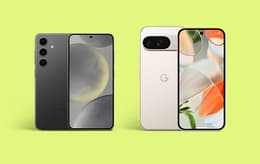
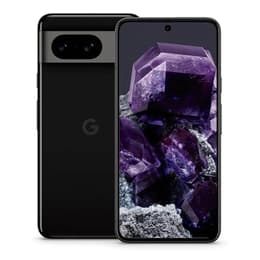
Google Pixel 8 • Unlocked
Starting at

Refurbished price:$254.00

Versus $699.99 new

See options
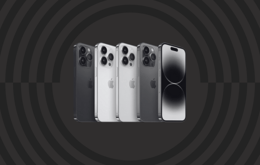
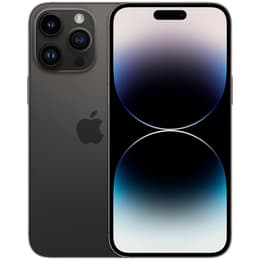
iPhone 14 Pro Max • Locked T-Mobile
Starting at

Refurbished price:$413.00

Versus $1,099.00 new

See options

Ratings

The Google Pixel 8, released in October 2023, and the iPhone 14 Pro Max, launched in September 2022, represent distinct approaches to high-end smartphone design and functionality. While the Pixel 8 operates on the Android ecosystem, emphasizing AI-driven features and a compact form factor, the iPhone 14 Pro Max runs on iOS, offering a larger display and a robust camera system. Both devices aim to deliver a premium user experience, but they cater to different preferences in terms of software integration, physical design, and specific capabilities.

Scores

Durability

When considering the long-term usability of these devices, their release timelines and software support policies are key differentiators.

  • Release Timeline: The iPhone 14 Pro Max was released in September 2022, making it approximately a year older than the Google Pixel 8, which launched in October 2023. This difference in release date inherently means the Pixel 8 will receive software updates for a longer period from its initial availability.
  • OS Support Duration: Google has committed to an extensive seven years of OS and security updates for the Pixel 8, extending support until at least October 2030. Apple typically provides 5-6 years of major iOS updates for its devices, meaning the iPhone 14 Pro Max will likely receive updates for a shorter duration compared to the Pixel 8.
  • Repairability: The Google Pixel 8 has received repairability scores ranging from 5.5 to 7 out of 10, with some sources noting that Google provides service manuals and OEM replacement parts, making it moderately repairable. The iPhone 14 Pro Max, while designed with precision, generally scores lower in repairability due to factors like proprietary screws and strong adhesives, often requiring specialized tools and expertise for repairs.

Release Year

2023

2022

Last OS Compatibility

Yes

Yes

OS

Android

iOS

Foldable

No

No

Performance

The performance of both smartphones is optimized for their respective operating systems, offering smooth experiences for daily tasks and demanding applications.

  • Processor Capabilities: The Google Pixel 8 is powered by its current-generation Tensor G3 processor, designed to enhance AI and machine learning tasks directly on the device, contributing to efficient photo processing and smart features. The iPhone 14 Pro Max features a powerful A16 Bionic chip, known for its robust performance in graphics-intensive applications and overall system responsiveness.
  • Multitasking and Responsiveness: The Pixel 8 comes with 8GB of RAM, which supports smooth multitasking and app handling within the Android environment. The iPhone 14 Pro Max is equipped with 6GB of RAM, which, combined with iOS's efficient memory management, provides a fluid user experience even with multiple applications running simultaneously.
  • Battery Behavior: The Pixel 8 houses a 4575 mAh battery, offering approximately 8-10 hours of screen-on time with mixed usage, and features an Adaptive Battery system that learns user habits to optimize power consumption. Some users have noted that battery life can be average, particularly with heavy 5G usage. The iPhone 14 Pro Max, with its 4323 mAh battery, is recognized for its extended endurance, often lasting over 13 hours in web browsing tests and up to 29 hours for video playback, making it a strong performer for all-day use.

Memory (GB)

8 GB

6 GB

Screen quality

Both devices offer high-quality displays, but they differ in size and specific display technologies, impacting the visual experience.

  • Display Technology and Clarity: The Google Pixel 8 features a 6.2-inch OLED display with a resolution of 1080 x 2400 pixels, resulting in a pixel density of approximately 428 ppi. This provides clear and vibrant visuals for everyday content. The iPhone 14 Pro Max boasts a larger 6.7-inch Super Retina XDR OLED display with a higher resolution of 2796x1290 pixels and a pixel density of around 460 ppi, offering slightly sharper details and a more expansive viewing area.
  • Brightness and Refresh Rate: The Pixel 8's display supports a 120Hz adaptive refresh rate, which can scale down to 60Hz to conserve battery, and reaches a peak brightness of 2000 nits, ensuring good visibility in various lighting conditions. The iPhone 14 Pro Max also features a 120Hz ProMotion adaptive refresh rate and achieves a peak brightness of 2000 nits, providing smooth scrolling and excellent outdoor readability.
  • Viewing Experience: The Pixel 8's smaller form factor makes it more manageable for one-handed use, while its vibrant OLED panel delivers deep blacks and rich colors. The iPhone 14 Pro Max's larger screen is well-suited for media consumption, gaming, and productivity tasks, offering an immersive visual experience.

Resolution

1080 x 2400

1290 x 2796

Screen type

OLED

LTPO Super Retina XDR OLED

Audiovisual

Both smartphones are equipped with advanced camera systems, each excelling in different aspects of photography and videography.

  • Rear Camera System: The Google Pixel 8 features a dual-camera setup with a 50 MP wide-angle main sensor (f/1.7) and a 12 MP ultrawide sensor (f/2.2) with autofocus. It is highly praised for its computational photography, producing images with natural colors, good exposure, and strong detail, especially in low-light conditions. The iPhone 14 Pro Max sports a triple-camera system, including a 48 MP main sensor (f/1.78) with sensor-shift OIS, a 12 MP ultrawide sensor (f/2.2), and a 12 MP telephoto lens offering 3x optical zoom (f/2.8). Its main camera excels in capturing detailed 48MP ProRAW images, and its larger sensors improve quality across both primary and ultrawide lenses.
  • Video Recording and Features: The Pixel 8 supports video recording up to 4K at 60fps across its rear and front cameras, with features like gyro-EIS and OIS for stabilization, and 10-bit HDR. It also includes AI-driven features like Magic Eraser for audio. The iPhone 14 Pro Max offers 4K video recording at 60fps, with excellent stabilization through features like Cinematic mode and Action mode, which provides near-GoPro-level steadiness. Its selfie camera also supports 4K 60fps video.
  • Front Camera and Audio: The Pixel 8 has a 10.5 MP ultrawide front camera. The iPhone 14 Pro Max features a 12 MP front camera with autofocus, which enhances selfie quality. Both devices offer stereo speakers for media consumption, and the Pixel 8's microphone quality is noted for clean sound recording.

Main camera

50 megapixels

48 megapixels

Front camera

10.5 megapixels

12 megapixels

Miscellaneous

Beyond core performance and camera capabilities, several practical elements distinguish these two devices in daily use.

  • Connectivity and Ports: The Google Pixel 8 supports the latest Wi-Fi 7 standard, along with Bluetooth 5.3, NFC, and utilizes a USB Type-C 3.2 port for charging and data transfer. The iPhone 14 Pro Max supports Wi-Fi 6, Bluetooth, NFC, and uses Apple's proprietary Lightning port.
  • Biometrics and Sensors: The Pixel 8 includes an optical in-display fingerprint sensor and face unlock for secure access. The iPhone 14 Pro Max relies on Face ID for biometric authentication, which uses advanced facial recognition technology. It also incorporates a LiDAR scanner, which enhances augmented reality experiences and improves autofocus in low light.
  • Design and Durability: The Pixel 8 features a glass front and back (Gorilla Glass Victus) with an aluminum frame, measuring 150.5 x 70.8 x 8.9 mm and weighing 187 g. It has an IP68 rating for dust and water resistance. The iPhone 14 Pro Max has a Ceramic Shield front, a textured matte glass back, and a stainless steel frame, giving it a more substantial feel. It measures 160.7 x 77.6 x 7.85 mm and weighs 240 g, also carrying an IP68 rating for dust and water resistance. The Pixel 8's smaller size makes it more comfortable for users preferring a compact device, while the iPhone 14 Pro Max offers a larger, more premium build.

Weight

7 oz

8 oz

Screen size (inches)

6.2

6.7

Network

5G

5G

SIM card

Physical SIM + eSIM

eSIM

Carrier compatibility

Unlocked

T-Mobile

Connector

USB-C

Lightning

The Google Pixel 8 and iPhone 14 Pro Max each offer compelling features, appealing to different user priorities. The Pixel 8 is frequently praised for its exceptional camera performance, particularly its computational photography capabilities that deliver consistent and high-quality images, even in challenging conditions. Users also appreciate its long-term software support, with Google promising seven years of updates, which is a significant advantage for longevity. However, some users have noted that the Pixel 8's battery life can be average, especially with heavy usage or when relying on mobile data. There have also been occasional reports of software bugs or minor build quality concerns.

The iPhone 14 Pro Max is widely lauded for its outstanding battery life, often lasting well over a full day of heavy use, making it a reliable choice for users who prioritize endurance. Its large, vibrant display and powerful performance are also consistent points of praise, providing a smooth and immersive experience for all tasks. Criticisms sometimes point to its larger size and weight, which some users find less comfortable for one-handed operation. Additionally, while its camera system is highly capable, some users desire more manual control options.

Users prioritizing a compact device with cutting-edge AI features, an excellent point-and-shoot camera, and extended software longevity may prefer the Google Pixel 8. Conversely, users who value a larger display, industry-leading battery life, and a robust ecosystem with strong video capabilities will find the iPhone 14 Pro Max well-suited to their needs. Both devices are available as quality-assured refurbished options, providing a sustainable choice for consumers.

See all articles

Our recent comparisons