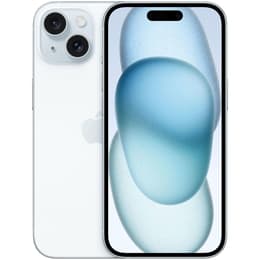
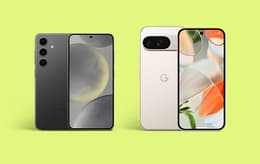
Google Pixel 8 • Unlocked vs iPhone 15 • Locked T-Mobile

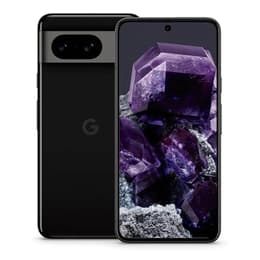
Google Pixel 8 • Unlocked
Starting at

Refurbished price:$254.00

Versus $699.99 new

See options
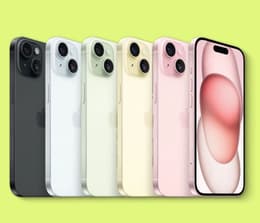
iPhone 15 • Locked T-Mobile
Starting at

Refurbished price:$379.00

Versus $699.00 new

See options

Ratings

The Google Pixel 8, released in October 2023, and the Apple iPhone 15, launched in September 2023, represent the latest standard models from their respective manufacturers. Both devices offer a premium smartphone experience, but they cater to different user preferences through their distinct operating systems and hardware philosophies. The Pixel 8 runs on Android, emphasizing advanced computational photography and AI-driven features, while the iPhone 15 operates on iOS, focusing on a streamlined user experience and robust ecosystem integration. These differences extend to their display technologies and overall performance characteristics.

Scores

Durability

When considering the long-term usability of these devices, both the Google Pixel 8 and the iPhone 15 offer substantial software support and durable builds.

  • Software Longevity: The Google Pixel 8 is notable for its commitment to seven years of OS upgrades and security patches, providing an extended period of software support. The iPhone 15 also receives regular iOS updates for several years, with Apple known for supporting its devices for a considerable duration after their release.
  • Build Quality: Both smartphones feature an IP68 rating for dust and water resistance, indicating a high level of protection against environmental elements. The Pixel 8 incorporates Gorilla Glass Victus for screen protection, while the iPhone 15 utilizes Ceramic Shield on its front display for enhanced durability.
  • Practical Lifespan: Users can expect both devices to remain functional and receive critical updates for many years, making them suitable for long-term use. The Pixel 8's explicit seven-year update policy offers a clear advantage for those prioritizing the longest possible software support.

Release Year

2023

2023

Last OS Compatibility

Yes

Yes

OS

Android

iOS

Foldable

No

No

Performance

The performance of the Google Pixel 8 and iPhone 15 is influenced by their respective internal components, impacting how they handle daily tasks and demanding applications.

  • Processing Power: The iPhone 15 features a powerful current-generation processor that delivers strong performance across various tasks, often scoring higher in benchmark tests. The Google Pixel 8's processor is designed with a focus on AI optimizations, which enhances features like Google Assistant and machine learning capabilities within Android. While it handles demanding apps and multitasking smoothly, its raw processing power may be slightly less than the iPhone 15's.
  • Multitasking and Storage: The Pixel 8 comes with 8GB of RAM, which supports efficient multitasking. The iPhone 15 operates effectively with 6GB of RAM, as iOS is optimized to run smoothly with less memory. Both devices offer 128GB and 256GB storage options, with the iPhone 15 also providing a 512GB variant for users requiring more space.
  • Battery Behavior: The Pixel 8 has a larger 4575mAh battery, compared to the iPhone 15's 3349mAh battery. In some tests, the Pixel 8 has shown to outperform the iPhone 15 in browsing and video streaming battery life, while the iPhone 15 can be more efficient during gaming. Both phones are generally capable of lasting a full day of typical use.

Memory (GB)

8 GB

6 GB

Screen quality

Both the Google Pixel 8 and iPhone 15 offer vibrant displays, but they differ in key specifications that affect the viewing experience.

  • Display Technology and Size: Both devices utilize OLED display technology, providing deep blacks and rich colors. The Pixel 8 features a 6.2-inch screen, slightly larger than the iPhone 15's 6.1-inch display. The iPhone 15 also incorporates the Dynamic Island, an interactive area around the front camera cutout that displays alerts and background activities.
  • Resolution and Brightness: The iPhone 15 has a resolution of 1179x2556 pixels, resulting in a pixel density of 460 pixels per inch (ppi). The Pixel 8 offers a 1080x2400 resolution with 428 ppi. Both phones achieve a peak brightness of 2000 nits, ensuring good visibility even in bright outdoor conditions.
  • Refresh Rate: A notable difference is the refresh rate; the Pixel 8 features a 120Hz refresh rate, which provides smoother scrolling and more fluid animations. The iPhone 15 maintains a 60Hz refresh rate, which some users may find less smooth, especially when coming from devices with higher refresh rates.

Resolution

1080 x 2400

1179 x 2556

Screen type

OLED

Super Retina XDR OLED

Audiovisual

The camera systems on the Google Pixel 8 and iPhone 15 are both highly capable, each with its own strengths in photography and videography.

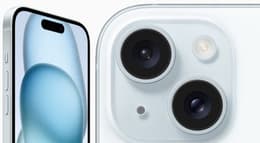
  • Rear Camera System: The Pixel 8 features a dual-camera setup with a 50MP main sensor and a 12MP ultrawide lens. The iPhone 15 also has a dual-camera system, comprising a 48MP main sensor and a 12MP ultrawide lens. Both are designed to capture detailed images in various lighting conditions.
  • Photography Features: The Pixel 8 leverages advanced computational photography and AI enhancements, including features like Best Take, Magic Editor, and Audio Magic Eraser, which allow for significant post-capture adjustments and improvements. The iPhone 15 utilizes Apple's Photonic Engine for improved low-light performance and offers a more natural color science.
  • Video Recording: Both devices support 4K video recording at 60 frames per second. The iPhone 15 is often noted for its strong video stabilization and cinematic mode, making it a preferred choice for users prioritizing video quality. The Pixel 8 also provides solid video performance with good image stabilization and realistic color processing.

Main camera

50 megapixels

48 megapixels

Front camera

10.5 megapixels

12 megapixels

Miscellaneous

Beyond core performance, several practical elements differentiate the Google Pixel 8 and iPhone 15, influencing daily interaction and user convenience.

  • Connectivity and Ports: Both devices have adopted the universal USB-C port for charging and data transfer. The Pixel 8 supports Wi-Fi 7, while the iPhone 15 supports Wi-Fi 6, offering fast wireless connectivity. Both also include 5G capabilities and Bluetooth 5.3.
  • Biometric Security: The Pixel 8 offers both an in-display optical fingerprint sensor and face unlock for secure access. The iPhone 15 relies solely on Face ID for biometric authentication.
  • Design and Handling: The iPhone 15 is slightly more compact and lighter, measuring 147.6 x 71.6 x 7.8 mm and weighing 171g. The Pixel 8 is marginally taller, narrower, and heavier at 150.5 x 70.8 x 8.9 mm and 187g. Both feature glass backs and aluminum frames, contributing to a premium feel.

Weight

7 oz

171 oz

Screen size (inches)

6.2

6.1

Network

5G

5G

SIM card

Physical SIM + eSIM

eSIM

Carrier compatibility

Unlocked

T-Mobile

Connector

USB-C

USB-C (USB 2)

User feedback for the Google Pixel 8 often highlights its responsive performance and excellent camera capabilities, particularly its advanced AI-driven features for photography. Many users appreciate the vibrant display and the extended software support commitment from Google. However, some Pixel 8 users have reported concerns regarding battery life, describing it as average, and a few have noted instances of the device getting warm during use or experiencing minor build quality issues.

For the iPhone 15, common praise points include its reliable performance, the quality of its main camera, and the brightness of its display. Users generally find the iOS experience intuitive and smooth. Criticisms frequently revolve around the 60Hz refresh rate, which some find less fluid compared to higher refresh rate displays on other devices, and some users have mentioned overheating concerns, particularly while charging.

Users prioritizing a long-term software commitment and advanced computational photography features may find the Google Pixel 8 well-suited to their needs. Its 120Hz display also offers a smoother visual experience. Conversely, individuals who value a highly optimized ecosystem, strong video recording capabilities, and a slightly more compact design might lean toward the iPhone 15. Both devices offer robust performance for everyday tasks, making the choice often dependent on preferred operating system and specific feature priorities. For those considering either of these capable smartphones, exploring quality-assured refurbished options can be a sustainable choice.

See all articles

Our recent comparisons