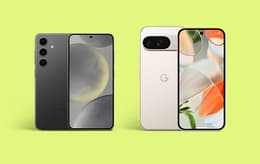
Google Pixel 9 Pro • Unlocked vs iPhone 13 Pro Max • Unlocked

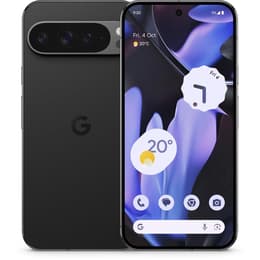
Google Pixel 9 Pro • Unlocked
Starting at

Refurbished price:$435.86

Versus $899.99 new

See options
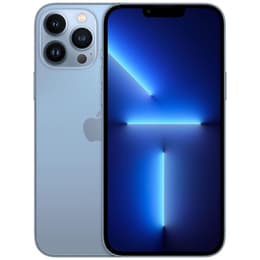
iPhone 13 Pro Max • Unlocked
Starting at

Refurbished price:$362.27

Versus $999.00 new

See options

Ratings

The Google Pixel 9 Pro, released in September 2024, and the Apple iPhone 13 Pro Max, launched in September 2021, represent distinct approaches to high-end smartphone design and functionality. While both devices offer premium experiences, the Pixel 9 Pro benefits from a more recent release, bringing updated hardware and a strong focus on artificial intelligence, whereas the iPhone 13 Pro Max, despite its age, continues to deliver robust performance and a large display. Both operate on their respective flagship operating systems, Android and iOS, offering different ecosystem experiences.

Scores

Durability

The longevity of a smartphone is influenced by its release timeline, software support, and physical durability. The Pixel 9 Pro, being a newer device, naturally offers a longer period of guaranteed software updates compared to the iPhone 13 Pro Max.

  • Software Support: The Google Pixel 9 Pro is committed to receiving seven years of OS and security updates, extending its support until at least August 2031. [23, 24, 27] The iPhone 13 Pro Max, released earlier, is expected to receive software updates until approximately 2028, providing around seven years of support from its launch. [37] This means the Pixel 9 Pro has a longer remaining support window.
  • Repairability: The Google Pixel 9 Pro has a repairability score of 8.4 out of 10, indicating a design that facilitates maintenance and part replacement. [41] While a specific repairability score for the iPhone 13 Pro Max was not readily available, iPhones are generally considered to have moderate repairability.
  • Practical Lifespan: Both devices are built with durable materials, but the Pixel 9 Pro's newer components and extended software support suggest a slightly longer practical lifespan for users who prioritize the latest features and security patches.

Release Year

2024

2021

Last OS Compatibility

Yes

Yes

OS

Android

iOS

Foldable

No

No

Performance

Performance in modern smartphones is crucial for smooth operation, multitasking, and demanding applications. Both devices deliver capable performance, though their underlying architectures differ.

  • Processing Power: The Google Pixel 9 Pro features a current-generation processor designed for efficient handling of complex tasks and advanced AI functionalities. [4] The iPhone 13 Pro Max is powered by a processor that, while from an earlier generation, still provides a highly responsive user experience for everyday applications and gaming. [1]
  • Multitasking and Responsiveness: With 16GB of RAM, the Pixel 9 Pro offers substantial capacity for seamless multitasking and keeping numerous applications open in the background without slowdowns. [4] The iPhone 13 Pro Max, equipped with 6GB of RAM, manages multitasking effectively within the iOS ecosystem, providing a fluid experience for most users. [6]
  • Battery Behavior: The Pixel 9 Pro includes a 4700 mAh battery, with users reporting excellent endurance, often lasting beyond a full day of heavy use. [4, 14, 17, 32] The iPhone 13 Pro Max, with its 4352 mAh battery, is also known for its exceptional battery life, frequently providing up to two days of use for average users and extended screen-on time. [1, 16, 26]

Memory (GB)

16 GB

6 GB

Screen quality

The display is a primary interface for smartphone interaction, and both devices offer high-quality viewing experiences with distinct characteristics.

  • Display Technology and Clarity: The Google Pixel 9 Pro features a 6.3-inch OLED display with a resolution of 2856 x 1280 pixels, resulting in a pixel density of 495 pixels per inch (ppi). [20] The iPhone 13 Pro Max boasts a larger 6.7-inch Super Retina XDR OLED display with a resolution of 2778 x 1284 pixels, offering a pixel density of 458 ppi. [1, 2, 9] Both provide vibrant colors and deep blacks characteristic of OLED technology.
  • Brightness and Refresh Rate: The Pixel 9 Pro's display can reach a peak brightness of 2000 nits for HDR content, ensuring good visibility in various lighting conditions. [20] It also features an adaptive refresh rate of up to 120Hz, which can dynamically scale down to 1Hz to conserve battery. [20] The iPhone 13 Pro Max offers a typical brightness of 1000 nits and a peak of 1200 nits for HDR content, alongside its ProMotion adaptive refresh rate that ranges from 10Hz to 120Hz for smooth scrolling and animations. [1, 2, 12]
  • Viewing Experience: The iPhone 13 Pro Max provides a larger screen area, which can enhance the immersive experience for media consumption and productivity. [9] The Pixel 9 Pro offers a slightly higher pixel density in a more compact form factor, which some users may prefer for one-handed use.

Resolution

1280 x 2856

1284 x 2778

Screen type

LTPO OLED

Super Retina XDR OLED

Audiovisual

Both smartphones are equipped with advanced camera systems, each excelling in different aspects of photography and videography, catering to varied user preferences.

  • Rear Camera System: The Google Pixel 9 Pro features a versatile triple-camera setup, including a 50MP main sensor, a 48MP ultrawide lens with macro autofocus, and a 48MP telephoto lens offering 5x optical zoom. [7, 8, 19] The iPhone 13 Pro Max also has a triple 12MP camera system, comprising wide, ultrawide, and telephoto lenses with 3x optical zoom. [2] Both systems are capable of capturing detailed images in various scenarios.
  • Photography Features: The Pixel 9 Pro emphasizes computational photography with features like Super Res Zoom, dedicated Pro Controls for manual adjustments, Night Sight, Astrophotography, and AI-powered tools such as Magic Editor and the 'Add Me' feature for group photos. [3, 18] The iPhone 13 Pro Max offers Cinematic Mode for video with shallow depth of field, macro photography via its ultrawide lens, Night mode, Portrait mode with advanced effects, and Apple ProRAW for professional-grade editing. [1, 2, 13, 25]
  • Video Capabilities: The Pixel 9 Pro introduces Video Boost, which uses AI to upscale videos to 8K resolution and enhance lighting and reduce noise, along with Night Sight Video and various stabilization options. [3] The iPhone 13 Pro Max supports HDR video recording with Dolby Vision up to 4K at 60fps and ProRes video recording, providing high-quality options for videographers. [2]

Main camera

50 megapixels

12 megapixels

Front camera

42 megapixels

12 megapixels

Miscellaneous

Beyond core features, several practical elements contribute to the overall user experience and differentiate these two devices.

  • Connectivity and Ports: The Google Pixel 9 Pro supports modern connectivity standards, including 5G and likely advanced Wi-Fi and Bluetooth versions, and features a USB-C port for charging and data transfer. [24] It also includes a Satellite SOS feature for emergency situations. [30] The iPhone 13 Pro Max also supports 5G, Wi-Fi, and Bluetooth, but utilizes Apple's proprietary Lightning port. [1, 6]
  • Biometric Security: The Pixel 9 Pro incorporates an under-display ultrasonic fingerprint scanner for secure unlocking and authentication. [24] The iPhone 13 Pro Max relies on Face ID, Apple's facial recognition system, for biometric security. [2]
  • Design and Handling: The Pixel 9 Pro measures 152.8 x 72 x 8.5 mm and weighs 199g, offering a relatively compact and manageable form factor. [24] The iPhone 13 Pro Max is a larger and heavier device at 160.8 x 78.1 x 7.65 mm and 240g, which may appeal to users who prefer a more substantial feel and larger screen. [6, 31]

Weight

7 oz

8000 oz

Screen size (inches)

6.3

6.7

Network

5G

5G

SIM card

Physical SIM + eSIM

Physical SIM + eSIM

Carrier compatibility

Unlocked

Unlocked

Connector

USB-C

Lightning

The Google Pixel 9 Pro and iPhone 13 Pro Max cater to different user priorities, reflecting their respective release timelines and design philosophies. Users often praise the iPhone 13 Pro Max for its exceptional battery life, which many consider to be among the best, and its consistent camera performance, particularly its Cinematic Mode and ProRes video capabilities. [16, 25, 26] Some users, however, might find its size and weight to be a factor in daily handling. The Pixel 9 Pro, being a more recent release, is frequently lauded for its advanced AI features, particularly in photography and video processing, and its commitment to long-term software support. [3, 27] Its more compact size compared to the Pro Max variant of the iPhone 13 series is also a notable advantage for some. Concerns for the Pixel 9 Pro sometimes revolve around the perceived complexity of its AI features for average users, or the learning curve associated with a new operating system for those switching from iOS.

Users prioritizing a large display, established ecosystem, and proven long-lasting battery life may find the iPhone 13 Pro Max well-suited to their needs. Conversely, those who value cutting-edge AI capabilities, a more compact design with a high-resolution screen, and the longest possible software support window may lean towards the Google Pixel 9 Pro. Both devices offer robust performance and capable camera systems, making the choice largely dependent on individual preferences for operating system, specific features, and form factor. For those considering either device, exploring quality-assured refurbished options can provide an eco-friendly alternative to extend the life cycle of these powerful smartphones.


See all articles

Our recent comparisons