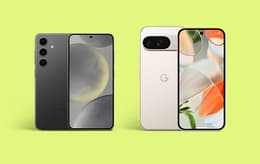
Compare models
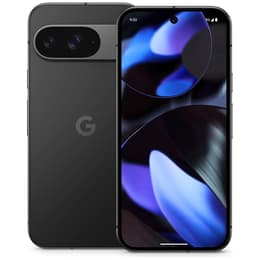
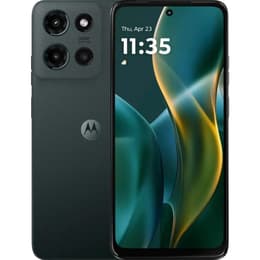
Google Pixel 9 • Unlocked vs Motorola Moto G (2025) • Unlocked
- 1-year warranty
- Free standard shipping
- Free 30-day returns
Differences at a glance
The Google Pixel 9 (2024) and the Motorola Moto G (2025) are unlocked smartphones designed to cater to different everyday user requirements. While the Google Pixel 9 operates as a premium flagship device emphasizing advanced capabilities, the Motorola Moto G (2025) focuses on core communication essentials and reliable daily functionality. Both devices run variations of the Android operating system, providing access to familiar application ecosystems while differing significantly in hardware execution and positioning.
Available Models
Color
Storage (GB)
Scores
Durability
Evaluating the lifespan and durability of these devices reveals distinct differences in software support schedules, build resilience, and anticipated longevity for everyday owners.
- Software longevity: The Google Pixel 9 features an extended multi-year software update commitment, ensuring prolonged operating system security. The Motorola Moto G (2025) provides standard software support typical of its class.
- Build resilience: The Google Pixel 9 incorporates robust glass and aluminum construction alongside advanced water resistance ratings. The Motorola Moto G (2025) utilizes practical polymer and glass materials designed to withstand routine daily handling.
- Practical lifespan: Users can expect both devices to maintain functional reliability over several years, though the Pixel's hardware headroom supports prolonged demanding usage.
Release Year
2024
2025
OS
Android
Android
Foldable
No
No
Performance
Performance capabilities vary noticeably between the two models, directly influencing multitasking smoothness, storage capacity, and battery endurance during intensive routines.
- System responsiveness: The Google Pixel 9 handles demanding applications, complex multitasking, and graphics-intensive gaming smoothly with minimal latency. The Motorola Moto G (2025) manages routine daily tasks, messaging, and web browsing efficiently.
- Memory and storage: The Google Pixel 9 offers generous onboard storage configurations paired with high RAM capacity for seamless background app management. The Motorola Moto G (2025) provides modest memory allocations alongside expandable storage via a dedicated card slot.
- Battery behavior: The Motorola Moto G (2025) benefits from a large battery capacity paired with power-efficient hardware, while the Google Pixel 9 balances high-refresh operations with optimized power management for daily routines.
Screen quality
Display characteristics shape visual engagement, influencing media consumption comfort, reading clarity, and outdoor visibility under bright lighting conditions.
- Display technology: The Google Pixel 9 features an OLED display producing deep contrast levels and vibrant color accuracy. The Motorola Moto G (2025) utilizes an LCD screen offering clear visuals and wide viewing angles.
- Refresh rate and clarity: Both models support a smooth 120Hz refresh rate for fluid scrolling through menus and web pages, though the Pixel provides higher pixel density for sharper text rendering.
- Outdoor visibility: The Google Pixel 9 achieves high peak brightness levels for comfortable outdoor readability, while the Motorola Moto G (2025) delivers adequate illumination for standard daylight use.
Resolution
1080 x 2424
720x1604
Screen type
OLED
IPS LCD
Audiovisual
Camera systems and audio output capabilities dictate how well each smartphone performs for photography, video recording, and media playback.
- Photography performance: The Google Pixel 9 equips advanced dual rear sensors with robust computational processing for detailed low-light and everyday photography. The Motorola Moto G (2025) features a reliable primary sensor suitable for casual snapshots and document scanning.
- Video and audio: The Google Pixel 9 records stabilized high-definition video with clear multi-microphone audio capture. The Motorola Moto G (2025) includes stereo speakers supporting media playback and clear voice calls.
- Media consumption: Both handsets deliver pleasant audio-visual experiences for streaming video and listening to podcasts through built-in speakers or wireless accessories.
Miscellaneous
Practical daily usability elements, connectivity standards, and physical dimensions determine how comfortably each smartphone fits into various user lifestyles.
- Connectivity features: Both devices support modern 5G networks, Wi-Fi standards, Bluetooth pairing, and near-field communication for contactless transactions.
- Physical handling: The Google Pixel 9 offers a compact form factor that rests comfortably in one hand, whereas the Motorola Moto G (2025) presents a larger screen real estate suited for viewing expansive content.
- Physical ports: The Motorola Moto G (2025) retains a traditional 3.5mm headphone jack alongside a USB-C port, while the Google Pixel 9 relies entirely on wireless audio or USB-C connectivity.
Weight
7 oz
7 oz
Screen size (inches)
6.3
6.7
Network
5G
5G
SIM card
Physical SIM + eSIM
Physical SIM + eSIM
Carrier compatibility
Unlocked
Unlocked
What the community thinks
User community discussions and feedback indicate that the Google Pixel 9 receives widespread praise for its advanced photography capabilities, premium display quality, and long-term software commitment, though some users note its higher tier positioning. Conversely, owners of the Motorola Moto G (2025) frequently highlight its dependable battery longevity, expandable storage flexibility, and straightforward usability as major practical advantages, while noting performance limitations during heavy workloads.
Users prioritizing advanced camera output, premium screen tech, and extended software updates will find the Google Pixel 9 well-suited to their daily routines. Meanwhile, users focusing on straightforward communication, expandable storage, and reliable battery endurance may lean toward the Motorola Moto G (2025). Choosing a quality-assured refurbished option through platforms like Back Market provides an eco-friendly way to acquire either device while supporting sustainable consumption habits. Ultimately, the right choice depends entirely on individual workflow priorities and feature preferences.