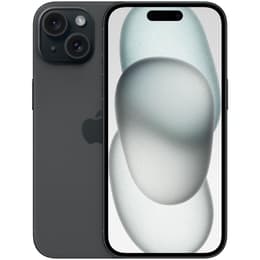
iPhone 12 • Unlocked vs iPhone 15 • Locked AT&T

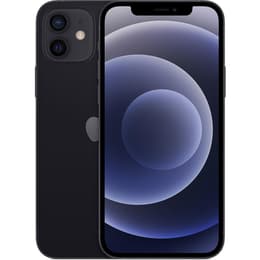
iPhone 12 • Unlocked
Starting at

Refurbished price:$172.96

Versus $629.00 new

See options
iPhone 15 • Locked AT&T
Starting at

Refurbished price:$349.43

Versus $729.00 new

See options

Ratings

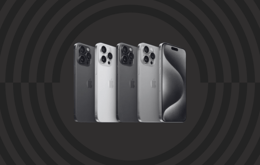
The iPhone 12, released in October 2020, and the iPhone 15, launched in September 2023, represent different generations of Apple's standard smartphone line. While both devices operate on Apple's iOS ecosystem, the iPhone 15 introduces several notable advancements, including a redesigned charging port, an updated display interface, and significant camera enhancements. These differences cater to varying user priorities, from connectivity standards to photographic capabilities.

Scores

Durability

When considering the practical lifespan of these devices, several factors come into play, including software support, physical durability, and ease of repair.

  • Software Longevity: The iPhone 12, having launched with iOS 14, is expected to receive software updates for several more years, potentially up to iOS 26. The iPhone 15, starting with iOS 17, will benefit from an extended period of software support, likely receiving updates for at least one year longer than the iPhone 12, ensuring access to the latest features and security patches for a longer duration. [1, 5]
  • Physical Durability: Both models feature Ceramic Shield on the front display, which enhances drop performance. They also share an IP68 rating for water and dust resistance, allowing submersion in up to 6 meters of water for 30 minutes. [1, 4, 5, 6, 13, 20]
  • Repairability: The iPhone 12 initially received a repairability score of 6 out of 10, which later adjusted to 4 out of 10 due to component pairing challenges. The iPhone 15 initially had a similar score but has seen its repairability score improve to 7 out of 10 with the introduction of Apple's Repair Assistant software, which simplifies the calibration of certain replacement parts. [9, 14, 15, 18, 25, 29, 31, 35]

Release Year

2020

2023

Last OS Compatibility

Yes

Yes

OS

iOS

iOS

Foldable

No

No

Performance

The performance of a smartphone is crucial for daily use, influencing everything from app responsiveness to battery endurance. These two models offer distinct experiences in this regard.

  • Processing Power: The iPhone 15 features a more advanced internal processor compared to the iPhone 12. This translates to smoother operation for demanding applications, faster loading times, and more efficient multitasking. Users engaging in intensive mobile gaming or complex video editing will likely notice a more fluid experience on the newer model. [4, 6, 7, 10, 20, 21]
  • Battery Behavior: The iPhone 15 offers improved battery performance, providing up to 20 hours of video playback and 80 hours of audio playback. While the iPhone 12 also delivers reliable all-day power for many users, its smaller battery capacity means it may require more frequent charging, especially for heavy usage. [1, 4, 6, 10, 18, 19]
  • Storage and Multitasking: Both devices are available with various storage capacities, typically ranging from 128GB to 512GB, with the iPhone 12 also offering a 64GB option. Both models are designed to handle multitasking efficiently, allowing users to switch between applications without significant slowdowns, though the iPhone 15's newer processor provides a slight edge in managing numerous background processes. [4, 5, 6, 7, 12, 17, 20, 21]

Memory (GB)

4 GB

6 GB

Screen quality

The visual experience is a primary interaction point for any smartphone, and both iPhones offer high-quality displays with some key distinctions.

  • Display Technology: Both the iPhone 12 and iPhone 15 feature 6.1-inch Super Retina XDR OLED displays, delivering deep blacks and vibrant colors. This technology provides excellent contrast and color accuracy for media consumption and general browsing. [1, 2, 3, 4, 5, 6, 8, 13, 20, 26]
  • Brightness and Clarity: The iPhone 15 offers significantly higher peak brightness levels, reaching up to 2,000 nits for outdoor use and 1,600 nits for HDR content, compared to the iPhone 12's 1,200 nits peak HDR brightness. This makes the iPhone 15's display more legible in bright sunlight. Both displays maintain a sharp resolution of approximately 460 pixels per inch, ensuring clear text and detailed images. [1, 2, 3, 4, 6, 8, 20]
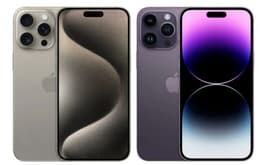
  • User Interface Elements: A notable difference is the iPhone 15's adoption of the Dynamic Island, which replaces the traditional notch found on the iPhone 12. The Dynamic Island integrates alerts and background activities into an interactive area at the top of the screen, offering a more dynamic user interface. Both models feature a standard 60Hz refresh rate. [1, 7, 8, 11, 19, 20, 33]

Resolution

1170 x 2532

1179 x 2556

Screen type

Super Retina XDR OLED

Super Retina XDR OLED

Audiovisual

Camera capabilities are often a deciding factor for smartphone users, and there are significant advancements between these two generations.

  • Main Camera System: The iPhone 12 features a dual 12MP camera system with a main wide lens (f/1.6 aperture) and an ultra-wide lens (f/2.4 aperture). The iPhone 15 significantly upgrades its main camera to a 48MP sensor with a f/1.6 aperture and sensor-shift optical image stabilization, which can capture detailed 24MP or 48MP photos. It also includes a 12MP ultra-wide lens. [2, 3, 4, 5, 6, 7, 8, 19, 20]
  • Photography Features: The iPhone 15 introduces a 2x optical zoom option, achieved by cropping the high-resolution main sensor, providing more versatility for framing shots without a dedicated telephoto lens. It also features next-generation portrait capabilities with improved Focus and Depth Control, allowing users to adjust focus after a photo is taken. Both models offer Night mode for improved low-light photography, but the iPhone 15 generally delivers better performance in challenging lighting conditions due to its larger sensor and enhanced processing. [4, 6, 8, 23, 32, 34]
  • Video Recording and Front Camera: Both devices support 4K video recording. The iPhone 15 offers Cinematic mode up to 4K HDR at 30 frames per second, providing a more professional video look with automatic depth-of-field adjustments. The front-facing TrueDepth camera on both models is 12MP, with the iPhone 15 featuring a slightly wider f/1.9 aperture and autofocus for clearer selfies and video calls. [2, 3, 4, 5, 6, 20, 23]

Main camera

12 megapixels

48 megapixels

Front camera

12 megapixels

12 megapixels

Miscellaneous

Beyond core features, several practical elements contribute to the overall user experience and differentiate these two iPhone models.

  • Connectivity and Ports: Both the iPhone 12 and iPhone 15 support 5G cellular connectivity and Wi-Fi 6 for fast wireless internet. However, the iPhone 15 features Bluetooth 5.3, an upgrade from the iPhone 12's Bluetooth 5.0, offering improved efficiency and range for accessories. A major change is the iPhone 15's transition to a USB-C port for charging and data transfer, replacing the Lightning port on the iPhone 12. This aligns the iPhone 15 with a more universal charging standard. [1, 2, 4, 5, 6, 7, 11, 12, 19, 20, 21]
  • Sensors and Biometrics: Both devices utilize Face ID for secure facial recognition. The iPhone 15 incorporates a second-generation Ultra Wideband chip, enhancing spatial awareness features like Precision Finding for compatible accessories. [4, 5, 6, 7, 20, 26]
  • Design and Handling: The iPhone 12 has a flat-edged design, while the iPhone 15 introduces slightly more rounded edges and a color-infused glass back, which some users may find more comfortable to hold. In terms of physical dimensions, the iPhone 15 is marginally taller, wider, and thicker, and slightly heavier (171 grams) compared to the iPhone 12 (164 grams). [2, 3, 4, 6, 10, 11, 13, 20, 24]

Weight

7 oz

171 oz

Screen size (inches)

6.1

6.1

Network

5G

5G

SIM card

Physical SIM + eSIM

eSIM

Carrier compatibility

Unlocked

AT&T

Connector

Lightning

USB-C (USB 2)

The iPhone 12 and iPhone 15 offer distinct experiences, reflecting several years of technological advancement. User feedback for the iPhone 15 often highlights its significantly upgraded main camera, the convenience of the USB-C port, and the interactive Dynamic Island as key improvements. Many users appreciate the enhanced low-light photography and the versatility of the 2x optical zoom on the iPhone 15. [7, 8, 11, 19, 20, 23, 32, 34] Conversely, some users note that the standard iPhone 15 still retains a 60Hz display, which can feel less fluid compared to devices with higher refresh rates. [8, 20, 33]

The iPhone 12, while an older model, is still praised for its robust performance and the introduction of 5G connectivity at its release. However, its repairability has been a point of discussion, with some challenges noted regarding component pairing. [5, 11, 12, 14, 36]

Users prioritizing the latest camera technology, a modern interactive display, and universal USB-C connectivity may find the iPhone 15 better suited to their needs. Its extended software support also offers a longer period of access to new features. For those seeking a device with established performance for everyday tasks and who may not require the absolute latest photographic advancements or the Dynamic Island, the iPhone 12 remains a capable option. Both models are available as quality-assured refurbished options, providing an eco-friendly alternative for consumers.
See all articles

Our recent comparisons