
iPhone 13 Pro • Unlocked vs iPhone 15 • Locked AT&T

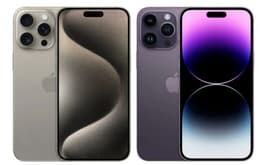
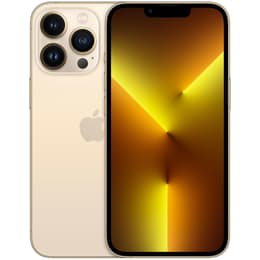
iPhone 13 Pro • Unlocked
Starting at

Refurbished price:$299.99

Versus $899.00 new

See options
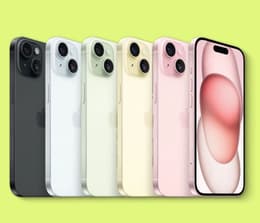
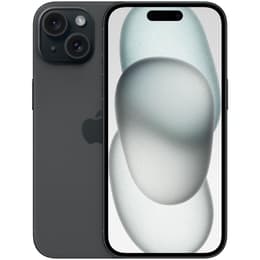
iPhone 15 • Locked AT&T
Starting at

Refurbished price:$348.00

Versus $729.00 new

See options

Ratings

The iPhone 13 Pro, released in September 2021, and the iPhone 15, launched in September 2023, represent different generations within Apple's smartphone lineup. While both devices offer a premium user experience, the iPhone 15 introduces several advancements in display technology, camera capabilities, and connectivity, building upon the foundation set by the iPhone 13 Pro. Both operate on Apple's iOS ecosystem, ensuring a consistent software experience, though the iPhone 15 benefits from a newer starting point in its software lifecycle.

Scores

Durability

When considering the practical lifespan of these devices, several factors come into play, including software support, physical durability, and ease of repair.

  • Release Timeline and OS Support: The iPhone 13 Pro, released in September 2021, will receive iOS updates for a shorter duration compared to the iPhone 15, which launched two years later in September 2023. This means the iPhone 15 is expected to receive major software updates for approximately two additional years, extending its functional longevity.
  • Physical Durability: Both models feature a Ceramic Shield front cover, offering enhanced drop performance. The iPhone 13 Pro utilizes a surgical-grade stainless steel frame, while the iPhone 15 features an aerospace-grade aluminum design with a color-infused glass back. Both devices carry an IP68 rating for water and dust resistance, allowing submersion up to 6 meters for 30 minutes.
  • Repairability: The iPhone 15 has shown significant improvements in repairability, with a reported score of 7 out of 10, compared to earlier models like the 13 Pro which typically scored around 4 out of 10. This indicates that the iPhone 15 is designed to be more accessible for repairs, potentially extending its practical lifespan through easier component replacement.

Release Year

2021

2023

Last OS Compatibility

Yes

Yes

OS

iOS

iOS

Foldable

No

No

Performance

The performance of a smartphone is largely determined by its internal processing power and how efficiently it manages tasks and battery consumption.

  • Processor Capabilities: The iPhone 13 Pro is equipped with the A15 Bionic chip, which includes a 6-core CPU and a 5-core GPU. The iPhone 15 features the A16 Bionic chip, also with a 6-core CPU and a 5-core GPU, but with architectural enhancements that provide improved efficiency and slightly faster processing for demanding applications and graphics-intensive tasks.
  • Real-world Usage: For everyday activities such as web browsing, social media, and light gaming, both devices offer smooth and responsive performance. Users engaging in more intensive tasks like high-fidelity mobile gaming, advanced video editing, or running multiple complex applications simultaneously may notice the iPhone 15 handles these with slightly greater fluidity and sustained performance due to its newer processor.
  • Battery Behavior: The iPhone 13 Pro generally offers good all-day battery life for typical usage. The iPhone 15, despite not being a 'Pro' model, often demonstrates comparable or even slightly better battery endurance in various tests, lasting around 11 hours and 5 minutes in some usage scenarios. Apple has also indicated that the iPhone 15 series batteries are designed to retain 80% of their capacity after 1000 charge cycles, an improvement in long-term battery health.

Memory (GB)

6 GB

6 GB

Screen quality

The visual experience on a smartphone is heavily influenced by its display technology, resolution, and brightness capabilities.

  • Display Technology and Resolution: Both the iPhone 13 Pro and iPhone 15 feature 6.1-inch Super Retina XDR OLED displays, offering deep blacks, high contrast, and vibrant colors. The iPhone 13 Pro has a resolution of 2532 x 1170 pixels at 460 ppi, while the iPhone 15 has a slightly higher resolution of 2556 x 1179 pixels at 460 ppi.
  • Refresh Rate and User Interface: A key difference lies in the refresh rate. The iPhone 13 Pro features ProMotion technology, offering an adaptive refresh rate from 10Hz to 120Hz, which results in smoother scrolling and more fluid animations. The iPhone 15 maintains a standard 60Hz refresh rate. However, the iPhone 15 introduces the Dynamic Island, a pill-shaped cutout that dynamically expands to show alerts and background activities, replacing the traditional notch found on the iPhone 13 Pro.
  • Brightness Levels: The iPhone 13 Pro offers a typical maximum brightness of 1000 nits and a peak HDR brightness of 1200 nits. The iPhone 15 matches the typical brightness at 1000 nits and peak HDR brightness at 1600 nits, but significantly increases peak outdoor brightness to 2000 nits, enhancing visibility in bright sunlight.

Resolution

1170 x 2532

1179 x 2556

Screen type

Super Retina XDR OLED

Super Retina XDR OLED

Audiovisual

The camera systems on both devices are designed to capture high-quality images and videos, though they approach this with different hardware configurations and software enhancements.

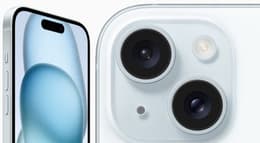
  • Rear Camera System: The iPhone 13 Pro features a versatile triple 12MP camera system, including a Wide (f/1.5), Ultra Wide (f/1.8), and a dedicated Telephoto (f/2.8) lens with 3x optical zoom. It also includes a LiDAR scanner for improved depth sensing and low-light focusing. The iPhone 15 utilizes an advanced dual-camera system with a 48MP Main sensor (f/1.6) and a 12MP Ultra Wide lens (f/2.4). The higher resolution main sensor on the iPhone 15 allows for 2x optical quality telephoto zoom by cropping the sensor.
  • Photography Features and Quality: Both models excel in everyday photography, producing detailed images with accurate colors. The iPhone 13 Pro introduced features like Cinematic Mode for video and macro photography. The iPhone 15 benefits from the Photonic Engine and Smart HDR 5, which enhance low-light performance and dynamic range, resulting in brighter and sharper images in challenging conditions. It also offers next-generation portrait features with improved depth control and the ability to convert regular photos into portraits after capture.
  • Video Recording and Audio: Both devices support 4K video recording at various frame rates, including Cinematic Mode. The iPhone 13 Pro also supports ProRes video recording. Microphone quality for calls and video recording is clear on both, and their stereo speakers provide a balanced audio experience for media consumption.

Main camera

12 megapixels

48 megapixels

Front camera

12 megapixels

12 megapixels

Miscellaneous

Beyond the core features, several practical elements contribute to the overall user experience and device functionality.

  • Connectivity and Ports: Both the iPhone 13 Pro and iPhone 15 support 5G cellular connectivity and Wi-Fi 6 for fast wireless internet. However, the iPhone 13 Pro uses Apple's proprietary Lightning port for charging and data transfer, while the iPhone 15 has transitioned to a USB-C port, offering broader compatibility with other modern electronic devices. The iPhone 15 also includes Bluetooth 5.3, an upgrade from the iPhone 13 Pro's Bluetooth 5.0, and a second-generation Ultra Wideband chip for enhanced spatial awareness.
  • Biometric Security and Sensors: Both models rely on Face ID for secure facial recognition. The iPhone 13 Pro includes a LiDAR scanner, which assists with augmented reality applications and improves autofocus in low-light conditions. The iPhone 15 does not feature LiDAR but incorporates an advanced dual-camera system that enhances depth perception for photography.
  • Physical Design and Handling: The iPhone 13 Pro has dimensions of 146.7 x 71.5 x 7.65 mm and weighs 204 grams, featuring flat edges and a stainless steel frame. The iPhone 15 measures 147.6 x 71.6 x 7.8 mm and weighs 171 grams, with a slightly lighter aluminum frame and contoured edges for a potentially more comfortable grip.

Weight

6 oz

171 oz

Screen size (inches)

6.1

6.1

Network

5G

5G

SIM card

Physical SIM + eSIM

eSIM

Carrier compatibility

Unlocked

AT&T

Connector

Lightning

USB-C (USB 2)

User sentiment for the iPhone 13 Pro often highlights its robust build quality, the versatility of its triple camera system with dedicated telephoto and ProMotion display for a smooth visual experience. Common praise points include its strong performance for its generation and reliable battery life. Some users, however, might find its weight and the presence of the notch less appealing compared to newer designs.

The iPhone 15 is frequently lauded for its adoption of the Dynamic Island, the significant upgrade to its main camera sensor, and the transition to USB-C connectivity, which many users appreciate for its universality. Its improved repairability and enhanced outdoor display brightness are also noted as positive changes. Some users accustomed to the ProMotion display might find the 60Hz refresh rate a step down, and while its camera is excellent, it lacks a dedicated telephoto lens like the 13 Pro.

Users prioritizing a consistently smooth display experience with a dedicated telephoto camera and a more premium stainless steel build may find the iPhone 13 Pro well-suited to their needs. Conversely, those who value the latest software support, a more modern design with the Dynamic Island, a higher-resolution main camera with improved low-light capabilities, and the convenience of USB-C connectivity will likely lean towards the iPhone 15. Both devices offer a quality experience, and choosing a quality-assured refurbished option for either model can be an eco-friendly alternative to purchasing new.

See all articles

Our recent comparisons