iPhone 14 Plus • Unlocked vs iPhone SE (2022) • Locked AT&T

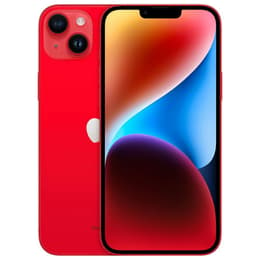
iPhone 14 Plus • Unlocked
Starting at

Refurbished price:$288.32

Versus $729.00 new

See options
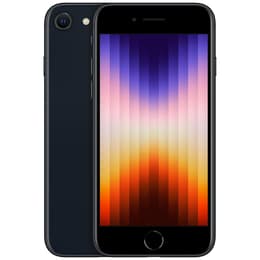
iPhone SE (2022) • Locked AT&T
Starting at

Refurbished price:$102.00

Versus $429.00 new

See options

Ratings

The iPhone 14 Plus, released in October 2022, and the iPhone SE (2022), launched in March 2022, are both Apple smartphones running on the iOS operating system. While they share the same powerful internal processing unit, they cater to different user preferences primarily through their distinct designs, screen sizes, and camera capabilities. The iPhone 14 Plus offers a larger, more immersive display and an advanced dual-camera system, whereas the iPhone SE (2022) maintains a compact form factor with a traditional home button and a single rear camera.

Scores

Durability

When considering the practical lifespan of these devices, several factors come into play, including their release dates, software support, and physical durability.

  • Release Timeline: The iPhone SE (2022) was released in March 2022, while the iPhone 14 Plus followed in October 2022. This means the iPhone 14 Plus will likely receive software updates for approximately seven months longer than the iPhone SE (2022).
  • Software Longevity: Both devices are powered by the same advanced processing unit, ensuring they can handle current and future iOS updates and applications efficiently. The iPhone SE (2022) was originally supplied with iOS 15.4 and is eligible for updates to later iOS versions, such as iOS 26 as of September 2025. The iPhone 14 Plus launched with iOS 16. Users can expect several years of continued software support for both models, with the iPhone 14 Plus having a slight edge due to its later release.
  • Durability and Repairability: The iPhone 14 Plus features a Ceramic Shield front cover and an aluminum design, offering enhanced durability and IP68 water and dust resistance, allowing submersion up to 6 meters for 30 minutes. The iPhone SE (2022) uses durable glass on the front and back, similar to the iPhone 13's back glass, and has an IP67 rating, protecting against submersion up to 1 meter for 30 minutes. Repairability for the iPhone SE (2022) is considered average, with common parts like the battery and screen being relatively accessible for replacement.

Release Year

2022

2022

Last OS Compatibility

Yes

Yes

OS

iOS

iOS

Foldable

No

No

Performance

Both the iPhone 14 Plus and the iPhone SE (2022) are equipped with the same powerful internal processing unit, leading to comparable performance in many aspects, though differences in RAM and battery size can influence real-world usage.

  • Processing Power: Both smartphones utilize a highly capable processor with a 6-core CPU and a 5-core GPU in the iPhone 14 Plus, and a 4-core GPU in the iPhone SE (2022). This ensures smooth operation for demanding applications, multitasking, and graphic-intensive games on both devices.
  • Multitasking and Storage: The iPhone 14 Plus comes with 6GB of RAM, while the iPhone SE (2022) has 4GB of RAM. This difference means the iPhone 14 Plus may handle a greater number of open applications and more intensive background tasks with slightly more fluidity. Both offer various storage options, including 128GB, 256GB, and 512GB for the 14 Plus, and 64GB, 128GB, and 256GB for the SE (2022), allowing users to choose based on their storage needs.
  • Battery Behavior: The iPhone 14 Plus is known for its extended battery life, often lasting through a full day of heavy use and sometimes even longer. The iPhone SE (2022) offers average battery life, typically sufficient for a day of moderate use, but heavy users may find themselves needing to charge more frequently.

Memory (GB)

6 GB

4 GB

Screen quality

The display experience differs significantly between these two models, primarily due to their underlying display technologies and physical dimensions.

  • Display Technology and Clarity: The iPhone 14 Plus features a 6.7-inch Super Retina XDR OLED display, providing deep blacks, vibrant colors, and a high resolution of 2778 x 1284 pixels at 458 ppi. In contrast, the iPhone SE (2022) has a 4.7-inch Retina IPS LCD display with a resolution of 1334 x 750 pixels at 326 ppi. The OLED technology in the 14 Plus offers superior contrast and color accuracy compared to the LCD panel of the SE (2022).
  • Brightness and Refresh Rate: The iPhone 14 Plus boasts a typical brightness of 800 nits and a peak HDR brightness of 1200 nits, making it highly visible even in bright outdoor conditions. The iPhone SE (2022) has a typical maximum brightness of 625 nits. Both devices feature a standard 60Hz refresh rate, providing a consistent visual experience for everyday tasks.
  • Screen Size and Viewing Experience: The larger 6.7-inch display of the iPhone 14 Plus offers a more expansive and immersive viewing experience, ideal for media consumption, gaming, and productivity. The compact 4.7-inch screen of the iPhone SE (2022) is well-suited for one-handed use and users who prefer a smaller device.

Resolution

1284 x 2778

750 x 1334

Screen type

Super Retina XDR OLED

Retina IPS LCD

Audiovisual

The camera systems on the iPhone 14 Plus and iPhone SE (2022) offer different capabilities, particularly in terms of versatility and low-light performance.

  • Rear Camera System: The iPhone 14 Plus features a dual-camera system with a 12MP main camera (f/1.5 aperture, sensor-shift OIS) and a 12MP ultra-wide camera (f/2.4 aperture, 120° field of view). It includes features like Photonic Engine for improved low-light performance and Night mode. The iPhone SE (2022) has a single 12MP wide camera (f/1.8 aperture, OIS) and lacks an ultra-wide lens. While it produces good images in decent light, it does not include Night mode, which impacts its low-light photography.
  • Front Camera and Video Recording: The iPhone 14 Plus is equipped with a 12MP TrueDepth front camera with autofocus and a faster f/1.9 aperture, enhancing selfie quality and low-light performance. The iPhone SE (2022) has a 7MP front camera. Both devices support 4K video recording at up to 60 frames per second. The iPhone 14 Plus also offers Cinematic mode up to 4K HDR at 30 fps and an Action mode for stabilized video.
  • Audio Quality: Both phones offer stereo audio recording for videos and have stereo speakers for media consumption. The iPhone 14 Plus provides a rich media experience with its larger display and capable speakers.

Main camera

12 megapixels

12 megapixels

Front camera

12 megapixels

7 megapixels

Miscellaneous

Beyond core performance and display, several practical elements differentiate the user experience of the iPhone 14 Plus and iPhone SE (2022).

  • Connectivity and Ports: Both devices support 5G connectivity and Wi-Fi 6, ensuring fast wireless speeds. They both utilize the Lightning port for charging and data transfer. The iPhone 14 Plus supports Bluetooth 5.3, while the iPhone SE (2022) supports Bluetooth 5.0.
  • Biometric Security: The iPhone 14 Plus relies on Face ID for secure authentication and unlocking. The iPhone SE (2022) features Touch ID, integrated into its traditional home button, which some users prefer for its familiarity and convenience.
  • Design and Handling: The iPhone 14 Plus has a larger form factor, measuring 160.8 x 78.1 x 7.8 mm and weighing 203 grams, offering a substantial feel and a large screen for viewing. The iPhone SE (2022) is significantly more compact and lighter at 138.4 x 67.3 x 7.3 mm and 144 grams, making it easier for one-handed use and pocketability. Both devices feature an aluminum frame and glass front and back.

Weight

7 oz

3 oz

Screen size (inches)

6.7

4.7

Network

5G

5G

SIM card

eSIM

Physical SIM + eSIM

Carrier compatibility

Unlocked

AT&T

Connector

Lightning

Lightning

The iPhone 14 Plus and iPhone SE (2022) offer distinct experiences within the Apple ecosystem, each with its own set of advantages tailored to different user needs. The iPhone 14 Plus is frequently praised for its exceptional battery life, often noted to last significantly longer than many other smartphones, and its large, vibrant OLED display provides an immersive viewing experience. Users appreciate the improved camera system, especially for low-light photography and video features like Cinematic mode. Some common criticisms for the 14 Plus often revolve around its iterative upgrades compared to its predecessor, and the absence of a high refresh rate display found in more premium models.

Conversely, the iPhone SE (2022) is lauded for its compact size and the continued presence of Touch ID, which many users find convenient. Its powerful processor, shared with the iPhone 14 Plus, ensures smooth performance for all tasks. However, its smaller, older LCD display technology and less versatile single camera system, particularly its lack of Night mode, are frequently mentioned as drawbacks. Its battery life, while adequate for many, is not as robust as that of the 14 Plus.

Users prioritizing a large, high-quality display, extended battery life, and a more advanced camera system for diverse photography and videography needs may find the iPhone 14 Plus well-suited to their preferences. It is a strong choice for those who consume a lot of media or require a device that can comfortably last through demanding usage scenarios. On the other hand, individuals who value a compact form factor, easy one-handed operation, and the familiarity of Touch ID will likely lean towards the iPhone SE (2022). It serves as an excellent option for users seeking reliable performance in a smaller package, making it ideal for those who prefer a more traditional smartphone experience. Both models, available as quality-assured refurbished options, present an eco-friendly alternative for consumers looking to make informed and sustainable choices.


See all articles

Our recent comparisons