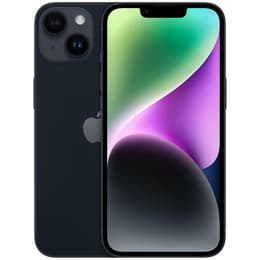
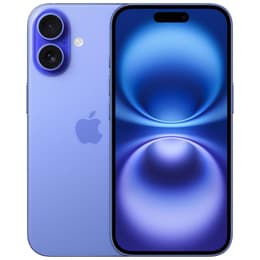
iPhone 14 • Locked T-Mobile vs iPhone 16 • Unlocked

iPhone 14 • Locked T-Mobile
Starting at

Refurbished price:$239.00

Versus $599.00 new

See options
iPhone 16 • Unlocked
Starting at

Refurbished price:$516.00

Versus $729.00 new

See options

Ratings

The iPhone 14, released in September 2022, and the iPhone 16, launched in September 2024, represent two distinct generations within Apple's smartphone lineup. While both devices operate on Apple's iOS ecosystem, the iPhone 16 introduces notable advancements in processing power, camera capabilities, and display technology, building upon the established foundation of its predecessor.

Scores

Durability

Evaluating the practical lifespan of a smartphone involves considering its release timeline, software support, and physical resilience.

  • Release Timeline and Software Longevity: The iPhone 14, released in September 2022, launched with iOS 16. Apple typically provides major iOS updates for approximately five to seven years from a device's initial release. The iPhone 16, released in September 2024, launched with iOS 18 and is guaranteed to receive software support until at least September 2029, offering a longer period of guaranteed updates compared to the iPhone 14. This extended support means the iPhone 16 will benefit from newer features and security patches for a longer duration.
  • Physical Durability: Both the iPhone 14 and iPhone 16 feature a Ceramic Shield front cover and are rated IP68 for water and dust resistance, indicating a similar level of protection against environmental elements. This rating means they can withstand submersion in up to 6 meters of water for up to 30 minutes.
  • Repairability Considerations: The iPhone 14 initially received a favorable repairability score due to its internal redesign that made the back panel more accessible. However, this score was later downgraded due to Apple's part pairing requirements, which can complicate repairs using non-authorized components. Information regarding the iPhone 16's specific repairability score is less detailed, but Apple's general approach to part pairing suggests similar considerations may apply.

Release Year

2022

2024

Last OS Compatibility

Yes

Yes

Foldable

No

No

Performance

Performance is a key differentiator between these two generations, impacting everything from app responsiveness to demanding tasks.

  • Processing Power: The iPhone 14 is equipped with the A15 Bionic chip, which was also featured in the iPhone 13 Pro models. This processor capably handles everyday applications, multitasking, and graphically intensive games with smooth performance. The iPhone 16 features the newer A18 chip, which offers significant improvements in processing speed and energy efficiency. This translates to faster app loading times, more fluid multitasking, and enhanced performance in advanced applications and gaming on the iPhone 16.
  • Battery Behavior: The iPhone 14, with an estimated 3,279 mAh battery, provides up to 20 hours of video playback and generally lasts a full day for most users. The iPhone 16 includes a larger estimated 3,561 mAh battery and benefits from the more power-efficient A18 chip. This combination results in extended battery life, with the iPhone 16 offering up to 22 hours of video playback, providing more usage time between charges.
  • System Responsiveness and Multitasking: Both devices offer a responsive user experience, but the iPhone 16's more advanced processor and potentially increased RAM (8GB compared to the iPhone 14's 6GB) contribute to a noticeably smoother experience, especially when switching between numerous applications or running demanding background processes.

Memory (GB)

6 GB

8 GB

Screen quality

Both iPhones feature high-quality displays, but the newer model brings enhancements in brightness and integration.

  • Display Technology and Clarity: Both the iPhone 14 and iPhone 16 utilize Super Retina XDR OLED displays, known for their deep blacks, vibrant colors, and excellent contrast ratios. The iPhone 14 has a resolution of 2532x1170 pixels at 460 ppi, while the iPhone 16 offers a slightly higher resolution of 2556x1179 pixels at the same 460 ppi, ensuring sharp and detailed visuals on both.
  • Brightness Levels: The iPhone 14 offers a typical brightness of 800 nits and a peak HDR brightness of 1200 nits. The iPhone 16 significantly improves upon this, featuring a typical brightness of 1000 nits, a peak HDR brightness of 1600 nits, and an impressive peak outdoor brightness of 2000 nits, enhancing readability in bright sunlight.
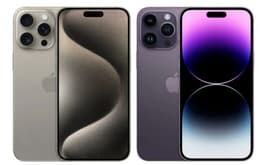
  • Screen Size and Features: Both standard models feature a 6.1-inch display. A key visual difference is the iPhone 16's adoption of the Dynamic Island, which replaces the traditional notch found on the iPhone 14, offering a more integrated and interactive notification and alert system. Both displays maintain a 60Hz refresh rate.

Resolution

1170 x 2532

1179 x 2556

Screen type

Super Retina XDR OLED

Super Retina XDR OLED

Audiovisual

The camera systems on both iPhones deliver capable photography, with the iPhone 16 introducing significant upgrades to its main sensor and features.

  • Main Camera System: The iPhone 14 features a dual 12MP camera system, including a main wide-angle lens with a f/1.5 aperture and sensor-shift optical image stabilization, and a 12MP ultra-wide lens with a f/2.4 aperture. The iPhone 16 elevates this with an advanced dual-camera system featuring a 48MP Fusion Main camera (f/1.6 aperture, sensor-shift OIS) that can capture super-high-resolution 24MP and 48MP photos, and also enables a 12MP 2x telephoto option. It retains a 12MP ultra-wide lens (f/2.2 aperture) with autofocus for macro capabilities.
  • Photography Performance: Both phones benefit from Apple's computational photography, including Photonic Engine and Deep Fusion, which enhance low-light performance and detail. The iPhone 16, with its larger 48MP main sensor and Smart HDR 5 (compared to Smart HDR 4 on the iPhone 14), offers improved image quality, particularly in challenging lighting conditions and with greater detail capture. The iPhone 16's ultra-wide camera also gains autofocus, allowing for close-up macro shots not possible on the iPhone 14.
  • Video Recording and Additional Features: Both devices support 4K video recording at up to 60 frames per second. The iPhone 16 introduces a new Camera Control button, allowing for quick access to camera functions and settings. The front-facing cameras on both are 12MP with autofocus, providing clear selfies and video calls.

Main camera

12 megapixels

48 megapixels

Front camera

12 megapixels

12 megapixels

Miscellaneous

Beyond core performance and display, several practical elements differentiate these two iPhone models.

  • Connectivity: Both the iPhone 14 and iPhone 16 support 5G cellular connectivity for fast mobile data. The iPhone 16, however, upgrades to Wi-Fi 7, offering faster wireless speeds and improved performance on compatible networks compared to the iPhone 14's Wi-Fi 6. The iPhone 16 also features a second-generation Ultra Wideband chip, enhancing spatial awareness and precision for locating other Apple devices.
  • Ports and Biometrics: The iPhone 14 utilizes Apple's proprietary Lightning port for charging and data transfer. The iPhone 16 transitions to a USB-C port, aligning with broader industry standards and offering greater compatibility with accessories. Both devices rely on Face ID for secure facial recognition.
  • Design and Handling: The iPhone 14 measures 146.7 x 71.5 x 7.8 mm and weighs 172g. The iPhone 16 has similar dimensions at 147.6 x 71.6 x 7.8 mm and weighs 170g, maintaining a comparable form factor and handling experience. A notable physical addition to the iPhone 16 is the customizable Action button, which can be programmed for various functions, and the Camera Control button for enhanced photography interaction.

Weight

6 oz

6000 oz

Screen size (inches)

6.1

6.1

Network

5G

5G

SIM card

eSIM

eSIM

Carrier compatibility

T-Mobile

Unlocked

Connector

Lightning

USB-C (USB 2)

User sentiment often highlights the iPhone 14 as a reliable and capable device, praised for its strong camera performance for its generation and consistent software experience. Common criticisms sometimes point to its 60Hz display and the continued use of the Lightning port as areas where it lagged behind some competitors even at its release. Users generally appreciate its robust build quality and the overall Apple ecosystem integration.

The iPhone 16, being two generations newer, garners praise for its significant upgrades, particularly in processing power, which ensures a highly responsive experience for demanding applications and future software. Its enhanced camera system, especially the 48MP main sensor and macro capabilities, is frequently noted as a major improvement for photography enthusiasts. The brighter display and the introduction of the Dynamic Island and Action button are also well-received additions that improve the user interface and functionality. Some users, however, might still desire a higher refresh rate display on the standard model.

For users prioritizing a device with the latest processing power, a more versatile camera system, and a longer period of guaranteed software updates, the iPhone 16 presents a compelling option. Its brighter display and modern features like the Dynamic Island and USB-C port offer a more current user experience. Conversely, individuals seeking a dependable smartphone that still delivers solid performance for everyday tasks and photography, and who may not require the absolute latest advancements, will find the iPhone 14 to be a capable choice. Both models offer a quality-assured refurbished option, providing an eco-friendly alternative for consumers.


See all articles

Our recent comparisons