iPhone 16 • Unlocked vs iPhone SE (2022) • Locked T-Mobile

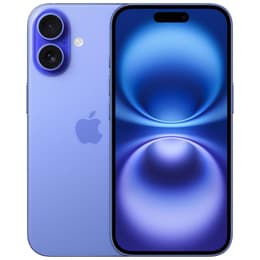
iPhone 16 • Unlocked
Starting at

Refurbished price:$516.00

Versus $729.00 new

See options
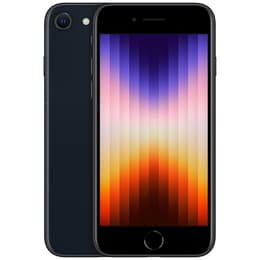
iPhone SE (2022) • Locked T-Mobile
Starting at

Refurbished price:$124.00

Versus $429.00 new

See options

Ratings

The iPhone 16, released in September 2024, and the iPhone SE (2022), launched in March 2022, represent distinct approaches within Apple's smartphone lineup. While both devices operate on the iOS platform, they cater to different user preferences through their design philosophies, display technologies, and performance capabilities. The iPhone 16 offers a modern, expansive screen experience with advanced internal components, whereas the iPhone SE (2022) maintains a compact, classic design with a physical home button.

Scores

Durability

The longevity of a smartphone is influenced by its physical durability and the duration of software support it receives. These two models offer different timelines in this regard.

  • Software Support: The iPhone 16, being a newer device, launched with iOS 18 and is confirmed to support iOS 26. It is expected to receive major software updates for at least five years, potentially extending its support until around 2029. The iPhone SE (2022), which debuted with iOS 15.4, also supports iOS 26 and is anticipated to receive updates until approximately 2029, offering a substantial lifespan for its age. [17, 25, 37, 40, 42, 44]
  • Physical Durability: The iPhone 16 features a Ceramic Shield front cover and a color-infused glass back, paired with an aluminum design, contributing to its overall resilience. The iPhone SE (2022) utilizes a glass front and back with an aerospace-grade aluminum frame, providing a premium feel and durability. Both devices carry an IP rating for water and dust resistance, with the iPhone 16 likely offering IP68 and the iPhone SE (2022) rated at IP67, meaning it can withstand immersion in up to 1 meter of water for up to 30 minutes. [1, 23, 16]
  • Repairability: While specific repairability scores can vary, both iPhones are designed with Apple's ecosystem in mind. The availability of parts and service for both models is generally good, though the newer iPhone 16 may benefit from more readily available components in the immediate future.

Release Year

2024

2022

Last OS Compatibility

Yes

Yes

Foldable

No

No

Performance

Performance is a key differentiator, with the newer iPhone 16 offering a more advanced processing unit compared to the iPhone SE (2022).

  • Processing Power: The iPhone 16 is equipped with a current-generation A18 chip, featuring a 6-core CPU, a 5-core GPU, and an upgraded 16-core Neural Engine. This architecture is designed for enhanced efficiency and speed, particularly for demanding applications and advanced AI tasks. The iPhone SE (2022) is powered by the A15 Bionic chip, which includes a 6-core CPU, a 4-core GPU, and a 16-core Neural Engine. While still capable, it represents an older generation of processing technology. [1, 3, 4, 11, 37]
  • System Responsiveness: Users of the iPhone 16 can expect exceptionally smooth app launches, fluid multitasking, and high-performance gaming due to its more powerful and efficient processor. The iPhone SE (2022) also delivers fast app launches and smooth performance for everyday tasks and most games, though it may show limitations with the most graphically intensive applications or future software advancements. [1, 11, 18]
  • Battery Behavior: The iPhone 16 is designed with improved battery life, benefiting from a larger battery and the efficiency of its A18 chip. The iPhone SE (2022) has a 2018 mAh battery, which, combined with the A15 Bionic chip's efficiency, provides adequate power for a full day of moderate use, typically around 9 hours of continuous web browsing over 5G. Heavy users of the iPhone SE (2022) may find themselves needing to charge more frequently. [14, 19, 22, 29, 31, 38]

Memory (GB)

8 GB

4 GB

Screen quality

The visual experience on these two iPhones differs significantly due to their display technologies and designs.

  • Display Technology and Size: The iPhone 16 features a 6.1-inch Super Retina XDR OLED display, offering deep blacks, vibrant colors, and a high contrast ratio. It incorporates a Dynamic Island for notifications and interactions. In contrast, the iPhone SE (2022) has a smaller 4.7-inch Retina HD LCD display, characterized by its classic design with prominent bezels and a physical home button. [1, 11, 15, 16, 23, 27, 30]
  • Resolution and Clarity: The iPhone 16 provides a 2556x1179-pixel resolution at 460 pixels per inch (ppi), resulting in sharp and detailed visuals. The iPhone SE (2022) offers a 1334x750-pixel resolution at 326 ppi, which is clear for its size but less dense than the iPhone 16's display. [1, 16, 23, 30]
  • Brightness and Refresh Rate: Both displays support True Tone and Wide Color (P3) for accurate color representation. The iPhone 16's OLED panel typically offers higher peak brightness for better outdoor visibility and HDR content. The iPhone SE (2022) has a typical maximum brightness of 625 nits. The iPhone 16 features a standard refresh rate, while the iPhone SE (2022) also operates at a standard refresh rate, meaning neither offers the smoother scrolling experience of higher refresh rate displays found in Pro models. [1, 16, 23, 27, 30, 37]

Resolution

1179 x 2556

750 x 1334

Screen type

Super Retina XDR OLED

Retina IPS LCD

Audiovisual

Camera capabilities vary between the two models, with the iPhone 16 offering a more comprehensive and advanced system.

  • Rear Camera System: The iPhone 16 is equipped with a dual-lens rear camera system, including a 48-megapixel main camera. Its vertical camera arrangement enables features like spatial video recording. The iPhone SE (2022) features a single 12-megapixel wide camera with an f/1.8 aperture. [7, 12, 19, 20, 37]
  • Photography Performance: The iPhone 16 benefits from its newer processor and advanced sensors, leading to improved low-light performance, greater detail, and more sophisticated computational photography features. The iPhone SE (2022), while having a single lens, leverages the A15 Bionic chip for features like Smart HDR 4, Deep Fusion, and Photographic Styles, resulting in good image quality in well-lit conditions. However, it lacks a dedicated Night mode, which can impact low-light photography. [7, 18, 20, 32]
  • Video Recording and Front Camera: Both devices support 4K video recording at up to 60 frames per second. The iPhone 16's camera system is designed to offer more advanced video capabilities, including spatial video. The iPhone SE (2022) has a 7-megapixel front-facing camera, capable of 1080p video recording, and supports Portrait mode for people. The iPhone 16's front camera is expected to offer higher resolution and more advanced features. [7, 15, 18, 33]

Main camera

48 megapixels

12 megapixels

Front camera

12 megapixels

7 megapixels

Miscellaneous

Beyond core features, several practical elements distinguish the iPhone 16 and iPhone SE (2022).

  • Connectivity and Ports: The iPhone 16 supports the latest wireless standards, including 5G, Wi-Fi 7, and Bluetooth 5.3, and features a USB-C port for charging and data transfer. It also uses eSIM exclusively in the US. The iPhone SE (2022) supports 5G, Wi-Fi 6, and Bluetooth 5.0, and retains the Lightning port. It supports dual SIM with one physical nano-SIM and one eSIM. [3, 10, 15, 16, 37]
  • Biometric Security: The iPhone 16 utilizes Face ID for secure authentication and unlocking. The iPhone SE (2022) features Touch ID, integrated into its physical home button, offering a familiar and reliable fingerprint-based security method. [1, 9, 37]
  • Design and Handling: The iPhone 16 has a modern, all-screen design with dimensions of 147.6 x 71.6 x 7.8 mm and a weight of 170 grams. It includes a new Capture Button for camera functions. The iPhone SE (2022) maintains a compact form factor, measuring 138.4 x 67.3 x 7.3 mm and weighing 144 grams, making it easier for one-handed use and pocketability. [2, 6, 9, 13, 16, 23, 37]

Weight

6000 oz

3 oz

Screen size (inches)

6.1

4.7

Network

5G

5G

SIM card

eSIM

Physical SIM + eSIM

Carrier compatibility

Unlocked

T-Mobile

Connector

USB-C (USB 2)

Lightning

Choosing between the iPhone 16 and the iPhone SE (2022) involves weighing modern advancements against a classic, compact design. User feedback for the iPhone SE (2022) often praises its powerful performance for its size and the familiarity of Touch ID, making it a solid choice for those who prefer a smaller device with robust internal capabilities. However, common criticisms include its dated design, smaller LCD screen, and less versatile camera system, particularly the absence of a Night mode, which can be a significant drawback for low-light photography. [18, 20, 32]

The iPhone 16, on the other hand, is generally lauded for its cutting-edge display, advanced camera features, and superior processing power, which are well-suited for demanding applications and future technologies like Apple Intelligence. Its modern design with Face ID and USB-C connectivity aligns with current smartphone trends. Potential considerations for the iPhone 16 might revolve around its larger size, which some users find less convenient for one-handed operation compared to the iPhone SE (2022).

Users prioritizing a large, vibrant OLED display, a highly capable multi-lens camera system, and the latest performance for intensive tasks and AI features will find the iPhone 16 well-suited to their needs. Conversely, users who value a compact form factor, the tactile feedback of a physical home button with Touch ID, and a device that handles everyday tasks efficiently without the need for the absolute latest features, may prefer the iPhone SE (2022). Both models offer a quality Apple experience, and for those considering a more sustainable choice, a quality-assured refurbished option for either device can provide an eco-friendly alternative.

See all articles

Our recent comparisons