Compare models
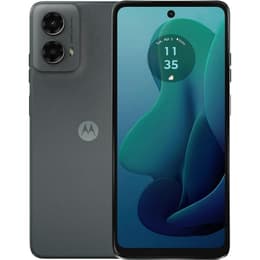
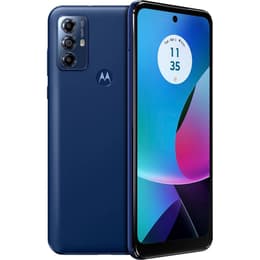
Motorola Moto G (2024) • Unlocked vs Motorola Moto G Play (2023) • Unlocked
- 1-year warranty
- Free standard shipping
- Free 30-day returns
Differences at a glance
The Motorola Moto G (2024) and the Motorola Moto G Play (2023) are both smartphones designed to offer essential features for everyday use. Released in March 2024, the Moto G (2024) brings updated internal components and 5G connectivity, while the Moto G Play (2023), launched in January 2023, focuses on a robust battery experience and affordability. Both devices operate on the Android platform, providing a user-friendly experience with Motorola's signature clean interface.
Available Models
Color
Storage (GB)
Scores
Durability
When considering the long-term usability of these devices, their release timelines and software support are key factors. The Moto G (2024) is the newer device, offering a longer expected period of software updates and security patches compared to its predecessor.
- Release Timeline: The Moto G (2024) was released in March 2024, making it a more recent option, while the Moto G Play (2023) became available in January 2023.
- OS Support: The Moto G (2024) launched with Android 14, providing a more current operating system and likely extending its support window further into the future. The Moto G Play (2023) initially ran on Android 12, with an expected upgrade to Android 13.
- Practical Lifespan: Both devices feature water-repellent designs, offering some protection against splashes. The Moto G (2024) has a glass front with a silicone polymer back, while the Moto G Play (2023) features a plastic body.
Release Year
2024
2022
Last OS Compatibility
Yes
No
OS
Android
Android
Foldable
No
No
Performance
The performance of a smartphone directly impacts daily tasks, from launching applications to multitasking. These two Motorola devices offer different levels of responsiveness and capability.
- Processor Capabilities: The Moto G (2024) is equipped with a more capable processor, which translates to smoother operation and better handling of demanding applications and games. The Moto G Play (2023) utilizes a processor that is suitable for basic tasks like web browsing and social media, but users may experience delays with more intensive applications or heavy multitasking.
- System Responsiveness: Users of the Moto G (2024) generally report a more fluid user interface and quicker app loading times. In contrast, the Moto G Play (2023) has been noted by some users to exhibit occasional sluggishness and lag, even with its 90Hz display, particularly when multiple apps are open.
- Storage and RAM: The Moto G (2024) comes with 4GB of RAM and 128GB of internal storage, which can be expanded with a microSD card. The Moto G Play (2023) offers 3GB of RAM and 32GB of internal storage, also expandable via microSD, which might be a limiting factor for users who store many apps or large media files.
Screen quality
The display is a primary interface for any smartphone, and both models offer a large viewing area with some distinctions in their visual experience.
- Display Technology and Size: Both the Moto G (2024) and Moto G Play (2023) feature IPS LCD screens. The Moto G (2024) has a 6.6-inch display, slightly larger than the 6.5-inch screen on the Moto G Play (2023).
- Resolution and Clarity: Both devices offer HD+ resolution (720 x 1612 pixels for the Moto G 2024 and 720 x 1600 pixels for the Moto G Play 2023), which provides adequate clarity for general content consumption. However, some users note that the resolution on both can appear less sharp compared to higher-resolution displays.
- Refresh Rate and Brightness: The Moto G (2024) features a 120Hz refresh rate, offering smoother scrolling and animations. The Moto G Play (2023) has a 90Hz refresh rate. In terms of brightness, the Moto G (2024)'s display has been described as somewhat dim, which can affect visibility in direct sunlight.
Resolution
720 x 1612
720 x 1600
Screen type
IPS LCD
IPS LCD
Audiovisual
For capturing moments and staying connected through video calls, the camera systems on these phones present different capabilities.
- Rear Camera System: The Moto G (2024) features a dual-camera setup with a 50MP main sensor and a 2MP macro lens. The Moto G Play (2023) comes with a triple-camera system, including a 16MP main sensor, a 2MP macro lens, and a 2MP depth sensor.
- Photography Performance: The 50MP main sensor on the Moto G (2024) generally offers better detail in well-lit conditions. User reviews for the Moto G Play (2023) often mention that its camera performance is subpar, with photos appearing fuzzy, especially in low-light environments.
- Front Camera and Video: The Moto G (2024) has an 8MP front-facing camera, while the Moto G Play (2023) has a 5MP front camera. Both devices are capable of recording video, with the Moto G (2024) offering 1080p at 30fps and the Moto G Play (2023) supporting 1080p at 30/60fps for the main camera and 1080p at 30fps for the front camera.
Main camera
50 megapixels
16 megapixels
Front camera
8 megapixels
5 megapixels
Miscellaneous
Beyond core features, several practical elements contribute to the overall user experience and connectivity of these smartphones.
- Connectivity: A significant difference is the Moto G (2024)'s support for 5G networks, offering faster data speeds where available. The Moto G Play (2023) is limited to 4G connectivity. Both devices support Wi-Fi (802.11 a/b/g/n/ac) and Bluetooth (5.1 for Moto G 2024, unspecified for Moto G Play 2023 but typically similar versions). The Moto G (2024) also includes NFC for contactless payments.
- Ports and Sensors: Both phones retain a 3.5mm headphone jack and use a USB-C port for charging and data transfer. They both feature side-mounted fingerprint sensors for secure unlocking.
- Design and Handling: The Moto G (2024) has dimensions of 164.4 x 75 x 8.2 mm and weighs 194 grams, featuring a silicone polymer (eco-leather) back. The Moto G Play (2023) measures 165.8 x 76.5 x 9.2 mm and weighs 207 grams, with a plastic body. The Moto G (2024) is slightly thinner and lighter, potentially offering a more comfortable grip.
Weight
7 oz
8 oz
Screen size (inches)
6.6
6.5
Network
5G
LTE
SIM card
Physical SIM
Physical SIM
Carrier compatibility
Unlocked
Unlocked
Connector
USB-C
USB-C + Jack 3.5mm
What the community thinks
User feedback for the Moto G (2024) often highlights its strong battery life, decent performance for everyday tasks, and the inclusion of 5G connectivity as positive aspects. Some users, however, have noted that its display can be dim outdoors and that performance can be sluggish when heavily multitasking. The Moto G Play (2023) is frequently praised for its exceptional battery longevity and the presence of a headphone jack and expandable storage. Conversely, common criticisms include its noticeably slower performance, especially with more demanding applications, and less impressive camera quality.
Users prioritizing faster mobile data speeds and a more responsive overall experience for a variety of applications may find the Moto G (2024) better suited to their needs. Its newer operating system and more powerful processor offer a more current smartphone experience. On the other hand, individuals who prioritize extended battery life, a traditional headphone jack, and expandable storage for media, and primarily use their phone for basic communication and light browsing, might lean towards the Moto G Play (2023). Both devices represent solid options within their respective segments, and considering a quality-assured refurbished option for either model can be an eco-friendly alternative to purchasing new.