
iPhone 12 Pro • Unlocked vs iPhone 12 Pro Max • Unlocked

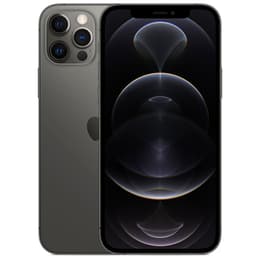
iPhone 12 Pro • Unlocked
Starting at

Refurbished price:$245.00

Versus $799.00 new

See options
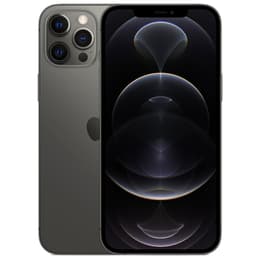
iPhone 12 Pro Max • Unlocked
Starting at

Refurbished price:$297.00

Versus $899.00 new

See options

Ratings

The iPhone 12 Pro and iPhone 12 Pro Max, both released in late 2020, represent Apple's premium smartphone offerings from that year. While they share a core design and the same operating system, iOS, their primary distinctions lie in physical size, battery capacity, and advanced camera capabilities. The iPhone 12 Pro was released on October 23, 2020, and the iPhone 12 Pro Max followed on November 13, 2020.

Scores

Durability

Both the iPhone 12 Pro and iPhone 12 Pro Max were released in 2020, meaning they share a similar timeline for software support. Apple typically provides iOS updates for approximately 5-6 years from a device's release, suggesting these models will continue to receive major software updates for a few more years.

  • Software Longevity: Both devices launched with iOS 14 and are compatible with the latest iOS versions, ensuring access to new features and security updates for the foreseeable future.
  • Physical Durability: Both models feature Ceramic Shield front covers, which Apple stated offered four times better drop protection compared to previous generations. They also share an IP68 rating for water and dust resistance, allowing submersion in up to 6 meters of water for 30 minutes.
  • Repairability: While specific repairability scores can vary, both devices are constructed with similar internal layouts and components, suggesting comparable ease of repair for common issues.

Release Year

2020

2020

Last OS Compatibility

Yes

Yes

OS

iOS

iOS

Foldable

No

No

Performance

The iPhone 12 Pro and iPhone 12 Pro Max are equipped with the same internal processing unit and RAM, leading to largely identical performance in most tasks. Both offer a smooth user experience across applications and multitasking.

  • Storage Options: Both models were available with 128GB, 256GB, and 512GB of internal storage, providing ample space for apps, photos, and videos.
  • System Responsiveness: Users can expect quick app loading times and fluid navigation, even with demanding applications or multiple apps running simultaneously.
  • Battery Behavior: The iPhone 12 Pro Max, due to its larger physical size, houses a significantly larger battery (3,687 mAh) compared to the iPhone 12 Pro (2,815 mAh). This translates to noticeably longer battery life for the Pro Max, with some tests showing it lasting nearly two hours longer during continuous use. For instance, the iPhone 12 Pro Max can offer up to 20 hours of video playback, while the iPhone 12 Pro provides up to 17 hours.

Memory

6 GB

6 GB

Screen quality

Both the iPhone 12 Pro and iPhone 12 Pro Max feature Super Retina XDR OLED displays, known for their vibrant colors and deep blacks.

  • Display Size and Resolution: The primary difference is physical size; the iPhone 12 Pro has a 6.1-inch display with a resolution of 2532 x 1170 pixels (460 ppi), while the iPhone 12 Pro Max boasts a larger 6.7-inch display with a resolution of 2778 x 1284 pixels (458 ppi). The pixel density is very similar, meaning both offer sharp visuals.
  • Brightness and Clarity: Both displays achieve a typical maximum brightness of 800 nits and a peak brightness of 1200 nits for HDR content, ensuring good visibility in various lighting conditions.
  • Refresh Rate: Both models feature a standard 60Hz refresh rate.

Resolution

1170 x 2532

1284 x 2778

Screen type

Super Retina XDR OLED

Super Retina XDR OLED

Audiovisual

While both devices share a triple 12MP camera system (wide, ultra-wide, and telephoto) along with a LiDAR scanner, the iPhone 12 Pro Max offers some distinct advantages in its camera hardware.

  • Main Wide Camera: The iPhone 12 Pro Max features a 47% larger sensor on its main wide camera, with larger 1.7µm pixels, compared to the iPhone 12 Pro's 1.4µm pixels. This larger sensor allows the Pro Max to capture significantly more light, resulting in improved low-light performance, with Apple claiming an 87% improvement.
  • Telephoto Lens and Stabilization: The iPhone 12 Pro Max also has a longer telephoto lens, offering 2.5x optical zoom (65mm focal length) compared to the iPhone 12 Pro's 2x optical zoom (52mm focal length). Additionally, the Pro Max introduced sensor-shift optical image stabilization for its wide camera, which stabilizes the sensor itself rather than the lens, potentially leading to steadier shots and videos, especially in challenging conditions.
  • Video Recording and Features: Both models support Dolby Vision HDR video recording at 4K and 60fps. The LiDAR scanner on both enhances low-light autofocus and enables advanced augmented reality experiences.

Main camera

12 megapixels

12 megapixels

Front camera

12 megapixels

12 megapixels

Miscellaneous

Beyond the core features, several practical elements differentiate these two devices, primarily related to their physical form and connectivity.

  • Dimensions and Weight: The iPhone 12 Pro is more compact, measuring 146.7 x 71.5 x 7.4 mm and weighing 189 grams. The iPhone 12 Pro Max is larger and heavier at 160.8 x 78.1 x 7.4 mm and 228 grams, making it a more substantial device to handle.
  • Connectivity: Both devices support 5G connectivity, including both sub-6GHz and mmWave bands, offering access to faster network speeds where available. They also feature Wi-Fi 6 and Bluetooth 5.0.
  • Charging and Ports: Both models utilize the Lightning port for charging and data transfer and support MagSafe for wireless charging and accessories. They also include Face ID for secure authentication.

Weight

7 oz

7 oz

Screen size (inches)

6.1

6.7

Network

5G

5G

SIM card

Physical SIM + eSIM

Physical SIM + eSIM

Carrier compatibility

Unlocked

Unlocked

Connector

Lightning

Lightning

User feedback often highlights the iPhone 12 Pro Max's superior battery life as a significant advantage, particularly for those who are heavy users or frequently stream media. Its larger display is also frequently praised for providing a more immersive viewing experience, especially for video content and productivity tasks. Some users also appreciate the subtle camera enhancements, particularly in low-light scenarios and with the extended telephoto zoom.

Conversely, the iPhone 12 Pro is often lauded for its more manageable size and weight, making it easier for one-handed use and pocketability. While its battery life is shorter than the Max, many users find it sufficient for a full day of typical use. Criticisms for both models often revolve around the 60Hz display refresh rate, which some users felt was a drawback compared to competing devices at the time of their release.

Users prioritizing extended battery life, a larger display for media consumption or work, and the most advanced camera system of the two may find the iPhone 12 Pro Max better suited to their needs. Those who value a more compact form factor, easier one-handed operation, and still excellent performance and camera capabilities will likely prefer the iPhone 12 Pro. Both devices offer a robust experience, and choosing between them often comes down to personal preference regarding size and the importance of marginal gains in battery and camera performance. For those considering these models, exploring quality-assured refurbished options can be an eco-friendly alternative to extend the life cycle of these capable smartphones.
See all articles

Our recent comparisons