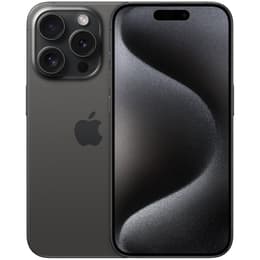

iPhone 13 • Unlocked vs iPhone 15 Pro • Unlocked

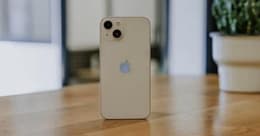
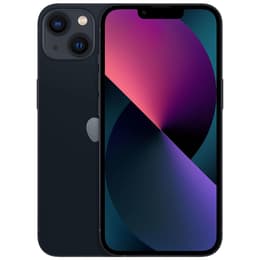
iPhone 13 • Unlocked
Starting at

Refurbished price:$226.99

Versus $629.00 new

See options
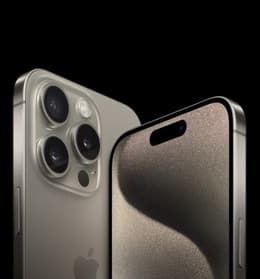
iPhone 15 Pro • Unlocked
Starting at

Refurbished price:$439.99

Versus $999.00 new

See options

Ratings

The iPhone 13, released in September 2021, and the iPhone 15 Pro, launched in September 2023, represent different tiers and generations within Apple's smartphone lineup. While both devices operate on Apple's iOS ecosystem, the iPhone 15 Pro introduces a more advanced processor, a versatile camera system, and several user experience enhancements that distinguish it from its predecessor.

Scores

Durability

When considering the long-term usability of these devices, several factors come into play, including their initial release, software support, and repairability.

  • Release Timeline: The iPhone 13 was released in September 2021, while the iPhone 15 Pro followed two years later in September 2023. Both models were discontinued in September 2024, coinciding with the launch of newer iPhone models.
  • Software Longevity: The iPhone 13 launched with iOS 15 and is compatible with iOS 26, the current version as of March 2026. The iPhone 15 Pro, starting with iOS 17, also supports iOS 26 and is expected to receive major software updates for a minimum of five years, extending support to at least 2028. This suggests the iPhone 15 Pro will likely receive software updates for a longer period.
  • Repairability: The iPhone 13 initially received a repairability score of 5 out of 10 from iFixit, which was later adjusted to 6 out of 10 after a software update addressed issues with Face ID functionality post-screen replacement. The iPhone 15 Pro has seen varied repairability scores, with some sources giving it a 7 out of 10 due to design changes like easier back glass replacement, while others rated it lower at 4 out of 10, citing challenges with internal component stacking and software-related hurdles for independent repairs.

Release Year

2021

2023

Last OS Compatibility

Yes

Yes

OS

iOS

iOS

Foldable

No

No

Performance

The performance of a smartphone is largely determined by its internal processing capabilities, memory, and battery efficiency, all of which impact daily usage.

  • Processing Power: The iPhone 15 Pro features a newer generation processor compared to the iPhone 13. This translates to more responsive app loading, smoother multitasking, and enhanced performance in demanding applications and games on the iPhone 15 Pro. The newer chip also contributes to improved thermal efficiency, allowing for sustained high performance.
  • Multitasking and Storage: The iPhone 15 Pro includes 8GB of RAM, double the 4GB found in the iPhone 13. This increased memory allows the iPhone 15 Pro to handle more applications simultaneously and switch between them more fluidly without needing to reload content. Both devices offer various storage options, with the iPhone 15 Pro extending to a 1TB option in addition to the 128GB, 256GB, and 512GB capacities available on both models.
  • Battery Behavior: The iPhone 15 Pro is equipped with a 3274 mAh battery, a slight increase from the iPhone 13's 3227 mAh battery. In practical terms, the iPhone 15 Pro offers up to 23 hours of video playback and 20 hours of streamed video playback, compared to the iPhone 13's 19 hours of video playback and 15 hours of streamed video. Both models provide up to 75 hours of audio playback.

Memory

4 GB

8 GB

Screen quality

The visual experience on a smartphone is heavily influenced by its display technology, resolution, and adaptive features.

  • Display Technology and Size: Both the iPhone 13 and iPhone 15 Pro feature 6.1-inch Super Retina XDR OLED displays, offering deep blacks and vibrant colors. The OLED technology provides excellent contrast and color accuracy for both devices.
  • Brightness and Clarity: The iPhone 13 offers a typical brightness of 800 nits and a peak HDR brightness of 1200 nits. The iPhone 15 Pro significantly enhances this with a typical brightness of 1000 nits, a peak HDR brightness of 1600 nits, and an impressive 2000 nits for peak outdoor brightness, improving visibility in bright sunlight. Both displays have a resolution of approximately 460 pixels per inch, ensuring sharp text and images.
  • Smoothness and Features: A key difference lies in the refresh rate. The iPhone 13 has a standard 60Hz refresh rate. The iPhone 15 Pro, however, incorporates ProMotion technology, offering an adaptive refresh rate that can scale from 1Hz to 120Hz. This results in noticeably smoother scrolling, more fluid animations, and a more responsive feel, especially during gaming or fast-paced content. The iPhone 15 Pro also introduces the Dynamic Island, replacing the traditional notch, and an Always-On display feature.

Resolution

1170 x 2532

1179 x 2556

Screen type

Super Retina XDR OLED

LTPO Super Retina XDR OLED

Audiovisual

The camera systems on both iPhones are capable, but the iPhone 15 Pro offers a more advanced and versatile setup for photography and videography.

  • Rear Camera System: The iPhone 13 features a dual 12MP camera system with a wide (main) lens and an ultra-wide lens. The main camera includes sensor-shift optical image stabilization for improved low-light performance and stability. The iPhone 15 Pro steps up with a triple camera system, including a 48MP main sensor, a 12MP ultra-wide lens, and a 12MP 3x telephoto lens. The 48MP main camera on the 15 Pro can capture more detail and offers a 2x telephoto option by cropping the sensor.
  • Photography Features: Both models include features like Night mode, Deep Fusion, and Photographic Styles. The iPhone 13 uses Smart HDR 4. The iPhone 15 Pro benefits from a newer generation of computational photography, offering enhanced Smart HDR and the ability to capture 48MP HEIF photos. The 15 Pro also allows users to customize default focal lengths for the main camera and automatically captures depth information for easier post-capture portrait editing.
  • Video Capabilities: The iPhone 13 supports Cinematic Mode at 1080p at 30 frames per second and HDR video recording with Dolby Vision up to 4K at 60 frames per second. The iPhone 15 Pro elevates video recording with Cinematic Mode up to 4K HDR at 30 frames per second, Action Mode for stabilized footage, and the ability to record ProRes video up to 4K at 60 frames per second with external recording. It also supports Log video recording and spatial video.

Main camera

12 megapixels

48 megapixels

Front camera

12 megapixels

12 megapixels

Miscellaneous

Beyond core performance and display, several practical elements contribute to the overall user experience and device utility.

  • Connectivity and Ports: Both devices support 5G cellular connectivity and Wi-Fi 6. The iPhone 15 Pro upgrades to Wi-Fi 6E, offering potentially faster and more stable wireless connections in compatible environments. A significant change is the port: the iPhone 13 uses Apple's proprietary Lightning connector, while the iPhone 15 Pro adopts the universal USB-C port, which also supports faster data transfer speeds (USB 3.2 Gen 2) compared to the iPhone 13's Lightning port.
  • Build and Handling: The iPhone 13 features an aluminum frame and a glass back. The iPhone 15 Pro utilizes a titanium frame, which offers a high strength-to-weight ratio, and a textured matte glass back. In terms of dimensions, the iPhone 13 measures 146.7 x 71.5 x 7.65 mm and weighs around 173-174 grams. The iPhone 15 Pro is slightly shorter and narrower at 146.6 x 70.6 x 8.25 mm, but slightly heavier at 187 grams. The iPhone 15 Pro also introduces a customizable Action Button, replacing the traditional mute switch.
  • Additional Sensors: Both devices feature Face ID for secure authentication. The iPhone 15 Pro includes a LiDAR scanner, which enhances augmented reality experiences and improves autofocus in low-light photography.

Weight

4 oz

187 oz

Screen size (inches)

6.1

6.1

Network

5G

5G

SIM card

Physical SIM + eSIM

eSIM

Carrier compatibility

Unlocked

Unlocked

Connector

Lightning

USB-C (USB 3)

User feedback often highlights the practical implications of a device's features. For the iPhone 13, common praise points include its reliable performance for everyday tasks and its capable camera system, which delivers consistent results in various conditions. Users appreciate its solid battery life for its generation and the familiar, durable design. Some criticisms, however, point to the 60Hz display feeling less fluid compared to newer phones and the Lightning port being less versatile than USB-C.

The iPhone 15 Pro, on the other hand, is frequently lauded for its significantly upgraded camera capabilities, particularly the versatility offered by the telephoto lens and advanced video features. The ProMotion display's smoothness and the Dynamic Island are often cited as major improvements to the user experience. The shift to USB-C is also a welcome change for many, offering broader compatibility. Some users note the increased weight compared to non-Pro models, despite the titanium frame, and the initial learning curve for the Action Button.

Users prioritizing a smooth visual experience, advanced photography and videography tools, and future-proof connectivity with USB-C will find the iPhone 15 Pro well-suited to their needs. Its enhanced processing power and additional RAM also make it a strong choice for demanding applications and extensive multitasking. Conversely, users seeking a dependable smartphone for general use, with a proven camera system and robust software support, may find the iPhone 13 to be a practical option. For those considering either device, exploring quality-assured refurbished options can provide an eco-friendly alternative.
See all articles

Our recent comparisons