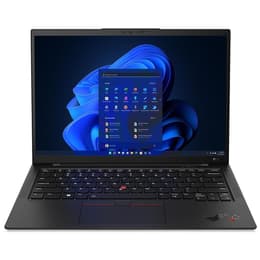
Dell Latitude 5520 15" vs Lenovo ThinkPad X1 Carbon G10 14"

Dell Latitude 5520 15"
Starting at

Refurbished price:$285.00

Versus $2,792.00 new

See options
Lenovo ThinkPad X1 Carbon G10 14"
Starting at

Refurbished price:$835.00

Versus $2,303.98 new

See options

Ratings

The Dell Latitude 5520, released in 2021, and the Lenovo ThinkPad X1 Carbon Gen 10, launched in 2022, are both business-oriented laptops designed for productivity. While the Latitude 5520 offers a larger screen and a focus on internal upgradeability, the ThinkPad X1 Carbon Gen 10 emphasizes extreme portability and a premium, lightweight design. Both devices operate on the Windows platform, providing a familiar software environment for business users.

Scores

Durability

The practical lifespan of a laptop is influenced by its build quality, software support, and ease of maintenance. These two models, designed for professional use, offer robust construction and ongoing software updates.

  • Release Timeline: The Dell Latitude 5520 was introduced in 2021, making it slightly older than the Lenovo ThinkPad X1 Carbon Gen 10, which debuted in 2022. This difference means the ThinkPad X1 Carbon Gen 10 may receive operating system updates for a slightly longer period.
  • Software Longevity: Both laptops run Windows, benefiting from Microsoft's long-term support for its operating system. As business-grade machines, they typically receive consistent driver and firmware updates from their respective manufacturers, contributing to their functional longevity.
  • Repairability and Upgrades: The Dell Latitude 5520 generally offers good repairability, with accessible internal components like RAM and storage, allowing for potential upgrades to extend its useful life. The Lenovo ThinkPad X1 Carbon Gen 10, while featuring an accessible SSD for storage upgrades, has its RAM soldered to the motherboard, limiting memory upgrade options.
  • Build Materials: The Latitude 5520 incorporates bioplastics in its chassis, contributing to a sturdy feel. The ThinkPad X1 Carbon Gen 10 utilizes carbon fiber and magnesium, known for their combination of lightweight properties and durability.

Release Year

2020

2022

Last Os Compatibility

Yes

Yes

OS

Windows 11

Windows 11

Performance

Performance in these laptops is a balance of processing power, memory, storage speed, and battery efficiency, impacting how smoothly daily tasks and more demanding applications run.

  • Processing Capabilities: The Dell Latitude 5520 is equipped with 11th Generation Intel processors, capable of handling general office tasks and moderate workloads efficiently. The Lenovo ThinkPad X1 Carbon Gen 10 features 12th Generation Intel processors, which generally offer improved multi-core performance for more demanding applications and multitasking. However, some users have noted that the ThinkPad X1 Carbon Gen 10 can experience thermal throttling under sustained heavy loads, potentially affecting consistent high performance.
  • Memory and Storage: The Latitude 5520 provides two SODIMM slots, allowing for user-upgradeable DDR4 RAM up to 64GB, which is beneficial for future-proofing and intensive multitasking. Both models offer fast SSD storage, with the ThinkPad X1 Carbon Gen 10 supporting PCIe Gen 4 drives, and the Latitude 5520 also having PCIe Gen 4 options, ensuring quick boot times and rapid application loading. The ThinkPad X1 Carbon Gen 10's LPDDR5 RAM is soldered, with configurations up to 32GB.
  • Battery Behavior: The Dell Latitude 5520 generally delivers good battery life, with typical usage ranging from 8 to 12 hours, and some reports indicating over 14 hours for web browsing. The Lenovo ThinkPad X1 Carbon Gen 10 has received mixed reviews regarding battery life; while some configurations offer decent endurance, others, particularly with higher-resolution displays or under heavier use, may provide shorter runtimes, often in the range of 5 to 9 hours.

Memory (GB)

8 GB

16 GB

Processor

Core i5-1135G7

Core i5-1235U

Graphic card

Integrated Graphics

Integrated Graphics

Screen quality

The display is a primary interface for user interaction, and differences in technology, resolution, and size can significantly impact the viewing and working experience.

  • Display Technology and Resolution: The Dell Latitude 5520 typically features 15.6-inch Full HD (1920x1080) IPS panels, with some configurations offering 4K UHD IPS options. It is important to note that some base models of the Latitude 5520 may come with a lower-resolution TN panel. The Lenovo ThinkPad X1 Carbon Gen 10 offers a 14-inch display with a 16:10 aspect ratio, providing more vertical screen space, and a wider range of options including WUXGA (1920x1200) IPS, 2.2K, 2.8K OLED (2880x1800), and 4K UHD (3840x2400) IPS panels.
  • Brightness and Clarity: Both laptops offer display options that can reach around 400 nits of brightness, making them suitable for indoor use and moderately bright environments. The OLED options on the ThinkPad X1 Carbon Gen 10 provide superior contrast and vibrant colors. However, some users have found that even 400-nit screens on the X1 Carbon Gen 10 can be challenging to view comfortably in direct sunlight.
  • Refresh Rate and Viewing Experience: Both models typically feature a standard 60Hz refresh rate. The larger 15.6-inch screen of the Latitude 5520 offers a more expansive viewing area, which can be beneficial for tasks requiring more screen real estate. The ThinkPad X1 Carbon Gen 10's 14-inch display with a 16:10 aspect ratio is often preferred for productivity due to its taller screen, reducing the need for excessive scrolling.

Resolution

1366 x 768

1920 x 1200

Screen type

IPS

IPS

Camera

Audiovisual

In an era of frequent virtual meetings and remote collaboration, the quality of integrated cameras, microphones, and speakers is increasingly important for a professional laptop.

  • Webcam Quality: The Dell Latitude 5520 includes an HD camera, which is suitable for standard video conferencing, and offers an optional IR sensor for facial recognition. The Lenovo ThinkPad X1 Carbon Gen 10 features an upgraded Full HD (1080p) webcam, providing clearer video quality for virtual meetings, and also includes optional IR for Windows Hello facial recognition.
  • Microphone Performance: The Latitude 5520 is equipped with dual array microphones. The ThinkPad X1 Carbon Gen 10 enhances audio input with a quad-microphone array, featuring 360-degree far-field pickup and Dolby Voice technology, which helps in noise cancellation and clearer voice capture during calls.
  • Speaker Output: While the Dell Latitude 5520's speakers are generally considered adequate for everyday use, they may not offer a particularly rich audio experience. The Lenovo ThinkPad X1 Carbon Gen 10 incorporates four Dolby Atmos speakers, which deliver a more immersive and higher-quality audio experience for media consumption and presentations.

Miscellaneous

Beyond core performance and display, practical features like connectivity, port selection, and physical design contribute significantly to a laptop's overall utility and user experience.

  • Connectivity Options: Both laptops support modern wireless standards. The Dell Latitude 5520 offers Wi-Fi 6 and Bluetooth 5.2. The Lenovo ThinkPad X1 Carbon Gen 10 supports Wi-Fi 6E and Bluetooth 5.1 or 5.2. Both also offer optional cellular connectivity (LTE/5G WWAN) for staying connected on the go.
  • Port Selection: The Latitude 5520 provides a comprehensive selection including two USB 3.2 Gen 1 ports (one with PowerShare), two Thunderbolt 4 ports (or Thunderbolt 3 depending on the processor generation), an HDMI port (2.0 or 1.4), an RJ45 Ethernet port, a microSD card slot, and a universal audio jack. The ThinkPad X1 Carbon Gen 10 includes two USB-A 3.2 Gen 1 ports, two Thunderbolt 4 ports, an HDMI port (2.0 or 2.1), and a headphone/mic combo jack, along with an optional nano-SIM slot.
  • Security Features: Both devices integrate essential security features. They typically include fingerprint readers, often embedded in the power button, and offer optional IR cameras for Windows Hello facial recognition, providing convenient and secure login methods.
  • Portability and Design: The Dell Latitude 5520, with its 15.6-inch screen, weighs approximately 1.59 kg (3.51 lbs). The Lenovo ThinkPad X1 Carbon Gen 10, featuring a 14-inch screen, is significantly lighter at around 1.12 kg (2.48 lbs), making it an exceptionally portable option for users who frequently travel.

Weight

60 oz

40 oz

Screen size

15

14

Choosing between the Dell Latitude 5520 and the Lenovo ThinkPad X1 Carbon Gen 10 depends largely on individual priorities and usage patterns. User feedback highlights distinct strengths and weaknesses for each model.

The Dell Latitude 5520 is often praised for its robust build, comprehensive port selection, and the flexibility offered by its upgradeable RAM and storage, which can extend its practical lifespan. Users appreciate its consistent battery performance for typical workdays and the inclusion of a full-sized keyboard, often with a numeric keypad, which is beneficial for data entry and extensive typing. However, some criticisms point to the quality of certain display options, particularly the lower-resolution TN panels, and some users have found the trackpad experience to be less refined than desired.

Conversely, the Lenovo ThinkPad X1 Carbon Gen 10 receives high marks for its exceptional portability, premium carbon fiber and magnesium construction, and its renowned keyboard, which provides an excellent typing experience. Its array of high-quality display options, including vibrant OLED panels, and an improved Full HD webcam are also frequently lauded. The primary concerns raised by users often revolve around its battery life, which can be shorter than expected, especially with higher-resolution screens or under heavy processing loads. Some users have also reported issues with thermal management and fan noise when the device is pushed to its limits.

Users prioritizing a larger screen, extensive connectivity, and the ability to upgrade internal components for long-term use may find the Dell Latitude 5520 well-suited to their needs. Its focus on repairability and a traditional business laptop experience makes it a solid choice for those who value practicality and longevity. On the other hand, professionals who require an ultra-light, highly portable device with a premium feel, an outstanding typing experience, and superior display options for on-the-go productivity and lighter creative tasks may lean towards the Lenovo ThinkPad X1 Carbon Gen 10. It is an excellent option for those who prioritize mobility and a refined user experience, understanding that its compact design may entail some trade-offs in battery endurance under demanding conditions. Both models are available as quality-assured refurbished options, providing an eco-friendly alternative for informed purchasing decisions.


See all articles

Our recent comparisons