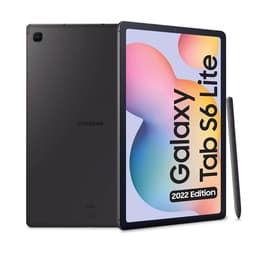
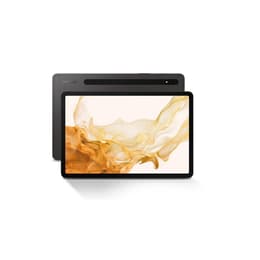

Galaxy Tab S6 Lite (10.4", 2024) vs Galaxy Tab S8 Ultra (14.6", 2022)

Galaxy Tab S6 Lite (10.4", 2024)
Starting at

Refurbished price:$194.86

Versus $412.99 new

See options
Galaxy Tab S8 Ultra (14.6", 2022)
Starting at

Refurbished price:$435.00

Versus $1,049.00 new

See options

Ratings

The Samsung Galaxy Tab S6 Lite (2024) and the Samsung Galaxy Tab S8 Ultra (2022) are two distinct Android tablets from Samsung, catering to different user needs and expectations. While the Tab S6 Lite (2024) offers a more compact and updated experience, the Tab S8 Ultra (2022) provides a larger, more powerful, and feature-rich platform. Their primary differentiators lie in their display size and technology, as well as their processing capabilities, influencing overall performance and user interaction.

Scores

Durability

The longevity of a tablet is influenced by its initial release date and the manufacturer's commitment to software updates, which impacts its practical lifespan and security.

  • Release Timeline: The Galaxy Tab S6 Lite (2024) was released in March 2024, making it a newer device compared to the Galaxy Tab S8 Ultra (2022), which launched in February 2022. This difference in release year means the Tab S6 Lite (2024) benefits from a more recent starting point for software support.
  • Software Support: Samsung typically provides four years of Android version upgrades and five years of security updates for its tablets. The Tab S6 Lite (2024), starting with Android 14, is expected to receive major OS updates until Android 18 and security updates until 2029. The Tab S8 Ultra (2022), launched with Android 12, is projected to receive OS updates until Android 16 and security updates until 2027.
  • Practical Lifespan: Both tablets are built with durable materials, featuring aluminum frames and backs with glass fronts. The Tab S8 Ultra (2022) is notably thin at 5.5mm, which, while contributing to its sleek design, might suggest a need for careful handling. The Tab S6 Lite (2024) has a thickness of 7.0mm. The newer release of the Tab S6 Lite (2024) provides a longer window for software and security updates, potentially extending its usable life for users who prioritize the latest software features and security patches.

Release Year

2024

2022

Compatible with latest Update

Yes

Yes

OS

Android

Android

Performance

The performance of these tablets varies significantly, driven by their internal components, which impacts how smoothly they handle demanding applications and multitasking.

  • Processing Power: The Galaxy Tab S8 Ultra (2022) is equipped with a high-end processor from its release era, designed to handle intensive tasks, complex applications, and graphic-heavy games with ease. The Galaxy Tab S6 Lite (2024) features a mid-range processor, suitable for everyday tasks like web browsing, video streaming, and note-taking, but may show limitations with more demanding software or extensive multitasking.
  • Multitasking and Responsiveness: With its more capable processor and higher RAM options (up to 16GB), the Tab S8 Ultra (2022) offers a highly responsive experience, allowing users to switch between numerous applications and run multiple windows simultaneously without significant slowdowns. The Tab S6 Lite (2024), with 4GB of RAM, is designed for more moderate multitasking, and users might experience occasional delays when pushing the device with many open applications.
  • Storage Options: Both tablets offer expandable storage via a microSD card slot, allowing users to increase their storage capacity beyond the internal options. The Tab S8 Ultra (2022) provides larger internal storage configurations, up to 512GB, while the Tab S6 Lite (2024) is available with up to 128GB of internal storage.
  • Battery Behavior: The Tab S8 Ultra (2022) houses a larger 11,200 mAh battery, which, despite powering a much larger and more vibrant display, provides ample usage time for a full day of mixed activities. The Tab S6 Lite (2024) comes with a 7,040 mAh battery, offering good endurance for its size, typically lasting through a full day of moderate use.

Memory (GB)

4 GB

8 GB

Processor

Exynos 1280

Qualcomm SM8450 Snapdragon 8 Gen 1

Screen quality

The visual experience is a key differentiator between these two tablets, primarily due to their display technology, size, and refresh rates.

  • Display Technology and Size: The Galaxy Tab S8 Ultra (2022) features a substantial 14.6-inch Super AMOLED display, known for its deep blacks, high contrast, and vibrant colors, providing an immersive viewing experience. The Galaxy Tab S6 Lite (2024) has a 10.4-inch TFT LCD panel, which offers good clarity and color reproduction suitable for general use.
  • Resolution and Clarity: The Tab S8 Ultra (2022) boasts a higher resolution of 2960x1848 pixels, resulting in a sharper image with a pixel density of 239 PPI, making text and images appear very crisp. The Tab S6 Lite (2024) has a resolution of 2000x1200 pixels, with a pixel density of 224 PPI, which is adequate for its screen size but less sharp than the Ultra model.
  • Refresh Rate and Smoothness: The Tab S8 Ultra (2022) features a 120Hz refresh rate, contributing to smoother scrolling, more fluid animations, and a more responsive touch experience, particularly noticeable in gaming and fast-paced content. The Tab S6 Lite (2024) operates at a standard 60Hz refresh rate, which is sufficient for most daily tasks but does not offer the same level of visual fluidity.
  • Brightness and Outdoor Use: The Super AMOLED panel of the Tab S8 Ultra (2022) generally offers higher peak brightness, making it more comfortable to use in brightly lit environments or outdoors. The TFT LCD of the Tab S6 Lite (2024) provides a solid luminance for indoor use, but may be less visible under direct sunlight.

Resolution

1200 x 2000

1848 x 2960

Screen type

TFT LCD

Super AMOLED

Pixel density

230ppp

240ppp

Audiovisual

The camera systems on these tablets are designed for different use cases, with the larger model offering more advanced capabilities for both photography and video conferencing.

  • Camera System Capabilities: The Galaxy Tab S8 Ultra (2022) features a more comprehensive camera setup, including dual rear cameras (13MP wide and 6MP ultrawide) and dual front cameras (12MP wide and 12MP ultrawide). The Galaxy Tab S6 Lite (2024) has a single 8MP rear camera and a 5MP front camera.
  • Photography and Video Performance: The Tab S8 Ultra (2022) is capable of recording video at up to 4K resolution at 60 frames per second, offering higher detail and smoother motion for video content. Its dual front cameras are particularly well-suited for high-quality video calls and conferences, with features like auto-framing. The Tab S6 Lite (2024) records video at up to 1080p at 30 frames per second for both front and rear cameras, with 4K only available on the main rear camera, making it suitable for casual photography and video calls.
  • Audio Experience: Both tablets feature dual speakers with Dolby Atmos support, providing an enhanced audio experience for media consumption. The Tab S8 Ultra (2022) also includes a three-microphone setup with noise reduction technology, which further improves audio clarity during calls and recordings. The Tab S6 Lite (2024) includes a 3.5mm headphone jack, offering a traditional audio output option.

Miscellaneous

Beyond core performance, several practical features and design elements contribute to the overall user experience and suitability for different lifestyles.

  • Connectivity Options: The Galaxy Tab S8 Ultra (2022) supports Wi-Fi 6E and Bluetooth 5.2, offering faster and more stable wireless connections, especially in congested network environments. The Galaxy Tab S6 Lite (2024) supports Wi-Fi 5 (802.11ac) and Bluetooth 5.3, providing reliable connectivity for most everyday tasks. Both models offer LTE variants for cellular connectivity.
  • Port Types and Sensors: The Tab S8 Ultra (2022) features a USB-C 3.2 port, enabling faster data transfer speeds. It also includes an on-screen fingerprint scanner for secure biometric authentication. The Tab S6 Lite (2024) comes with a USB-C 2.0 port and a 3.5mm headphone jack, which is a convenient inclusion for wired audio accessories. Both tablets include essential sensors like accelerometers, gyroscopes, and ambient light sensors.
  • Dimensions and Handling: The Tab S8 Ultra (2022) is a significantly larger device, measuring 326.4 x 208.6 x 5.5 mm and weighing 726g (Wi-Fi model). Its expansive screen and thin profile make it ideal for desktop-like productivity or immersive media viewing, though it is often considered a two-handed device. The Tab S6 Lite (2024) is more compact and lighter at 244.5 x 154.3 x 7.0 mm and 465g (Wi-Fi model), making it more portable and easier to handle with one hand for extended periods.
  • Stylus Support: Both tablets include an S Pen in the box, offering pressure-sensitive input for note-taking, drawing, and navigation. The S Pen on the Tab S8 Ultra (2022) benefits from a lower latency, providing a more natural writing and drawing experience. The Tab S6 Lite (2024)'s S Pen is unpowered and does not require charging.

Weight

23 oz

25 oz

Screen size (inches)

10.4

14.6

Network

Wi-Fi

Wi-Fi

Carrier compatibility

Without SIM Port

Without SIM Port

Connector

USB Type-C

USB Type-C

The Samsung Galaxy Tab S6 Lite (2024) and Galaxy Tab S8 Ultra (2022) serve different segments of the tablet market, each with distinct strengths and user profiles.

Users frequently praise the Galaxy Tab S8 Ultra (2022) for its expansive and vibrant Super AMOLED display, which provides an unparalleled viewing experience for movies, creative work, and multitasking. Its powerful processor and ample RAM are often highlighted for enabling smooth performance even with demanding applications. The advanced camera system, particularly the dual front cameras, receives positive remarks for high-quality video conferencing. However, some users note its considerable size can be unwieldy for casual, one-handed use, and its battery life, while good, is sometimes perceived as less enduring than smaller tablets due to the large, high-resolution screen. The software experience, including Samsung DeX, is generally well-regarded for productivity.

The Galaxy Tab S6 Lite (2024) is often commended for its portability, included S Pen, and solid build quality. Users appreciate its suitability for note-taking, light media consumption, and general productivity tasks. Criticisms sometimes point to its more modest processor, which can lead to occasional slowdowns with heavier workloads, and its TFT LCD display, while clear, does not offer the same visual impact as higher-end panels. The camera system is considered functional for basic use but not a standout feature.

Users prioritizing a large, high-performance display for immersive media, advanced multitasking, or professional creative work may find the Galaxy Tab S8 Ultra (2022) better suited to their needs. Its robust internal specifications and advanced features cater to power users. Conversely, individuals seeking a more portable, budget-conscious device primarily for note-taking, casual browsing, and light entertainment will likely find the Galaxy Tab S6 Lite (2024) to be a practical choice. Both tablets offer the versatility of the S Pen, making them valuable tools for students and professionals alike. For those considering a more sustainable choice, both models are available as quality-assured refurbished options, providing an eco-friendly alternative to purchasing new devices.


See all articles

Our recent comparisons