
Galaxy A14 5G • Unlocked vs Motorola Moto G Power 5G • Unlocked

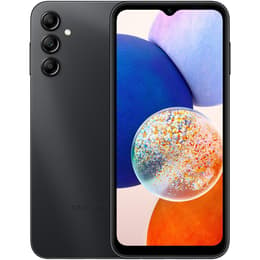
Galaxy A14 5G • Unlocked
Starting at

Refurbished price:$99.00

Versus $249.99 new

See options
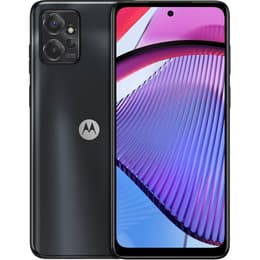
Motorola Moto G Power 5G • Unlocked
See options

Ratings

The Samsung Galaxy A14 5G and the Motorola Moto G Power 5G (2023) are both smartphones released in 2023, designed to offer essential features and 5G connectivity. While sharing a similar operating system foundation in Android, they present distinct approaches to display technology, software support, and overall user experience. This comparison will highlight their practical differences to help consumers make an informed choice.

Scores

Durability

When considering the long-term usability of these devices, their release timelines and manufacturer support policies are key factors.

  • Release and Software Support: The Samsung Galaxy A14 5G was launched in January 2023, while the Motorola Moto G Power 5G (2023) followed in April 2023. Samsung generally offers a more extended software support period for the Galaxy A14 5G, promising two major Android version updates and four years of security updates. In contrast, the Moto G Power 5G (2023) typically receives one major OS update and three years of security updates.
  • Repairability: The Samsung Galaxy A14 5G demonstrates a higher degree of repairability, earning a score of 8 out of 10. This is attributed to its design, which allows for easier disassembly and features adhesive pull tabs for battery replacement, simplifying common repairs. The Motorola Moto G Power 5G (2023) has a repairability score of 6 out of 10, with battery replacement requiring more steps, including the application of heat to remove the back plate.
  • Expected Lifespan: Given Samsung's longer software update commitment and the Galaxy A14 5G's higher repairability score, it may offer a slightly longer practical lifespan for users who prioritize up-to-date software and easier maintenance.

Release Year

2023

2023

OS

Android

Android

Foldable

No

No

Performance

Both smartphones are equipped to handle daily tasks, but their underlying hardware leads to subtle differences in responsiveness and multitasking capabilities.

  • Processor Capabilities: The Samsung Galaxy A14 5G is powered by either a MediaTek Dimensity 700 or an Exynos 1330 processor, depending on the region. The Motorola Moto G Power 5G (2023) features a MediaTek Dimensity 930 processor. In real-world usage, both processors provide a satisfactory experience for general tasks like web browsing, social media, and light gaming, though some users have noted occasional delays in app loading on the Galaxy A14 5G.
  • RAM and Storage: The Galaxy A14 5G is available with 4GB, 6GB, or 8GB of RAM and 64GB or 128GB of internal storage. The Moto G Power 5G (2023) typically comes with 4GB or 6GB of RAM and 128GB or 256GB of storage. Both devices offer expandable storage via a microSD card, allowing users to increase their storage capacity for photos, videos, and apps.
  • Battery Behavior: Both phones are equipped with a 5000mAh battery, providing ample power for a full day of typical use. Users of the Galaxy A14 5G have reported excellent battery life, with some experiencing up to four days of usage with moderate screen time. Both support 15W fast charging.

Memory (GB)

4 GB

6 GB

Screen quality

The visual experience on both devices is delivered through large displays, though with some distinctions in technology and smoothness.

  • Display Technology and Size: The Samsung Galaxy A14 5G features a 6.6-inch PLS LCD display, while the Motorola Moto G Power 5G (2023) has a 6.5-inch IPS LCD screen. Both offer a Full HD+ resolution (1080x2408 pixels for the A14 5G and 1080x2400 pixels for the Moto G Power 5G), resulting in clear and detailed visuals for everyday viewing.
  • Refresh Rate and Smoothness: The Moto G Power 5G (2023) provides a smoother scrolling and gaming experience with its 120Hz refresh rate. The Galaxy A14 5G offers a 90Hz refresh rate, which is still an improvement over standard 60Hz displays, but not as fluid as the Motorola's.
  • Brightness and Viewing: Both LCD panels offer good color reproduction, but some users have noted that the Galaxy A14 5G's display can be somewhat dim for outdoor use in direct sunlight.

Resolution

1080 x 2408

1080 x 2400

Audiovisual

Both smartphones feature multi-camera setups designed for versatile photography, with a focus on their main sensors.

  • Rear Camera System: Both the Samsung Galaxy A14 5G and the Motorola Moto G Power 5G (2023) are equipped with a 50-megapixel main camera, accompanied by 2-megapixel macro and 2-megapixel depth sensors. Neither phone includes an ultrawide-angle lens.
  • Photography Performance: In well-lit conditions, both devices are capable of capturing decent photos. The Galaxy A14 5G's camera performance is described as mixed, with good results in bright outdoor settings but struggles with movement and in low-light environments. The Moto G Power 5G (2023) also performs best in good lighting, and its main camera lacks optical image stabilization (OIS), which can impact clarity in challenging conditions.
  • Front Camera and Video: The Galaxy A14 5G has a 13-megapixel front-facing camera, while the Moto G Power 5G (2023) features a 16-megapixel front camera. Both can record video at 1080p resolution.
  • Audio Experience: The Galaxy A14 5G features a mono speaker, which some users have noted as a drawback. The Moto G Power 5G (2023) offers stereo speakers, providing a more immersive audio experience for media consumption.

Miscellaneous

Beyond core specifications, several practical features and design elements differentiate these two devices in daily use.

  • Connectivity and Ports: Both phones support 5G connectivity, ensuring access to faster mobile networks. They both include a 3.5mm headphone jack and a USB-C port for charging and data transfer. A notable difference is the inclusion of NFC on the Samsung Galaxy A14 5G, enabling contactless payments, which is omitted on the Motorola Moto G Power 5G (2023).
  • Biometrics and Sensors: Both devices feature a side-mounted fingerprint sensor for secure unlocking.
  • Build Materials and Handling: The Galaxy A14 5G has a plastic back and frame, and some users find it feels a bit thick. The Moto G Power 5G (2023) also uses a plastic back and frame but includes a water-repellent coating for added durability against splashes.
  • Dimensions and Weight: The Galaxy A14 5G measures approximately 167.7 x 78 x 9.1 mm and weighs around 204 grams. The Moto G Power 5G (2023) is slightly smaller and lighter at 163.1 x 74.8 x 8.5 mm and 185 grams.

Weight

7 oz

7 oz

Screen size (inches)

6.6

6.5

Network

5G

5G

SIM card

Physical SIM

Physical SIM

Carrier compatibility

Unlocked

Unlocked

Both the Samsung Galaxy A14 5G and the Motorola Moto G Power 5G (2023) offer compelling features for users seeking a capable 5G smartphone without advanced specifications. User feedback for the Galaxy A14 5G frequently praises its exceptional battery life and Samsung's commitment to software updates, ensuring a longer period of security and feature enhancements. However, some users have noted its display can be dim outdoors and its camera performance can be inconsistent, particularly in challenging lighting.

The Motorola Moto G Power 5G (2023) is often commended for its smooth 120Hz display and generally good performance for everyday tasks, along with its stereo speakers for an enhanced audio experience. Criticisms often point to its less extensive software update policy and camera performance, especially in low-light conditions, which some users find to be a compromise.

Users prioritizing extended software longevity and a higher repairability score may find the Samsung Galaxy A14 5G better suited to their needs. Its inclusion of NFC also makes it a convenient option for contactless payments. Conversely, those who value a smoother display refresh rate, stereo audio, and a slightly lighter build might lean towards the Motorola Moto G Power 5G (2023). Both devices represent solid choices in the refurbished market, offering eco-friendly and quality-assured alternatives for consumers.


See all articles

Our recent comparisons