Galaxy A15 5G • Unlocked vs Google Pixel 8 • Unlocked

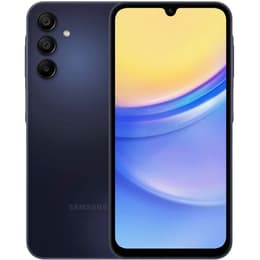
Galaxy A15 5G • Unlocked
Starting at

Refurbished price:$108.00

Versus $207.99 new

See options
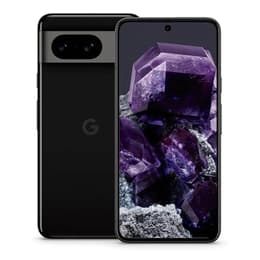
Google Pixel 8 • Unlocked
Starting at

Refurbished price:$254.00

Versus $699.99 new

See options

Ratings

The Samsung Galaxy A15 5G, released in December 2023, and the Google Pixel 8, launched in October 2023, are both Android smartphones offering distinct experiences. While the Galaxy A15 5G focuses on providing essential features with extended battery life, the Pixel 8 emphasizes advanced camera capabilities and a streamlined software experience. Both devices run on the Android operating system, with different approaches to software support and overall performance.

Scores

Durability

When considering the long-term usability of these devices, their release timelines and software support policies are key factors.

  • Software Longevity: The Google Pixel 8 offers a notable commitment to software updates, promising seven years of both operating system upgrades and security patches from its October 2023 release. This extended support ensures the device remains current and secure for a significantly longer period. In contrast, the Samsung Galaxy A15 5G, released in December 2023, is promised four years of OS updates and five years of security updates, providing a solid but shorter support window.
  • Physical Durability: The Pixel 8 features Gorilla Glass Victus on both its front and back, along with an IP68 rating for dust and water resistance, contributing to its robust build. The Galaxy A15 5G, while having a primarily plastic construction, does not specify Gorilla Glass protection and lacks an official IP rating, suggesting a more modest level of physical resilience.
  • Repairability: The Google Pixel 8 has received a repairability score of 7 out of 10 from some experts, indicating that self-repairs are possible, though battery replacement can be challenging due to adhesive. Information regarding the repairability of the Galaxy A15 5G is less widely available, but its construction suggests a more straightforward approach to component access.

Release Year

2023

2023

Last OS Compatibility

Yes

Yes

OS

Android

Android

Foldable

No

No

Performance

The performance of a smartphone impacts daily responsiveness, app handling, and overall user experience.

  • Everyday Responsiveness: The Google Pixel 8, powered by its custom-designed processor, delivers smooth performance for demanding applications, multitasking, and gaming, benefiting from its integrated AI capabilities. The Galaxy A15 5G, featuring a current-generation processor, capably handles everyday tasks such as web browsing, email, and media playback, though users might observe occasional delays when switching between multiple applications.
  • Storage and Multitasking: The Pixel 8 typically comes with 8GB of RAM and offers storage options of 128GB or 256GB, providing ample space and efficient multitasking. The Galaxy A15 5G is available with 4GB, 6GB, or 8GB of RAM and 128GB or 256GB of internal storage, which can be expanded via a microSD card, offering flexibility for users who require additional storage.
  • Battery Behavior: The Galaxy A15 5G is equipped with a 5000mAh battery, which can provide up to two days of moderate use and lasted over 14 hours in a video streaming test, making it suitable for users prioritizing extended usage between charges. The Pixel 8 has a 4575mAh battery, generally offering a full day of use for most individuals, with some users reporting varying experiences, particularly when using mobile data extensively. Both devices support wired fast charging, with the Pixel 8 supporting up to 27W and the Galaxy A15 5G supporting 25W.

Memory (GB)

4 GB

8 GB

Screen quality

The display is a primary interface for smartphone interaction, influencing media consumption and daily usability.

  • Display Technology and Clarity: Both devices feature OLED display technology, known for deep blacks and vibrant colors. The Galaxy A15 5G has a 6.5-inch Super AMOLED display with a Full HD+ resolution (1080x2340 pixels), providing clear visuals for general viewing. The Pixel 8 features a slightly smaller 6.2-inch OLED display with a Full HD+ resolution (1080x2400 pixels), offering a sharp and detailed viewing experience.
  • Refresh Rate and Brightness: The Galaxy A15 5G offers a 90Hz refresh rate, contributing to smoother scrolling and animations, with a peak brightness of 800 nits in high brightness mode. The Pixel 8 features a more adaptive 60-120Hz variable refresh rate, which can dynamically adjust for smoother visuals and potentially better power efficiency, and boasts a higher peak brightness of up to 2000 nits, making it more visible in bright outdoor conditions.
  • Screen Design: The Galaxy A15 5G incorporates a U-shaped notch at the top of its display for the front camera. The Pixel 8 features a punch-hole cutout for its front camera, contributing to a more expansive screen-to-body ratio.

Resolution

1080 x 2340

1080 x 2400

Screen type

Super AMOLED

OLED

Audiovisual

Camera capabilities are a significant differentiator, impacting the quality of photos and videos captured.

  • Rear Camera Systems: The Google Pixel 8 features a dual-camera setup with a 50MP main sensor and a 12MP ultrawide lens that includes autofocus and a macro mode, enabling versatile photography. The Samsung Galaxy A15 5G offers a triple-camera system, including a 50MP main sensor, a 5MP ultrawide lens, and a 2MP macro camera.
  • Photography Performance: The Pixel 8 is recognized for its excellent image quality, strong low-light performance, and natural color reproduction, often praised for its computational photography capabilities. The Galaxy A15 5G's main camera performs well in bright conditions, producing decent images, though colors can sometimes appear slightly oversaturated, and it lacks optical image stabilization.
  • Video and Audio Recording: The Pixel 8 supports video recording up to 4K at 60 frames per second with strong stabilization and clear sound recording. The Galaxy A15 5G records video at Full HD (1080p) at 30 frames per second, without 4K support or advanced stabilization. For audio output, the Pixel 8 features stereo speakers, while the Galaxy A15 5G has a single down-firing speaker but retains a 3.5mm headphone jack.

Main camera

50 megapixels

50 megapixels

Front camera

13 megapixels

10.5 megapixels

Miscellaneous

Beyond core specifications, several practical features contribute to the overall user experience.

  • Connectivity Standards: Both devices support 5G connectivity for faster mobile data speeds. The Pixel 8 includes modern Wi-Fi and Bluetooth standards, ensuring efficient wireless connections. The Galaxy A15 5G also supports Wi-Fi 802.11 a/b/g/n/ac and Bluetooth 5.3, along with NFC for mobile payments.
  • Ports and Biometrics: Both smartphones utilize a USB-C port for charging and data transfer. A notable difference is the inclusion of a 3.5mm headphone jack on the Galaxy A15 5G, a feature absent on the Pixel 8. For security, the Pixel 8 offers both an in-display fingerprint sensor and face unlock, while the Galaxy A15 5G features a side-mounted fingerprint sensor.
  • Design and Handling: The Pixel 8 has dimensions of 150.5 x 70.8 x 8.9 mm and weighs 187g, offering a compact and manageable form factor. The Galaxy A15 5G measures 160.1 x 76.8 x 8.4 mm and weighs 200g, making it slightly larger and heavier. The Pixel 8 features a more refined design with a camera bar, while the Galaxy A15 5G has a more traditional design with individual camera lenses protruding.

Weight

7 oz

7 oz

Screen size (inches)

6.5

6.2

Network

5G

5G

SIM card

Physical SIM

Physical SIM + eSIM

Carrier compatibility

Unlocked

Unlocked

Connector

USB-C

USB-C

The Samsung Galaxy A15 5G and Google Pixel 8 cater to different user priorities, each excelling in specific areas. Users frequently praise the Galaxy A15 5G for its exceptional battery life, often lasting up to two days on a single charge, and its vibrant Super AMOLED display. Its inclusion of a 3.5mm headphone jack and expandable storage are also common points of appreciation. However, some users note that its performance can be less fluid during heavy multitasking, and its camera system, while capable in good lighting, may not match the advanced capabilities of higher-end devices, particularly in low-light conditions or for video stabilization.

Conversely, the Google Pixel 8 is widely lauded for its sophisticated camera system, consistently producing high-quality photos with excellent detail and natural colors, even in challenging lighting. Its extended software support, promising seven years of updates, is a significant advantage for users seeking long-term device longevity. The Pixel 8's smooth performance and premium build quality are also frequently highlighted. Criticisms sometimes revolve around its battery life, which, while generally sufficient for a full day, can be inconsistent for heavy users, especially when relying on mobile data. Some users also miss the absence of a headphone jack and expandable storage.

Users prioritizing an eco-friendly and quality-assured refurbished option with a focus on long-term software support and advanced camera features will find the Google Pixel 8 well-suited to their needs. Its robust build and powerful processing make it ideal for those who demand consistent performance and photographic excellence. On the other hand, individuals who value extended battery life, a traditional headphone jack, and expandable storage for media and files may lean towards the Samsung Galaxy A15 5G. This device serves as a practical and reliable choice for everyday communication and media consumption. Both devices, when considered as refurbished options, offer a sustainable choice for consumers.

See all articles

Our recent comparisons