
Galaxy S10E • Unlocked vs iPhone XS • Unlocked

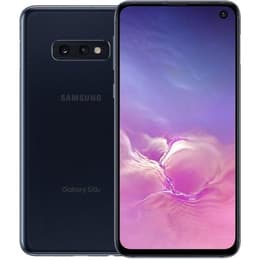
Galaxy S10E • Unlocked
Starting at

Refurbished price:$117.00

Versus $459.00 new

See options
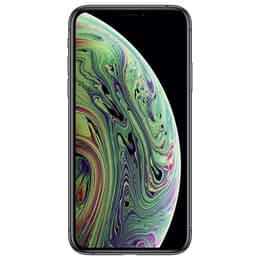
iPhone XS • Unlocked
Starting at

Refurbished price:$148.00

Versus $459.00 new

See options

Ratings

The Samsung Galaxy S10e, released in March 2019, and the Apple iPhone Xs, launched in September 2018, represent compact flagship smartphones from their respective manufacturers. While both devices offer a premium experience in a smaller form factor, they differ significantly in their operating systems and design philosophies. The Galaxy S10e runs on Android, providing a customizable user experience, whereas the iPhone Xs operates on Apple's iOS, known for its integrated ecosystem and consistent interface.

Scores

Durability

When considering the long-term usability of these devices, their release timelines and software support are key factors.

  • Software Longevity: The iPhone Xs, released in September 2018, received major iOS updates up to iOS 18, which was released in 2024. It is expected to continue receiving security updates through late 2026, providing a substantial period of software support. In contrast, the Galaxy S10e, launched in March 2019, received Android OS updates up to Android 12, with security updates concluding in April 2023.
  • Physical Durability: Both devices feature glass backs and are rated IP68 for dust and water resistance. The iPhone Xs can withstand submersion up to 2 meters for 30 minutes, while the Galaxy S10e is rated for up to 1.5 meters for 30 minutes. The iPhone Xs utilizes a stainless steel frame, contributing to its structural integrity, whereas the Galaxy S10e features an aluminum frame.
  • Repairability: Independent assessments indicate that the iPhone Xs generally has a higher repairability score compared to the Galaxy S10e. The Galaxy S10e's construction, which includes significant adhesive and a soldered charging port, can make certain repairs more challenging and costly.

Release Year

2019

2018

Last OS Compatibility

No

Yes

OS

Android

iOS

Foldable

No

No

Performance

Both smartphones were designed to deliver robust performance for their time, handling daily tasks and more demanding applications efficiently.

  • Processing Power: The iPhone Xs is equipped with a powerful processor that enables smooth navigation, rapid app loading, and efficient multitasking. It handles graphically intensive games and complex applications without significant slowdowns. The Galaxy S10e features a high-performance processor, ensuring a responsive user experience across various applications and games. It is capable of managing demanding tasks and maintaining overall system fluidity.
  • Multitasking Capabilities: The iPhone Xs comes with 4GB of RAM, which supports a reasonable number of applications running simultaneously. The Galaxy S10e offers configurations with 6GB or 8GB of RAM, providing more headroom for extensive multitasking and keeping more applications active in the background.
  • Battery Behavior: The iPhone Xs has a battery capacity of 2658 mAh. Users often report that it can last through a full day of typical use, though some comparisons noted it offered slightly less endurance than its predecessor. The Galaxy S10e is powered by a 3100 mAh battery. However, user feedback frequently points to its battery life as being moderate, often requiring a charge before the end of a heavy usage day.

Memory (GB)

6 GB

4 GB

Screen quality

The visual experience on both devices is characterized by vibrant displays, though they employ slightly different technologies and characteristics.

  • Display Technology and Clarity: The iPhone Xs features a 5.8-inch OLED Super Retina HD display, known for its deep blacks, high contrast, and vibrant colors. It offers a resolution of 2436 x 1125 pixels, resulting in a pixel density of 458 pixels per inch. The Galaxy S10e also has a 5.8-inch display, utilizing Dynamic AMOLED technology. This screen provides rich colors and good contrast, with a resolution of 2280 x 1080 pixels and a pixel density of approximately 438 ppi.
  • Brightness and Viewing Experience: The iPhone Xs display supports HDR content and offers a typical maximum brightness of 625 nits, making it suitable for various lighting conditions, including outdoor use. The Galaxy S10e's Dynamic AMOLED panel also gets sufficiently bright, ensuring good outdoor visibility and supporting HDR10+ content for an enhanced viewing experience.
  • Design and Features: The iPhone Xs features a display with a notch at the top housing the front camera and sensors. The Galaxy S10e opts for an Infinity-O display design, which incorporates a punch-hole cutout for the front camera, minimizing bezel intrusion. The Galaxy S10e also offers an Always-on Display feature.

Resolution

1080 x 2280

1125 x 2436

Screen type

Dynamic AMOLED

Super Retina OLED

Audiovisual

Both smartphones offer capable camera systems designed to capture moments with clarity, though they approach photography with different hardware configurations.

  • Rear Camera System: The iPhone Xs is equipped with a dual 12-megapixel rear camera system, featuring a wide-angle lens (f/1.8) and a telephoto lens (f/2.4). This setup allows for optical zoom and enhanced portrait mode effects. The Galaxy S10e features a dual rear camera setup consisting of a 12-megapixel wide-angle lens (f/1.5-2.4) and a 16-megapixel ultrawide lens (f/2.2). It does not include a dedicated telephoto lens, relying on digital zoom.
  • Photography Performance: The iPhone Xs benefits from Smart HDR, which improves detail in highlights and shadows, and offers enhanced low-light performance. Its portrait mode allows for adjustable background blur after capture. The Galaxy S10e's cameras are capable in most lighting conditions, producing good detail and color. However, its low-light performance is often noted as less effective compared to some competitors.
  • Front Camera and Audio: For selfies, the iPhone Xs has a 7-megapixel front camera with an f/2.2 aperture. The Galaxy S10e features a 10-megapixel front camera with an f/1.9 aperture. Both devices offer stereo speakers for media consumption. The iPhone Xs records stereo audio for videos, and the Galaxy S10e includes a 3.5mm headphone jack.

Main camera

12 megapixels

12 megapixels

Front camera

10 megapixels

7 megapixels

Miscellaneous

Beyond core performance, several practical features and design elements differentiate these two compact smartphones.

  • Connectivity and Ports: The iPhone Xs uses Apple's proprietary Lightning port for charging and data transfer. It supports dual SIM functionality through a physical nano-SIM and an eSIM. The Galaxy S10e features a USB-C port, a widely adopted standard. It offers a hybrid dual SIM slot, allowing for either two SIM cards or one SIM and a microSD card for expandable storage.
  • Biometric Security and Sensors: The iPhone Xs relies on Face ID for secure facial recognition. The Galaxy S10e incorporates a side-mounted fingerprint sensor integrated into the power button, which some users find convenient. Both phones support wireless charging. The Galaxy S10e also includes Wireless PowerShare, allowing it to wirelessly charge other compatible devices.
  • Physical Characteristics: The iPhone Xs weighs 177 grams and has dimensions of 143.6 x 70.9 x 7.7 mm. The Galaxy S10e is lighter at 150 grams and slightly more compact with dimensions of 142.2 x 69.9 x 7.9 mm. The Galaxy S10e also retains a 3.5mm headphone jack, a feature absent on the iPhone Xs.

Weight

5 oz

6 oz

Screen size (inches)

5.8

5.8

Network

LTE

LTE

SIM card

Physical SIM

Physical SIM + eSIM

Carrier compatibility

Unlocked

Unlocked

Connector

USB-C + Jack 3.5mm

Lightning

The Samsung Galaxy S10e and iPhone Xs, while both offering compact form factors, cater to different user preferences and priorities. Users often praise the iPhone Xs for its consistent performance, the quality of its OLED display, and its capable camera system, particularly its Smart HDR and portrait mode features. However, some users have noted its battery life, while generally sufficient for a day, might not be as extended as other devices.

The Galaxy S10e is frequently lauded for its comfortable, compact size, its vibrant flat display, and the inclusion of features like a 3.5mm headphone jack and expandable storage, which offer greater flexibility. Common criticisms include its battery life, which some find mediocre for heavy use, and its low-light camera performance. Additionally, its software support timeline has concluded sooner than the iPhone Xs.

Users prioritizing a long-term software support commitment and a telephoto camera lens may find the iPhone Xs more aligned with their needs. Those who value a more customizable Android experience, a physical headphone jack, expandable storage, and a lighter device might lean towards the Galaxy S10e. Both devices offer a solid experience for everyday use, and choosing a quality-assured refurbished option for either model can provide an eco-friendly alternative to purchasing new.


See all articles

Our recent comparisons