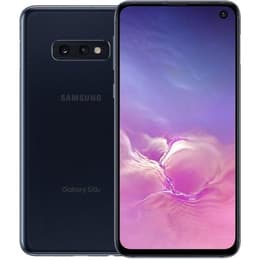
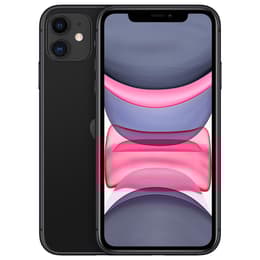

Galaxy S10E • Unlocked vs iPhone 11 • Unlocked

Galaxy S10E • Unlocked
Starting at

Refurbished price:$117.00

Versus $459.00 new

See options
iPhone 11 • Unlocked
Starting at

Refurbished price:$152.00

Versus $499.00 new

See options

Ratings

The Samsung Galaxy S10e, released in March 2019, and the Apple iPhone 11, launched in September 2019, represent two distinct approaches to flagship smartphones from the same year. While both offer capable performance and camera systems, the Galaxy S10e emphasizes a compact design with an AMOLED display, whereas the iPhone 11 provides a larger LCD screen and a different software ecosystem. Both devices operate on their respective platforms, Android for the S10e and iOS for the iPhone 11, offering unique user experiences.

Scores

Durability

When considering the long-term usability of these devices, their release timelines and software support are key factors.

  • Release Timeline: The Samsung Galaxy S10e was released in March 2019, making it slightly older than the iPhone 11, which debuted in September 2019. This six-month difference can impact the duration of future software support.
  • Software Longevity: The Galaxy S10e received major Android updates up to Android 12 and has since reached its end-of-life for further operating system upgrades, though it may still receive security patches. In contrast, the iPhone 11, launched with iOS 13, has continued to receive significant iOS updates, including iOS 18, and is expected to receive further updates, potentially extending its major software support for a longer period.
  • Build and Durability: Both smartphones feature a construction of glass on the front and back, framed by aluminum, and carry an IP68 rating for water and dust resistance. The iPhone 11 is rated to withstand submersion in up to 2 meters of water for 30 minutes. The Galaxy S10e also offers similar water resistance.

Release Year

2019

2019

Last OS Compatibility

No

Yes

OS

Android

iOS

Foldable

No

No

Performance

Evaluating the performance of these devices involves looking at their internal components and how they translate to real-world usage.

  • Processing Power: The iPhone 11 is equipped with a processor that, at its release, was noted for its ability to handle demanding applications and multitasking smoothly, often outperforming contemporary Android devices in speed tests. The Galaxy S10e, powered by its respective processor, also delivers strong performance for everyday tasks, gaming, and general responsiveness.
  • Storage and RAM: The Galaxy S10e offers storage options of 128GB and 256GB, paired with either 6GB or 8GB of RAM. The iPhone 11 comes with 64GB, 128GB, or 256GB storage configurations and 4GB of RAM. For users who frequently run multiple applications simultaneously or engage in intensive tasks, the higher RAM configurations of the S10e could offer a slight advantage in maintaining app states.
  • Battery Behavior: The Galaxy S10e houses a 3100 mAh battery. Users have reported that its battery can last a full day with moderate use, though heavy usage might necessitate a midday charge. The iPhone 11 features a 3110 mAh battery. Apple states it can provide up to 17 hours of video playback, and independent tests suggest around 11 to 13 hours of continuous web browsing.

Memory (GB)

6 GB

4 GB

Screen quality

The visual experience on these smartphones is shaped by their display technology and specifications.

  • Display Technology and Resolution: The Samsung Galaxy S10e features a 5.8-inch Dynamic AMOLED display with a resolution of 2280 x 1080 pixels, resulting in a pixel density of 438 ppi. This AMOLED technology provides deep blacks and vibrant colors. The iPhone 11, on the other hand, utilizes a 6.1-inch Liquid Retina IPS LCD display with a resolution of 1792 x 828 pixels, offering a pixel density of 326 ppi.
  • Brightness and Clarity: The iPhone 11's display offers a typical maximum brightness of 625 nits, contributing to good visibility in various lighting conditions. The Galaxy S10e's AMOLED panel typically delivers strong contrast and good outdoor visibility due to its inherent display characteristics.
  • Screen Size and Viewing: The Galaxy S10e's 5.8-inch screen provides a compact form factor, making it easier for one-handed use. The iPhone 11's larger 6.1-inch display offers a more expansive viewing area, which can be beneficial for media consumption and browsing. Both devices feature a standard 60Hz refresh rate.

Resolution

1080 x 2280

828 x 1792

Screen type

Dynamic AMOLED

Liquid Retina IPS LCD

Audiovisual

Both devices offer capable camera systems, but with different strengths and features for capturing photos and videos.

  • Rear Camera Systems: The Samsung Galaxy S10e is equipped with a dual-camera setup on the rear, consisting of a 12-megapixel wide-angle lens and a 16-megapixel ultra-wide-angle lens. The iPhone 11 also features a dual-camera system, with two 12-megapixel lenses for wide and ultra-wide shots.
  • Photography Performance: The iPhone 11 introduced a dedicated Night mode, which significantly enhances low-light photography by capturing brighter images with reduced noise. The Galaxy S10e's low-light performance was considered good at its release, though some users noted it might not match the advanced capabilities of some competitors in very dim conditions. Both phones are capable of recording 4K video.
  • Front Cameras and Audio: For selfies, the Galaxy S10e has a 10-megapixel front camera, while the iPhone 11 features a 12-megapixel front camera. The iPhone 11 also supports features like Face ID for secure authentication. The Galaxy S10e records stereo sound with its video recordings.

Main camera

12 megapixels

12 megapixels

Front camera

10 megapixels

12 megapixels

Miscellaneous

Beyond core features, several practical elements differentiate the user experience of these two smartphones.

  • Connectivity and Ports: Both devices support 4G LTE, Wi-Fi 6, and Bluetooth 5.0 for wireless connectivity. The Galaxy S10e includes a USB-C port for charging and data transfer, alongside a traditional 3.5mm headphone jack. The iPhone 11 uses Apple's proprietary Lightning port and does not feature a headphone jack.
  • Biometric Security: The Galaxy S10e incorporates a side-mounted fingerprint sensor for secure unlocking, in addition to face recognition. The iPhone 11 relies solely on Face ID, Apple's facial recognition system, for biometric authentication.
  • Physical Characteristics: The Galaxy S10e is notably more compact and lighter, measuring 142.2 x 69.9 x 7.9 mm and weighing 150 grams. The iPhone 11 is larger and heavier, with dimensions of 150.9 x 75.7 x 8.3 mm and a weight of 194 grams. This difference in size impacts one-handed usability and pocketability.

Weight

5 oz

7 oz

Screen size (inches)

5.8

6.1

Network

LTE

LTE

SIM card

Physical SIM

Physical SIM + eSIM

Carrier compatibility

Unlocked

Unlocked

Connector

USB-C + Jack 3.5mm

Lightning

User sentiment for the Samsung Galaxy S10e often highlights its compact form factor and the inclusion of features like a flat AMOLED display and a headphone jack as significant advantages. Some users appreciate its balance of size and performance. Criticisms sometimes revolve around its battery life for heavy users and the camera system, while capable, not being as advanced as the larger S10 models of its generation.

The iPhone 11 generally receives praise for its robust processing power, which ensures smooth operation across applications, and its camera system, particularly the introduction of a dedicated Night mode for improved low-light photography. Users also value its extended software support. Common observations include its LCD display, which some compare to OLED panels on other devices, and its larger size and weight compared to more compact alternatives.

Users prioritizing a highly compact device with a vibrant AMOLED display and traditional connectivity options like a headphone jack may find the Galaxy S10e well-suited to their needs. Conversely, those who value extended software longevity, a powerful and consistently updated camera system with strong low-light capabilities, and a larger display for media consumption might lean towards the iPhone 11. Both devices offer a solid smartphone experience, and considering a quality-assured refurbished option for either model can be an eco-friendly alternative for making an informed choice.

See all articles

Our recent comparisons