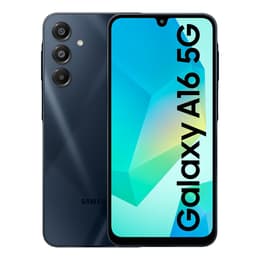


Galaxy A16 5G • Unlocked vs Google Pixel 7 Pro • Unlocked

Galaxy A16 5G • Unlocked
Starting at

Refurbished price:$144.73

Versus $195.00 new

See options
Google Pixel 7 Pro • Unlocked
Starting at

Refurbished price:$222.00

Versus $899.99 new

See options

Ratings

The Samsung Galaxy A16 5G, released in late 2024, and the Google Pixel 7 Pro, launched in late 2022, represent distinct approaches to the smartphone experience. While both devices operate on the Android platform, they cater to different user priorities through their hardware and software philosophies. The Galaxy A16 5G focuses on extended software support and essential features, whereas the Pixel 7 Pro emphasizes advanced camera capabilities and a premium user experience.

Scores

Durability

When considering the longevity of a smartphone, both the release timeline and software support are key factors.

  • Release Timeline and Software Support: The Samsung Galaxy A16 5G, released in October 2024, is notable for its commitment to six generations of Android OS upgrades and six years of security updates, with support extending until October 2030. This provides a long software lifespan for users. In contrast, the Google Pixel 7 Pro, released in October 2022, was promised five years of OS and security updates from its launch, meaning its software support will conclude earlier than the A16 5G.
  • Durability Features: The Galaxy A16 5G includes an IP54 rating, offering protection against dust and splashes, which contributes to its practical lifespan. The Pixel 7 Pro features Gorilla Glass for display protection and an aluminum finish, suggesting a robust build.
  • Practical Lifespan: Users prioritizing the longest possible software update cycle will find the Galaxy A16 5G's extended support particularly appealing. The Pixel 7 Pro, while still receiving updates, will reach its end-of-life for software support sooner due to its earlier release.

Release Year

2024

2022

OS

Android

Android

Foldable

No

No

Performance

The performance of these two devices varies significantly, impacting how smoothly they handle daily tasks and more demanding applications.

  • Processor Capabilities: The Galaxy A16 5G is equipped with either an Exynos 1330 or MediaTek Dimensity 6300 processor, depending on the region. These chipsets are designed to handle everyday activities and light multitasking efficiently, providing a responsive experience for general use. The Google Pixel 7 Pro features the Google Tensor G2, a more advanced processor engineered for enhanced speed, security, and overall efficiency. This allows the Pixel 7 Pro to manage demanding applications, complex multitasking, and graphic-intensive tasks with greater fluidity.
  • Memory and Storage: The Galaxy A16 5G offers RAM options ranging from 4GB to 8GB, paired with 128GB or 256GB of internal storage, and includes a microSDXC slot for expansion. The Pixel 7 Pro comes with a substantial 12GB of RAM and storage options up to 512GB, without a microSD slot. The larger RAM in the Pixel 7 Pro contributes to smoother transitions between multiple open applications and more efficient background processing.
  • Battery Behavior: Both devices are equipped with a 5000 mAh battery. The Galaxy A16 5G supports 25W fast charging, while the Pixel 7 Pro supports 30W fast charging. Real-world battery life will depend on usage patterns and software optimization, but both offer substantial capacities for daily use.

Memory (GB)

4 GB

8 GB

Screen quality

The visual experience on a smartphone is largely defined by its display, and these two models offer different screen technologies and specifications.

  • Display Technology and Resolution: The Samsung Galaxy A16 5G features a 6.7-inch Super AMOLED display with a Full HD+ resolution (1080 x 2340 pixels). This technology provides vibrant colors and deep blacks, enhancing the viewing experience for everyday content. The Google Pixel 7 Pro also has a 6.7-inch display, but it utilizes an LTPO AMOLED panel with a significantly higher Quad HD+ resolution (1440 x 3120 pixels). The higher resolution on the Pixel 7 Pro results in sharper text and more detailed images.
  • Refresh Rate and Brightness: The Galaxy A16 5G offers a 90 Hz refresh rate, which provides a smoother scrolling experience compared to standard 60 Hz displays, and reaches 800 nits of high brightness mode (HBM) for outdoor visibility. The Pixel 7 Pro features a 120 Hz refresh rate, delivering even smoother motion and responsiveness, particularly noticeable in gaming and fast-paced content. It also supports HDR10+ for enhanced contrast and color depth in compatible media.
  • Screen Design and Protection: The Pixel 7 Pro's display is curved and protected by Gorilla Glass, contributing to both its aesthetic and durability. While the A16 5G also offers a large display, specific protection details are less prominent, though its IP54 rating offers some overall device protection.

Resolution

1080x2340

1440 x 3120

Screen type

Super AMOLED

LTPO AMOLED

Audiovisual

Camera capabilities are a significant differentiator, with both devices offering multi-lens setups designed for various photographic scenarios.

  • Rear Camera Systems: The Samsung Galaxy A16 5G features a triple rear camera setup consisting of a 50 MP main sensor, a 5 MP ultrawide lens, and a 2 MP macro lens. This configuration allows for versatile shooting, from detailed everyday photos to wider landscape shots and close-up macro photography. The Google Pixel 7 Pro boasts a more advanced triple camera system, including a 50 MP main sensor with a wide aperture, a 12 MP ultrawide lens with a broad field of view, and a 48 MP telephoto lens capable of 5x optical zoom. The telephoto lens on the Pixel 7 Pro provides greater flexibility for capturing distant subjects without significant loss of detail.
  • Photography Performance: The Pixel 7 Pro is known for its computational photography, which enhances image quality, particularly in challenging lighting conditions. Its larger ultrawide sensor and dedicated telephoto lens contribute to its overall photographic versatility and detail capture. While the A16 5G's 50 MP main sensor is capable, its supplementary lenses are of lower resolution, suggesting a focus on essential functionality rather than advanced photographic performance.
  • Video and Front Camera: For video recording, the Pixel 7 Pro supports 4k resolution at 30 frames per second. It also features a 10.8 MP front camera. The Galaxy A16 5G comes with a 13 MP front camera. Specific video recording capabilities for the A16 5G are not as prominently detailed in available information, but it is expected to offer standard video recording for its segment.

Miscellaneous

Beyond core specifications, several practical elements contribute to the overall user experience and daily convenience of these smartphones.

  • Connectivity and Ports: Both devices support 5G connectivity, ensuring access to faster mobile networks. They both feature a USB Type-C port for charging and data transfer. The Galaxy A16 5G supports dual-band Wi-Fi ac and Bluetooth 5.3. The Pixel 7 Pro also includes standard Wi-Fi and Bluetooth connectivity, but notably lacks a 3.5mm headphone jack, which the A16 5G may or may not include (information not explicitly found for A16 5G, but common in A-series).
  • Biometric Security: The Galaxy A16 5G incorporates a side-mounted fingerprint scanner for secure unlocking. The Pixel 7 Pro offers an under-display fingerprint reader and also includes face unlock functionality for convenient access.
  • Physical Design and Handling: The Galaxy A16 5G measures 164.4 x 77.9 x 7.9 mm and weighs 200 g. The Pixel 7 Pro is slightly more compact in height and width but thicker, at 162.9 x 76.6 x 8.9 mm, and slightly heavier at 212 g. Both devices offer large screen sizes, which can impact one-handed use. The Pixel 7 Pro features an aluminum finish, contributing to a premium feel.

Weight

7 oz

7 oz

Screen size (inches)

6.7

6.7

Network

5G

5G

SIM card

Physical SIM

Physical SIM + eSIM

Carrier compatibility

Unlocked

Unlocked

The Samsung Galaxy A16 5G and Google Pixel 7 Pro cater to different segments of the smartphone market, each with distinct strengths. User feedback for the Galaxy A16 5G often praises its exceptional software support policy, offering six years of updates, which is a significant advantage for users seeking long-term device usability. Its Super AMOLED display and 5000 mAh battery are also generally well-received for their practical benefits in daily use. Criticisms, where they exist, typically revolve around its mid-range processor performance, which may not satisfy users with demanding application needs.

The Google Pixel 7 Pro, on the other hand, is frequently lauded for its advanced camera system, delivering high-quality photos and videos, and its powerful Tensor G2 processor, which ensures smooth performance across various tasks. Its high-resolution 120 Hz LTPO AMOLED display is also a common point of praise for its visual clarity and fluidity. Some users have noted that its battery life, while substantial, might require more frequent charging for very heavy use compared to some competitors, and its software update policy, while good, is shorter than the A16 5G's extended commitment.

Users prioritizing an extended software lifespan and a reliable, feature-rich device for everyday tasks may find the Samsung Galaxy A16 5G well-suited to their needs. Conversely, users who place a high value on advanced photography capabilities, a premium display, and top-tier performance for demanding applications will likely lean towards the Google Pixel 7 Pro. Both devices are available as quality-assured refurbished options, providing an eco-friendly alternative for consumers.


See all articles

Our recent comparisons