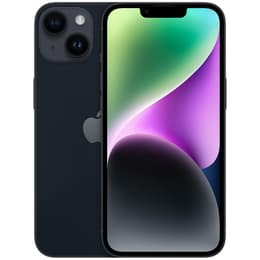
Galaxy A16 5G • Unlocked vs iPhone 14 • Locked AT&T

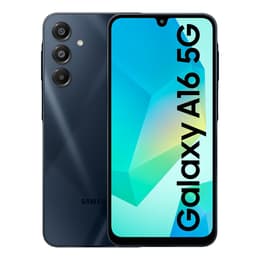
Galaxy A16 5G • Unlocked
Starting at

Refurbished price:$145.73

Versus $195.00 new

See options
iPhone 14 • Locked AT&T
Starting at

Refurbished price:$225.72

Versus $629.00 new

See options

Ratings

The Samsung Galaxy A16 5G (2024) and the Apple iPhone 14 (2022) represent distinct approaches to smartphone design and functionality. While the Galaxy A16 5G offers a more recent release with an Android operating system, the iPhone 14, released two years prior, operates on iOS. This comparison will explore their core differences in areas such as longevity, performance, display quality, and camera capabilities to help users determine which device aligns best with their needs.

Scores

Durability

When considering the practical lifespan of these devices, several factors come into play, including their release timelines, software support, and physical resilience.

  • Release Timeline and Software Support: The Samsung Galaxy A16 5G was announced in October 2024 and released in late 2024 and early 2025, making it a newer device. It is expected to receive six major Android OS upgrades and six years of security updates, extending its support until October 2030. In contrast, the iPhone 14 was released in September 2022. Apple typically provides iOS updates for 5-6 years from a device's release, meaning the iPhone 14 will likely receive software support for a comparable, though potentially slightly shorter, overall duration from its release date compared to the A16 5G's projected end-of-life.
  • Physical Durability: The iPhone 14 features a Ceramic Shield front cover and an aerospace-grade aluminum design, contributing to its robust build. Both devices carry an IP68 rating for water and dust resistance, indicating protection against immersion. The Galaxy A16 5G emphasizes an ergonomic design and a slim profile.
  • Repairability: While specific repairability scores can vary, both manufacturers offer repair services. Users considering a quality-assured refurbished option for either device can benefit from extended product life and reduced environmental impact.

Release Year

2024

2022

OS

Android

iOS

Foldable

No

No

Performance

The performance of a smartphone is crucial for daily operations, influencing app responsiveness, multitasking efficiency, and overall user experience.

  • Processor Capabilities: The iPhone 14 is equipped with an A15 Bionic chip, which includes a 6-core CPU and a 5-core GPU. This hardware configuration allows for smooth handling of demanding applications, complex graphics, and efficient multitasking. The Samsung Galaxy A16 5G utilizes an octa-core processor, identified as either a MediaTek Dimensity 6300 or an Exynos 1330, depending on the region. This processor is designed to provide reliable performance for everyday tasks and 5G connectivity.
  • Memory and Storage: The iPhone 14 comes with 6 GB of RAM, supporting fluid transitions between applications. It offers internal storage options of 128GB, 256GB, and 512GB. The Galaxy A16 5G is available with 4GB, 6GB, or 8GB of RAM, providing flexibility for different user needs. Its storage options include 128GB and 256GB, with the added benefit of expandable storage up to 1.5TB via a microSD card.
  • Battery Behavior: The Galaxy A16 5G features a 5000 mAh battery, designed to provide extended usage throughout the day, and supports 25W Super Fast Charging. The iPhone 14 has a 3279 mAh battery, offering up to 20 hours of video playback, and supports both Qi wireless charging and 15W MagSafe wireless charging.

Memory (GB)

4 GB

6 GB

Screen quality

The display is a primary interface for smartphone interaction, and both devices offer distinct visual experiences.

  • Display Technology and Resolution: The iPhone 14 features a 6.1-inch Super Retina XDR OLED display with a resolution of 2532 x 1170 pixels, resulting in a pixel density of approximately 460 PPI. This OLED technology delivers deep blacks and vibrant colors. The Samsung Galaxy A16 5G sports a larger 6.7-inch Super AMOLED display with an FHD+ resolution of 1080 x 2340 pixels. Its Super AMOLED panel also provides rich colors and high contrast.
  • Brightness and Refresh Rate: The iPhone 14 offers a typical brightness of 800 nits and a peak brightness of 1200 nits for HDR content, ensuring good visibility in various lighting conditions. It has a standard 60 Hz refresh rate. The Galaxy A16 5G features a 90 Hz adaptive refresh rate, which can result in smoother scrolling and animations. Its peak brightness is around 800 nits, which may present some challenges for outdoor visibility in direct sunlight.
  • Viewing Experience: The iPhone 14's display is known for its color accuracy and clarity, suitable for detailed content consumption. The larger screen of the Galaxy A16 5G provides an expansive viewing area, which can be beneficial for media consumption and productivity tasks.

Resolution

1080x2340

1170 x 2532

Screen type

Super AMOLED

Super Retina XDR OLED

Audiovisual

Camera capabilities are a significant consideration for many users, and these devices offer different photographic and videographic strengths.

  • Rear Camera Systems: The iPhone 14 features a dual-camera system on the rear, consisting of a 12 MP main camera with a wide f/1.5 aperture and sensor-shift optical image stabilization (OIS), alongside a 12 MP ultra-wide camera with a 120° field of view. It includes features like Photonic Engine, Deep Fusion, and Night mode for enhanced image processing. The Samsung Galaxy A16 5G comes with a triple-camera setup: a 50 MP main sensor (f/1.8), a 5 MP ultra-wide lens (f/2.2), and a 2 MP macro lens (f/2.4). It includes an LED flash and digital zoom up to 10x, but lacks OIS on its main sensor.
  • Front Camera Performance: For selfies and video calls, the iPhone 14 has a 12 MP front camera with an f/1.9 aperture and autofocus with Focus Pixels. The Galaxy A16 5G is equipped with a 13 MP front camera with an f/2.0 aperture, but it does not feature autofocus or OIS.
  • Video Recording: The iPhone 14 supports 4K Dolby Vision video recording at up to 60 fps, and offers Cinematic mode for depth-of-field effects and Action Mode for stabilized footage. The Galaxy A16 5G records video at Full HD (1080p) at 30 fps.

Miscellaneous

Beyond the core features, several practical elements contribute to the overall user experience and device utility.

  • Connectivity and Ports: Both devices support 5G connectivity for fast mobile data. The iPhone 14 uses Wi-Fi 6 and Bluetooth 5.3, and features a Lightning port for charging and data transfer. US models of the iPhone 14 rely solely on eSIM, lacking a physical SIM tray. The Galaxy A16 5G supports Wi-Fi 802.11a/b/g/n/ac and Bluetooth 5.3, and includes a USB Type-C port (USB 2.0). It offers dual SIM capability with a hybrid slot for either a second SIM or a microSD card.
  • Biometric Security and Audio: The iPhone 14 utilizes Face ID for secure facial recognition. It features stereo speakers for an immersive audio experience. The Galaxy A16 5G includes Knox Security for data protection. It has a single bottom-firing speaker, which provides loud output.
  • Design and Handling: The iPhone 14 has dimensions of 146.7 mm (height) x 71.5 mm (width) x 7.80 mm (depth) and weighs 172 grams. The Galaxy A16 5G is slightly larger with a height of 164.4 mm and a slim 7.9 mm thickness. Its design is described as ergonomic, aiming for comfortable handling.

Weight

7 oz

6 oz

Screen size (inches)

6.7

6.1

Network

5G

5G

SIM card

Physical SIM

eSIM

Carrier compatibility

Unlocked

AT&T

Connector

USB-C

Lightning

User feedback for the iPhone 14 often praises its consistent performance, reliable camera system, and the seamless integration within the Apple ecosystem. Users frequently highlight the quality of its display and its strong build. Common criticisms sometimes point to the standard 60 Hz refresh rate and the incremental upgrades over its predecessor. For the Samsung Galaxy A16 5G, users appreciate its large, vibrant Super AMOLED display and its extended software support, which is a significant advantage for longevity. Its substantial battery capacity is also a frequently noted positive. Some users have mentioned that its outdoor screen brightness could be improved, and the absence of OIS on the main camera is a point of consideration.

Users prioritizing a compact device with a highly optimized software experience, advanced video capabilities, and robust physical durability may find the iPhone 14 well-suited to their needs. Its consistent performance and ecosystem benefits cater to those already invested in Apple's services or seeking a premium feel. Conversely, users who value a larger display, expandable storage, and a longer guaranteed software update timeline will likely lean towards the Samsung Galaxy A16 5G. Its strong battery life and flexible storage options make it a practical choice for those who consume a lot of media or need ample space for files. Both devices offer compelling features for different user profiles, and considering a quality-assured refurbished option for either can be a sustainable choice.


See all articles

Our recent comparisons