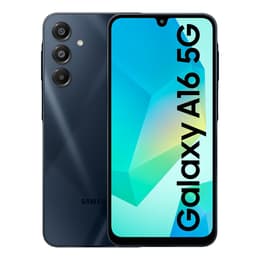
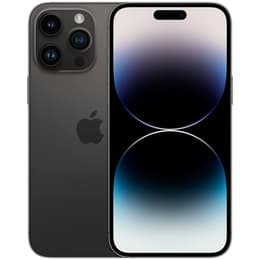

Galaxy A16 5G • Unlocked vs iPhone 14 Pro Max • Unlocked

Galaxy A16 5G • Unlocked
Starting at

Refurbished price:$145.73

Versus $195.00 new

See options
iPhone 14 Pro Max • Unlocked
Starting at

Refurbished price:$414.99

Versus $1,099.00 new

See options

Ratings

The Samsung Galaxy A16 5G, released in late 2024, and the Apple iPhone 14 Pro Max, launched in September 2022, represent distinct segments of the smartphone market. While the Galaxy A16 5G aims to deliver a comprehensive experience within a more accessible category, the iPhone 14 Pro Max stands as a high-end flagship device from its release year. The primary differentiators lie in their operating systems, overall performance capabilities, and advanced camera systems, catering to different user priorities and expectations.

Scores

Durability

When considering the long-term usability of these devices, their respective release timelines and software support policies are key factors. The Galaxy A16 5G, being a newer device, benefits from an extended support window, while the iPhone 14 Pro Max, despite its earlier release, still offers substantial longevity.

  • Software Longevity: The Samsung Galaxy A16 5G launched with Android 14 and is notable for its commitment to six years of major Android OS updates and six years of security patches, extending its software lifespan significantly into the future. The iPhone 14 Pro Max, released with iOS 16, typically receives 5-6 years or more of iOS updates, ensuring it remains current with Apple's ecosystem for a considerable period.
  • Physical Durability: The iPhone 14 Pro Max features a robust build with a stainless steel frame and Ceramic Shield front cover, offering enhanced resistance against drops and scratches, along with an IP68 rating for dust and water resistance. The Galaxy A16 5G utilizes a plastic frame and a 'Glastic' back, a material designed to mimic glass, and carries an IP54 rating, providing protection against dust and splashes.
  • Practical Lifespan: Both devices are designed for practical daily use over several years. The iPhone 14 Pro Max's premium construction and consistent software updates contribute to a perceived longer high-performance lifespan, while the Galaxy A16 5G's extensive software support makes it a viable option for users seeking a device that remains functional and secure for an extended period without requiring frequent upgrades.

Release Year

2024

2022

OS

Android

iOS

Foldable

No

No

Performance

The performance of a smartphone dictates its responsiveness and ability to handle various tasks, from everyday browsing to demanding applications. The Galaxy A16 5G and iPhone 14 Pro Max offer different tiers of performance, reflecting their design philosophies.

  • Everyday Responsiveness: The iPhone 14 Pro Max delivers exceptionally smooth and rapid performance across all applications, handling intensive multitasking and graphically demanding games with ease due to its powerful internal components. The Galaxy A16 5G provides capable performance for daily tasks such as social media, web browsing, and light gaming, offering a generally smooth experience for average use.
  • Battery Behavior: The iPhone 14 Pro Max is known for its excellent battery endurance, often lasting a full day or more even with heavy usage, supported by a 4323 mAh battery and efficient power management. It also supports fast wired charging and wireless charging. The Galaxy A16 5G features a larger 5000 mAh battery, which typically provides a full day of mixed use, though some tests show slightly less endurance than its predecessor. It supports 25W wired charging but lacks wireless charging.
  • Storage and Multitasking: The iPhone 14 Pro Max offers storage options up to 1TB, paired with ample RAM, ensuring smooth multitasking and sufficient space for extensive media and applications. The Galaxy A16 5G comes with up to 256GB of internal storage and up to 8GB of RAM, with the added benefit of expandable storage via a microSD card, which can be advantageous for users with large media libraries.

Memory (GB)

4 GB

6 GB

Screen quality

The display is a primary interface for smartphone interaction, and both devices offer distinct visual experiences tailored to their respective categories.

  • Display Technology and Clarity: The iPhone 14 Pro Max features a 6.7-inch Super Retina XDR OLED display, providing deep blacks, vibrant colors, and exceptional clarity with a resolution of 2796x1290 pixels (460 ppi). The Galaxy A16 5G also sports a 6.7-inch Super AMOLED display with FHD+ resolution (2340x1080 or 2408x1080), offering good color reproduction and sharpness for its class.
  • Brightness and Smoothness: The iPhone 14 Pro Max boasts ProMotion technology, offering an adaptive refresh rate from 1Hz to 120Hz for incredibly smooth scrolling and animations, along with high peak brightness levels of up to 2000 nits for excellent outdoor visibility. The Galaxy A16 5G features a 90Hz refresh rate, providing a smoother experience than standard 60Hz displays, and reaches a peak brightness of 800 nits, which is adequate for most indoor and some outdoor conditions.
  • Viewing Experience: The iPhone 14 Pro Max includes an Always-On display and the Dynamic Island, which integrates notifications and activities into a fluid interface element. The Galaxy A16 5G offers a large screen size suitable for media consumption, though some users note the presence of a U-shaped notch and larger bezels.

Resolution

1080x2340

1290 x 2796

Screen type

Super AMOLED

LTPO Super Retina XDR OLED

Audiovisual

Camera capabilities are a significant consideration for many users, and these two phones offer different levels of photographic and videographic prowess.

  • Rear Camera System: The iPhone 14 Pro Max features a versatile triple-camera system, including a 48MP main sensor, a 12MP ultrawide, and a 12MP telephoto lens with 3x optical zoom. It excels in capturing detailed images, especially in challenging lighting conditions, and supports advanced features like 48MP ProRAW. The Galaxy A16 5G is equipped with a 50MP main camera, a 5MP ultrawide, and a 2MP macro lens. It performs well in good lighting, producing decent photos for everyday use, with the main camera capable of shooting 50MP images.
  • Video Recording and Low Light: The iPhone 14 Pro Max offers high-quality video recording up to 4K at 60 frames per second across its cameras, with excellent stabilization and strong low-light video performance. The Galaxy A16 5G's main camera supports 4K video recording, though some reviews indicate that video quality and stabilization can vary, with some sources mentioning 1080p 30fps for front and back. Its low-light photography is generally considered acceptable for its category but does not match the performance of higher-end devices.
  • Front Camera and Audio: Both devices feature capable front-facing cameras. The iPhone 14 Pro Max has a 12MP selfie camera with autofocus, delivering clear and detailed self-portraits and video calls. The Galaxy A16 5G includes a 13MP front camera, suitable for selfies and video calls. For audio, the iPhone 14 Pro Max provides a rich stereo speaker experience and clear microphone quality. The Galaxy A16 5G typically offers a mono speaker, with some user reports of scratchy audio.

Miscellaneous

Beyond core performance and display, several practical features contribute to the overall user experience and daily convenience.

  • Connectivity and Ports: Both devices support 5G connectivity for fast mobile data. The iPhone 14 Pro Max uses Apple's proprietary Lightning port for charging and data transfer, and supports Wi-Fi 6 and Bluetooth 5.3. The Galaxy A16 5G features a USB-C port, a more universal standard, and supports Wi-Fi 5 and Bluetooth 5.3. Notably, the Galaxy A16 5G lacks a 3.5mm headphone jack.
  • Biometric Security: The iPhone 14 Pro Max relies on Face ID, an advanced facial recognition system for secure unlocking and authentication. The Galaxy A16 5G incorporates a side-mounted fingerprint sensor, integrated into the power button, offering a convenient and reliable biometric security option.
  • Design and Handling: The iPhone 14 Pro Max has a premium feel with its stainless steel and glass construction, weighing 240 grams. The Galaxy A16 5G, with its plastic build, is slightly lighter at 200 grams, despite having a similar screen size, which can contribute to easier handling for some users. Both devices have large 6.7-inch displays, making them substantial in hand.

Weight

7 oz

8 oz

Screen size (inches)

6.7

6.7

Network

5G

5G

SIM card

Physical SIM

eSIM

Carrier compatibility

Unlocked

Unlocked

Connector

USB-C

Lightning

The Samsung Galaxy A16 5G and iPhone 14 Pro Max cater to different user needs and preferences, reflecting their distinct market positions. User feedback for the iPhone 14 Pro Max consistently praises its robust hardware, vibrant display, exceptional battery life, and advanced camera system, making it a strong choice for those prioritizing a premium and powerful mobile experience. Some minor criticisms from users include the iOS notification system and the device's weight.

For the Galaxy A16 5G, users appreciate its large, bright AMOLED screen, solid battery life for daily use, and Samsung's commitment to long-term software support. However, some users have reported concerns regarding its performance, describing it as occasionally slow or laggy, particularly with the 4GB RAM variant, and have noted varying camera quality.

Users prioritizing a top-tier camera, industry-leading performance, and a highly refined ecosystem with long-lasting battery life will find the iPhone 14 Pro Max well-suited to their needs. Its premium build and advanced display technology offer a sophisticated user experience. Conversely, individuals seeking a modern smartphone with a large, vibrant display, reliable battery life, and extensive software support for everyday tasks, without the need for flagship-level processing power or advanced camera features, may lean towards the Galaxy A16 5G. Opting for a quality-assured refurbished version of either device can also be an eco-friendly alternative, providing access to these technologies while supporting sustainable consumption.


See all articles

Our recent comparisons