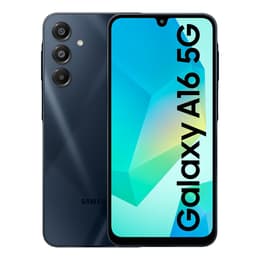
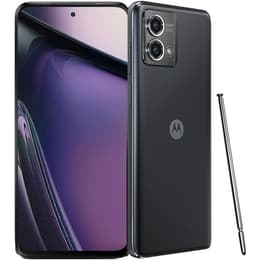

Galaxy A16 5G • Unlocked vs Motorola Moto G Stylus 5G (2023) • Unlocked

Galaxy A16 5G • Unlocked
Starting at

Refurbished price:$145.73

Versus $195.00 new

See options
Motorola Moto G Stylus 5G (2023) • Unlocked
Starting at

Refurbished price:$106.00

Versus $237.99 new

See options

Ratings

The Samsung Galaxy A16 5G, released in late 2024 and early 2025, and the Motorola Moto G Stylus 5G (2023), launched in mid-2023, are both Android smartphones designed for users seeking modern connectivity and features. While the Galaxy A16 5G focuses on an enhanced display and extended software support, the Moto G Stylus 5G (2023) distinguishes itself with an integrated stylus and a higher refresh rate screen. Both devices operate on the Android platform, offering a wide ecosystem of applications and services.

Scores

Durability

When considering the long-term usability of these devices, their release timelines and software support policies are key factors.

  • Release Timeline: The Samsung Galaxy A16 5G is a newer device, having been released in late 2024 and early 2025, while the Motorola Moto G Stylus 5G (2023) was released in June 2023. This difference in launch date inherently gives the Galaxy A16 5G a longer potential lifespan for receiving updates and remaining current.
  • Software Longevity: Samsung has committed to an impressive six years of OS and security updates for the Galaxy A16 5G, with support expected to continue until October 2030. This provides a substantial period of software relevance and security. In contrast, the Moto G Stylus 5G (2023) typically receives one major OS update and approximately three years of security updates, which is a shorter support window.
  • Practical Lifespan & Repairability: Both devices are generally designed with plastic backs, which can offer some resilience to minor impacts. Repairability for both models is typical for their segment, with components generally accessible to skilled technicians. The extended software support of the Galaxy A16 5G suggests it is built to remain functional and secure for a longer duration, making it a suitable choice for users who prefer to keep their devices for many years.

Release Year

2024

2023

OS

Android

Android

Foldable

No

No

Performance

The performance of these smartphones impacts how smoothly applications run and how efficiently daily tasks are handled.

  • Processor Capabilities: The Samsung Galaxy A16 5G is powered by either a MediaTek Dimensity 6300 or an Exynos 1330 processor, depending on the region. These processors are designed to provide responsive performance for everyday applications and moderate multitasking. The Motorola Moto G Stylus 5G (2023) features a Qualcomm Snapdragon 6 Gen 1 processor, which also delivers capable performance for general use and can handle more demanding applications and some gaming.
  • System Responsiveness & Multitasking: Both devices offer configurations with varying amounts of RAM, typically starting from 4GB or 6GB, with the Galaxy A16 5G also offering an 8GB option. Higher RAM configurations contribute to smoother multitasking and quicker app loading times. User experiences for the A15 5G (a predecessor to the A16 5G) suggest that while adequate for basic use, it might show some slowdown with heavy multitasking or demanding applications. The Moto G Stylus 5G (2023) generally receives positive feedback for its performance, with some users noting its ability to handle games and background applications effectively.
  • Storage Options & Battery Behavior: Both phones come with internal storage options of 128GB or 256GB, and both support expandable storage via a microSD card, offering flexibility for users with large media libraries. Both devices are equipped with 5000 mAh batteries, which typically provide a full day of use for most users. The Galaxy A16 5G supports 25W fast charging, while the Moto G Stylus 5G (2023) supports 20W charging.

Memory (GB)

4 GB

6 GB

Screen quality

The display is a primary interface for smartphone interaction, and both devices offer distinct viewing experiences.

  • Display Technology & Clarity: The Samsung Galaxy A16 5G features a 6.7-inch Super AMOLED display, known for its deep blacks, high contrast, and vibrant colors. This technology generally provides a more immersive viewing experience, especially for media consumption. The Motorola Moto G Stylus 5G (2023) comes with a 6.6-inch IPS LCD panel. While LCDs offer good color reproduction and viewing angles, they typically do not match the contrast levels of AMOLED screens. Both displays offer Full HD+ resolution (1080x2340 for A16 5G, 1080x2400 for Moto G Stylus 5G 2023), ensuring sharp visuals.
  • Refresh Rate & Smoothness: The Galaxy A16 5G features a 90Hz refresh rate, providing smoother scrolling and a more fluid visual experience compared to standard 60Hz displays. The Moto G Stylus 5G (2023) offers an even higher 120Hz refresh rate, which results in noticeably smoother animations and responsiveness, particularly beneficial for gaming or fast-paced content.
  • Brightness & Viewing Experience: The Super AMOLED display of the Galaxy A16 5G is capable of higher brightness levels, which can improve outdoor visibility. Users of the A15 5G (a similar model) have praised its vibrant display. The Moto G Stylus 5G (2023)'s LCD panel offers good brightness, but may not perform as well under direct sunlight compared to an AMOLED. The slightly larger screen of the A16 5G provides a marginally more expansive viewing area.

Resolution

1080x2340

1080 x 2400

Screen type

Super AMOLED

IPS LCD

Audiovisual

Both smartphones are equipped with multi-camera systems designed to capture various types of photos and videos.

  • Rear Camera Systems: The Samsung Galaxy A16 5G features a triple camera setup, including a 50MP main sensor, a 5MP ultrawide lens, and a 2MP macro lens. This configuration allows for versatile shooting, from wide landscapes to detailed close-ups. The Motorola Moto G Stylus 5G (2023) also has a capable camera system, with a 50MP main sensor that includes optical image stabilization (OIS) and an 8MP ultrawide camera that doubles as a macro and depth sensor. The inclusion of OIS on the main sensor of the Moto G Stylus 5G (2023) can lead to clearer photos in challenging conditions and more stable video.
  • Photography Performance: For everyday photography, both devices are expected to produce good results in well-lit conditions. The Galaxy A16 5G's dedicated ultrawide lens offers a broader field of view. User feedback for the Moto G Stylus 5G (2023) indicates that its daytime photos are clean and crisp, though its low-light performance may not be as strong. The A15 5G (a predecessor to the A16 5G) also receives mixed reviews for its camera, being considered adequate but not exceptional.
  • Video Recording & Audio: The Moto G Stylus 5G (2023) offers 4K video recording at 30fps with its main camera, providing higher detail than the Galaxy A16 5G, which records at Full HD (1080p) at 30fps. Both phones feature loudspeakers for media consumption. The Moto G Stylus 5G (2023) includes a 3.5mm headphone jack, a feature absent on the Galaxy A16 5G, which relies on its USB-C port for wired audio.

Miscellaneous

Beyond core features, several practical elements differentiate these two smartphones in daily use.

  • Connectivity & Ports: Both devices support 5G connectivity, ensuring access to faster mobile networks. They also feature Wi-Fi 802.11ac and Bluetooth 5.3 for wireless connections. Both utilize a USB Type-C port for charging and data transfer. A notable difference is the presence of a 3.5mm headphone jack on the Motorola Moto G Stylus 5G (2023), which is absent on the Samsung Galaxy A16 5G.
  • Sensors & Unique Features: Both phones include fingerprint sensors for secure unlocking, typically integrated into the power button. The Motorola Moto G Stylus 5G (2023) stands out with its integrated stylus, offering functionality for note-taking, drawing, and precise navigation, which is a key differentiator. The Galaxy A16 5G includes NFC for contactless payments, a feature that may vary by region or carrier for the Moto G Stylus 5G (2023).
  • Design & Handling: The Galaxy A16 5G has a 6.7-inch display and weighs around 200 grams. The Moto G Stylus 5G (2023) has a 6.6-inch display, measures 162.8 x 73.8 x 9.2 mm, and weighs 202 grams. Both phones feature plastic backs. The Moto G Stylus 5G (2023) has a water-repellent design, offering some protection against splashes, though neither device typically carries a formal IP water resistance rating.

Weight

7 oz

202 oz

Screen size (inches)

6.7

6.8

Network

5G

5G

SIM card

Physical SIM

Physical SIM

Carrier compatibility

Unlocked

Unlocked

Connector

USB-C

USB-C

The Samsung Galaxy A16 5G and the Motorola Moto G Stylus 5G (2023) cater to slightly different user preferences within the mid-range smartphone market. User feedback for the Galaxy A15 5G (a close predecessor to the A16 5G) often praises its vibrant display and long-term software support, though some users report occasional performance limitations with heavy use. Conversely, the Moto G Stylus 5G (2023) is frequently lauded for its integrated stylus functionality, generally smooth performance, and good battery life, with some criticisms occasionally directed at its camera quality or the presence of pre-installed applications.

Users prioritizing an extended software support lifespan and a vivid Super AMOLED display may find the Samsung Galaxy A16 5G to be a compelling choice. Its commitment to six years of updates ensures a longer period of security and access to the latest Android features. On the other hand, individuals who value the precision and convenience of an integrated stylus, a higher refresh rate display for smoother interactions, and 4K video recording capabilities will likely lean towards the Motorola Moto G Stylus 5G (2023). Both devices offer robust battery life and 5G connectivity, making them suitable for daily use. When considering either of these models, exploring quality-assured refurbished options can be an eco-friendly alternative to extend their lifecycle.


See all articles

Our recent comparisons