Galaxy A16 5G • Unlocked vs iPhone 14 • Unlocked

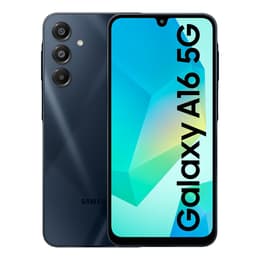
Galaxy A16 5G • Unlocked
Starting at

Refurbished price:$141.00

Versus $195.00 new

See options
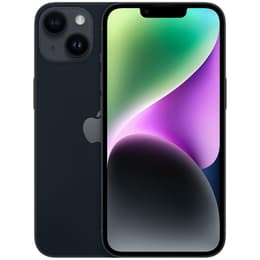
iPhone 14 • Unlocked
Starting at

Refurbished price:$254.00

Versus $629.00 new

See options

Ratings

The Samsung Galaxy A16 5G, released in late 2024 and early 2025, and the Apple iPhone 14, launched in September 2022, represent distinct approaches to smartphone design and functionality. While both devices offer 5G connectivity and capable camera systems, they differ significantly in their operating systems, display technologies, and overall user experience. The Galaxy A16 5G operates on Android, emphasizing a larger display and extensive software support, whereas the iPhone 14 runs on iOS, focusing on a refined user interface and advanced computational photography.

Scores

Durability

When considering the long-term usability of a smartphone, software support and physical durability are key factors. The Galaxy A16 5G and iPhone 14 offer different longevity propositions.

  • Software Updates: The Galaxy A16 5G is notable for its extended software commitment, promising six years of operating system and security updates, with support expected to continue until October 2030. The iPhone 14, released earlier, typically receives iOS updates for approximately five to six years from its launch.
  • Durability Features: The iPhone 14 features a Ceramic Shield front cover and an IP68 rating, indicating a high level of resistance to dust and water immersion. The Galaxy A16 5G comes with an IP54 rating, offering protection against dust ingress and splashes of water.
  • Practical Lifespan: Users prioritizing the absolute longest period of manufacturer software support from the point of purchase may find the Galaxy A16 5G appealing due to its stated update policy. The iPhone 14, while having a shorter remaining update window, benefits from Apple's consistent and timely software delivery.

Release Year

2024

2022

OS

Android

iOS

Foldable

No

No

Performance

The performance of a smartphone impacts everything from app responsiveness to gaming experiences. Both the Galaxy A16 5G and iPhone 14 are designed to handle daily tasks efficiently, though they achieve this with different hardware foundations.

  • Everyday Responsiveness: The Galaxy A16 5G is equipped with a processor optimized for routine tasks, providing smooth operation for browsing, social media, and common applications. The iPhone 14 features a powerful processor that ensures demanding applications and multitasking run smoothly, offering a fluid user experience across the iOS ecosystem.
  • Multitasking and Storage: The Galaxy A16 5G offers various RAM configurations, including 4GB, 6GB, and 8GB options, alongside expandable storage via microSD, which can be beneficial for users who manage large media libraries. The iPhone 14 comes with 6GB of RAM and internal storage options up to 512GB, providing ample space and efficient memory management for seamless app switching.
  • Battery Behavior: The Galaxy A16 5G includes a 5000mAh battery, which typically provides over a full day of use for many users, extending to two days with lighter usage. The iPhone 14, with its 3279mAh battery, is optimized for a full day of use for most users, offering up to 20 hours of video playback.

Memory (GB)

4 GB

6 GB

Screen quality

The display is a primary interface for smartphone interaction, and both devices offer distinct visual experiences tailored to their respective platforms.

  • Display Technology and Size: The Galaxy A16 5G features a larger 6.7-inch Super AMOLED display, known for its vibrant colors and deep blacks, providing an expansive viewing area. The iPhone 14 utilizes a 6.1-inch Super Retina XDR OLED display, which also delivers rich colors, high contrast, and excellent clarity in a more compact form factor.
  • Resolution and Clarity: Both phones offer Full HD+ resolution, with the Galaxy A16 5G at 1080 x 2340 pixels and the iPhone 14 at 2532 x 1170 pixels. The iPhone 14's smaller screen size with a similar resolution results in a higher pixel density, contributing to sharp text and images.
  • Refresh Rate and Brightness: The Galaxy A16 5G boasts a 90Hz refresh rate, which contributes to smoother scrolling and animations. It reaches a maximum brightness of 800 nits. The iPhone 14 has a standard 60Hz refresh rate but offers higher peak brightness of 1200 nits for HDR content, enhancing visibility in bright conditions.

Resolution

1080x2340

1170 x 2532

Screen type

Super AMOLED

Super Retina XDR OLED

Audiovisual

Camera capabilities are a significant consideration for many users, and both the Galaxy A16 5G and iPhone 14 provide tools for capturing photos and videos, albeit with different strengths.

  • Rear Camera Systems: The Galaxy A16 5G is equipped with a triple-lens rear camera setup, featuring a 50MP main sensor, a 5MP ultra-wide lens, and a 2MP macro lens, capable of capturing detailed everyday photos and 4K video at 30 frames per second. The iPhone 14 features a dual 12MP camera system, comprising a main wide-angle lens with sensor-shift optical image stabilization and an ultra-wide lens, excelling in computational photography and low-light performance with its Photonic Engine.
  • Front Camera and Video Features: For selfies and video calls, the Galaxy A16 5G has a 13MP front camera. The iPhone 14 includes a 12MP front camera with autofocus and improved low-light capabilities. The iPhone 14 also offers advanced video recording features such as Cinematic mode for depth-of-field effects and Action mode for stabilized footage, supporting up to 4K Dolby Vision HDR recording at 60 frames per second.
  • Photography Performance: The Galaxy A16 5G's 50MP main sensor can capture high-resolution images, which are often binned to 12MP for improved light capture. The iPhone 14's camera system, while having lower megapixel counts, leverages software enhancements to produce consistent and high-quality images, particularly in challenging lighting conditions.

Miscellaneous

Beyond core specifications, several practical elements contribute to the overall user experience and daily convenience of a smartphone.

  • Connectivity and Ports: Both devices support 5G connectivity for fast mobile data. The Galaxy A16 5G features a USB Type-C port for charging and data transfer, and includes Bluetooth 5.3 and Wi-Fi 5. The iPhone 14 uses Apple's proprietary Lightning port, along with Bluetooth 5.3 and Wi-Fi 6. Neither phone includes a traditional 3.5mm headphone jack.
  • Biometrics and Security: The Galaxy A16 5G incorporates a side-mounted fingerprint sensor for secure unlocking and authentication. The iPhone 14 relies on Face ID, Apple's facial recognition system, for biometric security.
  • Design and Handling: The Galaxy A16 5G has a larger 6.7-inch display and a build primarily of plastic, contributing to its overall dimensions of 6.47 x 3.07 x 0.31 inches and a weight of 7.06 ounces. The iPhone 14, with its 6.1-inch display, features an aerospace-grade aluminum frame and glass back, measuring 5.78 x 2.82 x 0.31 inches and weighing 6.07 ounces, offering a more compact and lighter feel.

Weight

7 oz

6 oz

Screen size (inches)

6.7

6.1

Network

5G

5G

SIM card

Physical SIM

eSIM

Carrier compatibility

Unlocked

Unlocked

Connector

USB-C

Lightning

The Samsung Galaxy A16 5G and iPhone 14 cater to different user preferences and priorities. User feedback for the Galaxy A16 5G often highlights its impressive battery life, vibrant display, and the significant commitment to long-term software updates as key advantages. Some common points of discussion include the absence of wireless charging and the lack of a headphone jack.

For the iPhone 14, users frequently praise its robust camera capabilities, smooth performance, and the cohesive iOS ecosystem. Some users have noted concerns regarding battery degradation over time.

Users prioritizing a larger display, a longer stated software support window, and extended battery life for general use may find the Galaxy A16 5G well-suited to their needs. Its expandable storage also appeals to those who require more space for media and files. Conversely, users who value a more compact design, advanced computational photography features, a highly optimized operating system, and wireless charging capabilities may lean toward the iPhone 14. The iPhone 14 also offers a higher degree of water and dust resistance.

Both devices are available as quality-assured refurbished options, providing an eco-friendly alternative for consumers seeking reliable technology while making sustainable choices.


See all articles

Our recent comparisons