
Compare models
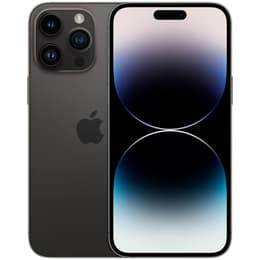
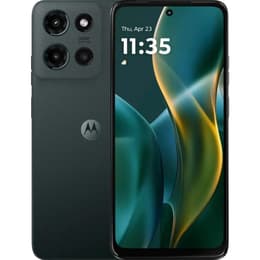
iPhone 14 Pro Max • Locked AT&T vs Motorola Moto G (2025) • Unlocked
- 1-year warranty
- Free standard shipping
- Free 30-day returns
Differences at a glance
The iPhone 14 Pro Max (2022) and the Motorola Moto G (2025) represent two distinct approaches to the modern smartphone market, balancing flagship capabilities with accessible everyday utility. While the iPhone 14 Pro Max operates on Apple's closed software ecosystem emphasizing hardware integration, the Motorola Moto G runs on a flexible version of Android designed for straightforward daily tasks. The primary differentiators between these devices center on processing capability, software environment, and display technology, establishing distinct paths for users depending on their preferred mobile platform.
Available Models
Color
Storage (GB)
Scores
Durability
When examining software longevity and hardware endurance, both devices offer different timelines for support and physical resilience based on their respective release schedules and materials.
- Software longevity: The iPhone benefits from an extended history of multi-year operating system updates and security patches, whereas the Motorola device provides a shorter software support window typical of its class.
- Build and repair: The iPhone 14 Pro Max features a stainless steel frame and textured glass back designed to withstand heavy daily use, while utilizing a structured repair network for component replacements.
- Expected lifespan: Users can expect prolonged system performance from the iPhone's high-end internal architecture, whereas the Motorola Moto G serves standard operational needs effectively for its intended lifecycle.
Release Year
2022
2025
OS
iOS
Android
Foldable
No
No
Performance
Underneath the exterior, these smartphones handle everyday applications, multitasking, and battery consumption differently due to their varying internal hardware configurations.
- Multitasking and processing: The iPhone 14 Pro Max handles demanding mobile games and resource-heavy applications smoothly without noticeable stutter, while the Motorola Moto G manages routine browsing, messaging, and media streaming reliably.
- Storage capacity: Apple provides various high-capacity internal storage tiers without expansion slots, whereas the Motorola model typically offers expandable storage via a memory card slot for media archiving.
- Battery behavior: Both devices manage daily energy consumption efficiently, allowing standard users to reach the end of a full day of mixed usage before requiring a recharge.
Screen quality
Visual output and display responsiveness vary significantly between the two models, impacting media consumption, outdoor legibility, and day-to-day navigation.
- Display panel type: The iPhone utilizes an advanced organic light-emitting diode panel with deep contrast levels and high peak brightness for clear outdoor visibility, while the Motorola Moto G features a standard high-refresh-rate screen for smooth scrolling.
- Resolution and clarity: High pixel density on the iPhone provides sharp text rendering and detailed image viewing, whereas the Motorola display offers clear visual performance suited for web browsing and video playback.
- Refresh rate smoothness: Both devices incorporate smooth screen refresh technologies that reduce motion blur during rapid scrolling and interface navigation.
Resolution
1290 x 2796
720x1604
Screen type
LTPO Super Retina XDR OLED
IPS LCD
Audiovisual
Photography, video recording, and audio output capabilities differ notably, reflecting the distinct hardware tiers and design priorities of each manufacturer.
- Camera systems: The iPhone 14 Pro Max includes a versatile multi-lens array with a high-resolution primary sensor and dedicated optical zoom capabilities, while the Motorola Moto G equips a simpler multi-lens setup focused on everyday snapshots.
- Low-light and video performance: Advanced image processing on the iPhone preserves detail in challenging lighting conditions and records stable high-definition video, whereas the Motorola handles daytime photography and casual video calls adequately.
- Audio delivery: Stereo speakers on both units provide clear sound output for hands-free calls and media playback, with the iPhone delivering broader dynamic range and depth.
Miscellaneous
Practical daily usability is shaped by connectivity standards, physical dimensions, and security authentication features built into each device's design.
- Connectivity and ports: The iPhone utilizes Apple's proprietary charging port alongside modern wireless and fifth-generation cellular standards, whereas the Motorola Moto G adopts a standard universal connector alongside contemporary network compatibility.
- Security sensors: The iPhone relies on facial recognition technology for device unlocking and secure authentication, while the Motorola Moto G incorporates a physical fingerprint scanner for quick access.
- Physical handling: The iPhone 14 Pro Max features a heavier build with dense materials, whereas the Motorola Moto G utilizes lightweight plastics for a more relaxed hand-held feel during extended usage sessions.
Weight
8 oz
7 oz
Screen size (inches)
6.7
6.7
Network
5G
5G
SIM card
eSIM
Physical SIM + eSIM
Carrier compatibility
AT&T
Unlocked
What the community thinks
User feedback and community discussions indicate that the iPhone 14 Pro Max receives frequent praise for its robust display quality, advanced camera flexibility, and durable construction, though some users note its heavier physical weight during one-handed operation. Conversely, community sentiment highlights the Motorola Moto G for its straightforward software interface and lightweight handling, while noting limitations in complex gaming performance and long-term software update availability. Users prioritizing high-end photography, extended software support, and a high-resolution display ecosystem may prefer the iPhone 14 Pro Max. Meanwhile, users looking for a straightforward, lightweight device for daily communication and media consumption may find the Motorola Moto G well-suited to their needs. For those exploring sustainable purchasing alternatives, a quality-assured refurbished option provides a reliable way to access high-end technology while minimizing environmental impact. Ultimately, the choice depends on individual platform preferences and daily operational priorities without a single designated superior option.