
Galaxy A23 5G • Unlocked vs iPhone 11 Pro • Unlocked

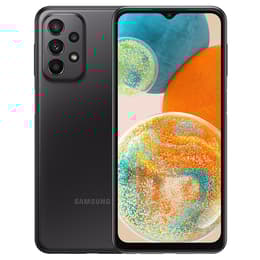
Galaxy A23 5G • Unlocked
Starting at

Refurbished price:$123.00

Versus $279.99 new

See options
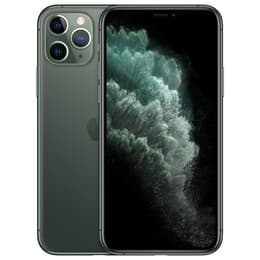
iPhone 11 Pro • Unlocked
Starting at

Refurbished price:$200.00

Versus $749.00 new

See options

Ratings

The Samsung Galaxy A23 5G, released in late 2022 and early 2023, and the iPhone 11 Pro, launched in September 2019, represent different approaches to smartphone design and functionality. While the Galaxy A23 5G focuses on modern connectivity and a large display, the iPhone 11 Pro emphasizes a premium build and advanced camera capabilities from its release era. These devices cater to distinct user preferences, offering varying experiences in terms of operating system, display technology, and overall ecosystem integration.

Scores

Durability

When considering the long-term usability of these devices, their respective release timelines and software support play a significant role. The iPhone 11 Pro, released in September 2019, has received consistent iOS updates, typically extending for about five to six years from its launch. The Galaxy A23 5G, launched later in 2022/2023, benefits from a more recent starting point for Android updates, generally receiving several years of major OS upgrades and security patches.

  • Software Longevity: The iPhone 11 Pro, having been released earlier, is closer to the end of its major iOS update cycle compared to the Galaxy A23 5G, which will likely receive Android updates for a longer period from the current date.
  • Physical Durability: The iPhone 11 Pro features a more robust build with a stainless steel frame and glass construction, offering IP68 water and dust resistance. The Galaxy A23 5G utilizes a plastic frame and back, with Corning Gorilla Glass 5 protecting its display, providing a good level of everyday scratch and drop resistance. [10, 15]
  • Repairability: Both devices, when considering refurbished options, can offer extended practical lifespans through component replacement and software maintenance, providing an eco-friendly alternative to purchasing new.

Release Year

2022

2019

Last OS Compatibility

Yes

Yes

OS

Android

iOS

Foldable

No

No

Performance

The performance of these two smartphones varies significantly due to their different hardware architectures and operating systems. The iPhone 11 Pro, with its internal processing unit from 2019, delivers a highly optimized and fluid user experience, capable of handling demanding applications and multitasking with ease. The Galaxy A23 5G, featuring a more recent but mid-range processing unit, provides reliable performance for daily tasks and 5G connectivity.

  • System Responsiveness: The iPhone 11 Pro offers consistently smooth navigation and rapid app loading, making it well-suited for users who prioritize a highly responsive interface.
  • Multitasking and Gaming: The Galaxy A23 5G handles everyday applications and moderate gaming effectively, with its octa-core processor and up to 8GB of RAM supporting multitasking. [3, 4, 6, 8] The iPhone 11 Pro, with its powerful internal components, excels in graphically intensive games and complex applications.
  • Storage Options: The iPhone 11 Pro comes with internal storage options of 64GB, 256GB, or 512GB, without expandable storage. [2, 7] The Galaxy A23 5G offers 64GB or 128GB of internal storage, with the flexibility to expand up to 1TB using a microSD card. [3, 6]

Memory (GB)

6 GB

4 GB

Screen quality

The visual experience on these devices is a key differentiator, primarily due to their underlying display technologies and specifications. The iPhone 11 Pro features a Super Retina XDR OLED display, known for its deep blacks and vibrant color reproduction, while the Galaxy A23 5G offers a large PLS LCD panel with a higher refresh rate.

  • Display Technology and Clarity: The iPhone 11 Pro's 5.8-inch OLED display provides exceptional contrast and color accuracy, with a resolution of 2436x1125 pixels resulting in a sharp image. [1, 13] The Galaxy A23 5G features a larger 6.6-inch PLS LCD display with a 1080x2408 pixel resolution, offering a clear viewing experience. [3, 4]
  • Brightness and Outdoor Visibility: The iPhone 11 Pro's display can reach up to 800 nits typical brightness and 1200 nits peak for HDR content, ensuring good visibility even in bright conditions. [1, 13] The Galaxy A23 5G's brightness levels are suitable for most indoor and outdoor environments.
  • Refresh Rate: The Galaxy A23 5G boasts a 120Hz refresh rate, contributing to smoother scrolling and a more fluid visual experience, particularly noticeable in fast-paced content. [3, 6] The iPhone 11 Pro has a standard 60Hz refresh rate, though its touch-sensing operates at 120Hz for responsiveness. [5]

Resolution

1080 x 2408

1125 x 2436

Screen type

PLS LCD

Super Retina XDR OLED

Audiovisual

Both smartphones offer capable camera systems, but they approach photography and videography with different strengths and feature sets. The iPhone 11 Pro is recognized for its consistent image processing and versatile triple-lens setup, while the Galaxy A23 5G provides a high-megapixel main sensor and a quad-camera array for diverse shooting scenarios.

  • Rear Camera System: The iPhone 11 Pro features a triple 12MP camera system, including wide, ultra-wide, and telephoto lenses, offering 2x optical zoom in and out, Night mode, and 4K video recording at up to 60fps. [1, 2, 19] The Galaxy A23 5G comes with a quad-camera setup, highlighted by a 50MP main sensor with Optical Image Stabilization (OIS), a 5MP ultrawide, and dedicated macro and depth sensors, recording video at 1080p 30fps. [3, 17, 21]
  • Low-Light Performance: The iPhone 11 Pro's Night mode significantly enhances low-light photography, producing detailed and well-exposed images in challenging conditions. [2, 9] The Galaxy A23 5G's 50MP main sensor with OIS helps in capturing clearer photos in less ideal lighting, though its overall low-light performance may not match the iPhone's dedicated mode. [21]
  • Front Camera and Video: The iPhone 11 Pro includes a 12MP front camera capable of 4K video recording at 60fps, supporting advanced features like cinematic video stabilization. [1, 27] The Galaxy A23 5G has an 8MP front camera, suitable for video calls and selfies, recording at 1080p 30fps. [3, 4]

Main camera

50 megapixels

12 megapixels

Front camera

8 megapixels

12 megapixels

Miscellaneous

Beyond their core features, several practical elements contribute to the overall user experience and differentiate these two devices. These include their connectivity capabilities, physical design, and integrated sensors.

  • Connectivity and Ports: The Galaxy A23 5G supports 5G cellular networks, Wi-Fi 5 (802.11ac), Bluetooth 5.1, and includes a 3.5mm headphone jack and a USB-C 2.0 port. [3, 18] The iPhone 11 Pro offers Gigabit-class 4G LTE, Wi-Fi 6 (802.11ax), Bluetooth 5.0, and features a Lightning port, without a headphone jack. [1, 5, 19]
  • Biometric Security: The iPhone 11 Pro relies on Face ID for secure facial recognition. [27] The Galaxy A23 5G incorporates a side-mounted fingerprint sensor for biometric authentication. [10]
  • Design and Handling: The iPhone 11 Pro has a more compact form factor (144 x 71.4 x 8.1 mm) and a premium feel with its stainless steel frame and glass back, weighing 188g. [7, 9] The Galaxy A23 5G is larger (164.5 x 76.9 x 8.4 mm) and slightly heavier at 197g, with a plastic construction. [10, 26]

Weight

7 oz

7 oz

Screen size (inches)

6.8

5.8

Network

5G

LTE

SIM card

Physical SIM

Physical SIM + eSIM

Carrier compatibility

Unlocked

Unlocked

The Samsung Galaxy A23 5G and the iPhone 11 Pro cater to different user priorities, reflecting their distinct design philosophies and release timelines. Users often praise the iPhone 11 Pro for its exceptional camera performance, particularly its Night mode and video capabilities, as well as its fluid operating system and premium build quality. [9, 14, 28] Some common criticisms for the iPhone 11 Pro at its launch included the base storage option of 64GB being limiting for many users. [14]

The Galaxy A23 5G is frequently noted for its large, high-refresh-rate display, long-lasting battery, and the inclusion of 5G connectivity, making it a strong contender for users prioritizing modern network speeds and extended usage between charges. [11, 21, 32] User feedback sometimes points to its performance not being as consistently smooth as higher-end devices, with occasional reports of lag. [11]

Users prioritizing a highly optimized software experience, advanced camera features for both photos and videos, and a compact, premium design may find the iPhone 11 Pro better suited to their needs. Conversely, individuals who value a larger display with a smoother refresh rate, expandable storage, a 3.5mm headphone jack, and the latest 5G connectivity will likely lean towards the Galaxy A23 5G. Both devices, especially when considering quality-assured refurbished options, offer a sustainable choice for consumers looking to make an informed purchasing decision.


See all articles

Our recent comparisons