
Compare models
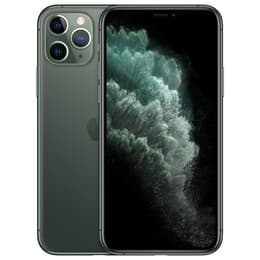
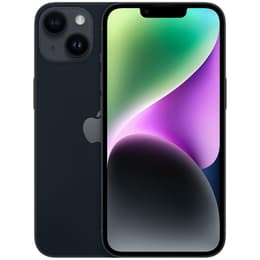
iPhone 11 Pro • Unlocked vs iPhone 14 • Unlocked
- 1-year warranty
- Free standard shipping
- Free 30-day returns
Differences at a glance
The iPhone 11 Pro, released in September 2019, and the iPhone 14, launched in September 2022, represent different generations of Apple's smartphone lineup. While both devices operate on Apple's iOS ecosystem, the iPhone 14 introduces several advancements in processing power, camera capabilities, and connectivity. This comparison will explore the practical differences between these two models to help users understand which device might better suit their needs.
Available Models
Color
Storage (GB)
Scores
Durability
When considering the longevity of a smartphone, factors like release timeline, software support, and physical resilience are key. The iPhone 11 Pro and iPhone 14 offer varying practical lifespans due to their respective launch dates and design evolutions.
- Release Timeline: The iPhone 11 Pro was released in September 2019, making it a significantly older model compared to the iPhone 14, which launched in September 2022. This three-year difference directly impacts the duration of future software updates and overall support.
- Software Longevity: Apple typically provides iOS updates for 5-6 years from a device's release. Consequently, the iPhone 14 is expected to receive software support for a longer period than the iPhone 11 Pro, offering extended access to new features and security updates.
- Physical Durability and Repairability: Both models feature an IP68 rating for water and dust resistance, though the iPhone 14 is rated for a maximum depth of 6 meters for up to 30 minutes, compared to the iPhone 11 Pro's 4 meters for the same duration. The iPhone 14 also incorporates a Ceramic Shield front cover, designed for enhanced drop performance. While the iPhone 14 initially received a high repairability score due to its internal redesign, this was later downgraded by iFixit due to software-based parts pairing requirements that complicate independent repairs.
Release Year
2019
2022
Last OS Compatibility
Yes
Yes
OS
iOS
iOS
Foldable
No
No
Performance
The performance of a smartphone is central to the user experience, influencing everything from app responsiveness to multitasking efficiency. The iPhone 11 Pro and iPhone 14, separated by several generations, exhibit notable differences in their underlying capabilities.
- Processing Power: The iPhone 14 features a more advanced processor compared to the iPhone 11 Pro. This translates to faster app loading times, smoother navigation through demanding applications, and more efficient handling of complex tasks like video editing or graphic-intensive gaming.
- Multitasking and Storage: The iPhone 14 generally offers more internal memory, which contributes to improved multitasking performance, allowing users to switch between multiple open applications more fluidly. While both devices offer various storage configurations, the iPhone 14 starts with a higher base storage option.
- Battery Behavior: The iPhone 14 provides an improved battery life compared to the iPhone 11 Pro, with users often reporting that it comfortably lasts through a full day of typical use. The iPhone 11 Pro, while offering respectable battery performance for its time, may require more frequent charging for heavy users. Some iPhone 14 users have noted faster battery degradation over time.
Screen quality
The display is a primary interface for any smartphone, and both the iPhone 11 Pro and iPhone 14 feature high-quality screens, though with some distinctions in size and protective technology.
- Display Technology and Clarity: Both models utilize Super Retina XDR OLED displays, known for deep blacks, vibrant colors, and excellent contrast ratios. The iPhone 14 has a slightly larger 6.1-inch display compared to the iPhone 11 Pro's 5.8-inch screen, offering a marginally more expansive viewing area.
- Resolution and Brightness: The iPhone 14 features a resolution of 2532x1170 pixels at 460 ppi, while the iPhone 11 Pro has a 2436x1125 pixel resolution at 458 ppi. Both displays offer a typical maximum brightness of 800 nits and a peak HDR brightness of 1200 nits, ensuring good visibility in various lighting conditions.
- Refresh Rate and Protection: Both devices maintain a standard 60Hz refresh rate. The iPhone 14 introduces the Ceramic Shield front cover, which is designed to offer enhanced durability against drops compared to the glass used on the iPhone 11 Pro.
Resolution
1125 x 2436
1170 x 2532
Screen type
Super Retina XDR OLED
Audiovisual
Camera systems are a significant differentiator between smartphone generations, and the iPhone 11 Pro and iPhone 14 offer distinct photographic and videographic capabilities.
- Rear Camera System: The iPhone 11 Pro features a triple 12MP camera setup (Ultra Wide, Wide, Telephoto), providing 2x optical zoom in and out, and up to 10x digital zoom. The iPhone 14 has a dual 12MP camera system (Main, Ultra Wide), with a larger main sensor and a wider aperture for improved light capture.
- Low-Light and Computational Photography: The iPhone 14 benefits from the Photonic Engine, which enhances low-light performance across all cameras, and improved Deep Fusion and Smart HDR 4 for better detail and color accuracy. The iPhone 11 Pro introduced Night mode, which was a significant advancement for its time.
- Video Capabilities and Front Camera: Both models support 4K video recording up to 60 frames per second. The iPhone 14 adds Cinematic mode for shallow depth-of-field video and Action mode for smoother, stabilized footage. The iPhone 14's 12MP TrueDepth front camera also gains autofocus and improved low-light performance.
Main camera
12 megapixels
12 megapixels
Front camera
12 megapixels
12 megapixels
Miscellaneous
Beyond core features, several practical elements contribute to the overall user experience and connectivity of these devices.
- Connectivity: A key difference is the iPhone 14's support for 5G cellular networks, offering faster download and upload speeds in compatible areas, which the iPhone 11 Pro lacks, being limited to 4G LTE. Both devices support Wi-Fi 6 (802.11ax) for fast wireless internet and Bluetooth for accessories, with the iPhone 14 featuring the newer Bluetooth 5.3 compared to the iPhone 11 Pro's Bluetooth 5.0.
- Ports and Biometrics: Both the iPhone 11 Pro and iPhone 14 utilize the Lightning port for charging and data transfer. Both models rely on Face ID for secure authentication.
- Design and Handling: The iPhone 14 is slightly taller and wider than the iPhone 11 Pro, but also marginally thinner and lighter (172g vs 188g), which can impact in-hand feel. The iPhone 11 Pro features a stainless steel frame, while the iPhone 14 uses an aluminum design.
Weight
7 oz
6 oz
Screen size (inches)
5.8
6.1
Network
LTE
5G
SIM card
Physical SIM + eSIM
eSIM
Carrier compatibility
Unlocked
Unlocked
Connector
Lightning
Lightning
What the community thinks
The iPhone 11 Pro and iPhone 14 cater to different user priorities, reflecting the advancements in smartphone technology over several years. Users often praise the iPhone 11 Pro for its robust build quality and the versatility of its triple-lens camera system, particularly the dedicated telephoto lens. However, common criticisms for the 11 Pro often revolve around its aging processor and the eventual cessation of software updates, which can limit its long-term usability for demanding applications.
The iPhone 14, on the other hand, is frequently lauded for its significantly improved performance, enhanced low-light camera capabilities, and the inclusion of 5G connectivity, which offers a more future-proof experience. User feedback sometimes points to concerns regarding battery degradation over time for some units, and the complexities introduced by Apple's parts pairing for repairs.
Users prioritizing a more compact device with a versatile camera setup and who do not require the latest performance or 5G connectivity might find the iPhone 11 Pro still meets their needs. Conversely, those who value extended software support, faster performance for modern applications, improved low-light photography, and the benefits of 5G will likely find the iPhone 14 to be a more suitable choice. For consumers looking for a quality-assured refurbished option, both models are available, offering an eco-friendly alternative to purchasing new.