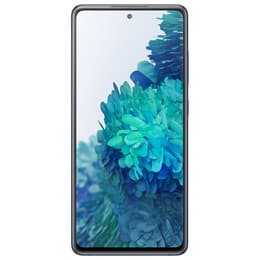

Galaxy A53 5G • Unlocked vs Galaxy S20 FE 5G • Unlocked

Galaxy A53 5G • Unlocked
Starting at

Refurbished price:$113.00

Versus $414.99 new

See options
Galaxy S20 FE 5G • Unlocked
Starting at

Refurbished price:$135.00

Versus $903.28 new

See options

Ratings

The Samsung Galaxy A53 5G, released in March 2022, and the Samsung Galaxy S20 FE 5G, launched in October 2020, are both Android smartphones from Samsung. While the A53 5G is a more recent offering in Samsung's A-series, the S20 FE 5G was introduced as a 'Fan Edition' of the flagship S20 series, aiming to deliver core premium features. Both devices run on the Android operating system with Samsung's One UI, but they differ in their processing power and camera configurations, catering to slightly different user priorities.

Scores

Durability

The longevity of a smartphone is influenced by its release timeline, software support, and physical resilience.

  • Release Timeline: The Galaxy A53 5G was released in March 2022, making it newer than the Galaxy S20 FE 5G, which launched in October 2020. This difference in release dates impacts their respective software support cycles.
  • Software Support: The Galaxy A53 5G was promised four generations of Android OS upgrades and five years of security updates, extending its support until approximately 2027 and up to Android 16. In contrast, the Galaxy S20 FE 5G, initially running Android 10, received updates up to Android 13 and transitioned to quarterly security updates, with official support ending around 2025.
  • Physical Durability: Both devices offer water and dust resistance, with the Galaxy A53 5G featuring an IP67 rating and Corning Gorilla Glass 5 for screen protection. The Galaxy S20 FE 5G comes with an IP68 rating and Corning Gorilla Glass 3. The S20 FE 5G also features an aluminum frame, while the A53 5G has a plastic frame.

Release Year

2022

2020

Last OS Compatibility

Yes

No

OS

Android

Android

Foldable

No

No

Performance

Performance is a key differentiator, affecting how smoothly applications run and how responsive the device feels during daily use.

  • Processing Capabilities: The Galaxy S20 FE 5G generally offers a more robust performance experience, handling demanding applications and multitasking with greater fluidity. Users often report a consistently smooth experience, even with graphically intensive games. The Galaxy A53 5G, while capable for everyday tasks, may exhibit occasional lag or stuttering, particularly when switching between apps or during more intensive operations.
  • Battery Behavior: The Galaxy A53 5G is equipped with a larger 5000mAh battery, often providing extended usage that can comfortably last beyond a full day for many users. The Galaxy S20 FE 5G has a 4500mAh battery, which typically provides a full day of use, though heavy usage, especially with the high refresh rate display, might require more frequent charging. Both devices support 25W fast wired charging.
  • Storage and Responsiveness: Both models offer configurations with 6GB or 8GB of RAM and 128GB or 256GB of internal storage, expandable via a microSD card. The S20 FE 5G's faster internal storage technology (UFS 3.1) contributes to quicker app loading and file transfers compared to the A53 5G's UFS 2.2.

Memory (GB)

6 GB

6 GB

Screen quality

The visual experience on a smartphone is largely defined by its display, and both devices offer vibrant screens with high refresh rates.

  • Display Technology and Clarity: Both the Galaxy A53 5G and the Galaxy S20 FE 5G feature 6.5-inch Super AMOLED displays with a resolution of 1080x2400 pixels, providing clear and colorful visuals. The Super AMOLED technology ensures deep blacks and vibrant colors on both devices.
  • Brightness and Refresh Rate: Both phones boast a 120Hz refresh rate, contributing to smoother scrolling and a more fluid user interface. The Galaxy S20 FE 5G generally achieves a higher peak brightness of 1200 nits, making it more easily viewable in bright outdoor conditions compared to the Galaxy A53 5G's 800 nits.
  • Screen Protection: The Galaxy A53 5G is protected by Corning Gorilla Glass 5, offering enhanced resistance against drops and scratches. The Galaxy S20 FE 5G uses Corning Gorilla Glass 3.

Resolution

1080 x 2400

1080 x 2400

Screen type

Super AMOLED

Super AMOLED

Audiovisual

Camera capabilities are a significant factor for many users, and these devices offer different strengths in their photographic systems.

  • Rear Camera Systems: The Galaxy A53 5G features a quad-camera setup with a 64MP main sensor (with OIS), a 12MP ultrawide, a 5MP macro, and a 5MP depth sensor. The Galaxy S20 FE 5G has a triple-camera system, including a 12MP main sensor (with OIS), an 8MP telephoto lens offering 3x optical zoom, and a 12MP ultrawide lens.
  • Photography Performance: The A53 5G's main camera performs well in good lighting, producing vibrant images, but its low-light performance and video stabilization can be less consistent. The S20 FE 5G's main camera is praised for its image quality in various conditions, and its 3x optical zoom provides clear zoomed-in shots. However, its ultrawide camera has received some criticism for quality.
  • Front Camera and Video: Both phones are equipped with a 32MP front-facing camera for selfies and video calls. Both can record video at 4K resolution at 30fps, with the S20 FE 5G also supporting 4K at 60fps on both front and rear cameras.

Main camera

64 megapixels

12 megapixels

Front camera

32 megapixels

32 megapixels

Miscellaneous

Beyond core features, several practical elements contribute to the overall user experience and device utility.

  • Connectivity and Ports: Both devices support 5G connectivity. The Galaxy A53 5G supports Wi-Fi 5 and Bluetooth 5.1, while the Galaxy S20 FE 5G offers Wi-Fi 6 and Bluetooth 5.0. Both utilize a USB-C port for charging and data transfer, but neither includes a 3.5mm headphone jack.
  • Biometric Security: Both phones feature an in-display optical fingerprint sensor for secure unlocking. The Galaxy S20 FE 5G also includes face recognition. Some users have noted that the A53 5G's fingerprint sensor can be slower or less reliable than desired, and its facial recognition is inconsistent.
  • Design and Handling: The Galaxy A53 5G has a plastic back and frame, contributing to a lighter feel, and measures 159.6 x 74.8 x 8.1mm, weighing 189g. The Galaxy S20 FE 5G also has a plastic back but features an aluminum frame, with dimensions of 159.8 x 74.5 x 8.4mm and a weight of 190g, making them very similar in size and weight.

Weight

7 oz

6 oz

Screen size (inches)

6.5

6.5

Network

5G

5G

SIM card

Physical SIM

Physical SIM

Carrier compatibility

Unlocked

Unlocked

User feedback for the Galaxy A53 5G often highlights its vibrant display, long-lasting battery, and Samsung's commitment to extended software updates as strong points. However, common criticisms revolve around its performance, with some users experiencing occasional lag and stuttering, particularly during multitasking or demanding applications. The camera, while versatile, is sometimes noted for inconsistent low-light performance and video stabilization.

The Galaxy S20 FE 5G is frequently praised for its robust performance, capable cameras (especially the main and telephoto lenses), and the smooth experience provided by its 120Hz display. Its battery life is generally considered good, though some heavy users might find it requires a mid-day top-up. Less favorable comments sometimes point to the quality of its ultrawide camera and its slightly older software support timeline compared to newer devices.

Users prioritizing consistent, fluid performance for demanding tasks and a capable telephoto camera may find the Galaxy S20 FE 5G well-suited to their needs. Those who value extended software support, a larger battery, and a more recent release date, and are less concerned with peak performance, might lean towards the Galaxy A53 5G. Both devices offer a quality-assured refurbished option, providing an eco-friendly alternative for consumers.


See all articles

Our recent comparisons