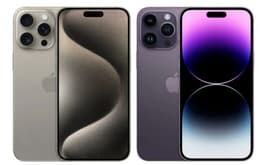
Galaxy S10E • Unlocked vs iPhone 14 • Unlocked

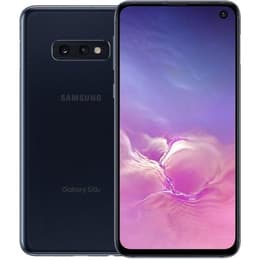
Galaxy S10E • Unlocked
Starting at

Refurbished price:$138.00

Versus $459.00 new

See options
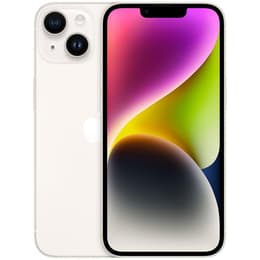
iPhone 14 • Unlocked
Starting at

Refurbished price:$249.99

Versus $629.00 new

See options

Ratings

The Samsung Galaxy S10e, released in March 2019, and the iPhone 14, launched in September 2022, represent distinct approaches to smartphone design and functionality from their respective manufacturers. While the Galaxy S10e operates on the Android platform, the iPhone 14 runs on Apple's iOS. These devices differ significantly in their release timelines, core specifications, and the user experiences they offer.

Scores

Durability

The age and software support timelines are key considerations for the longevity of these devices.

  • Release Timeline: The Galaxy S10e was released in March 2019, making it an older device compared to the iPhone 14, which launched in September 2022. This age difference impacts their expected practical lifespan.
  • OS Support: The Galaxy S10e launched with Android 9 and received updates up to Android 12, reaching its end-of-life for major operating system upgrades. In contrast, the iPhone 14 launched with iOS 16 and is expected to receive several more years of software updates, offering a longer period of access to new features and security enhancements.
  • Physical Durability: Both devices feature IP68 ratings for water and dust resistance, indicating a good level of protection against environmental elements. The iPhone 14 incorporates a Ceramic Shield front cover, which is designed for enhanced drop performance, while the Galaxy S10e uses Gorilla Glass 5 on its front and back.

Release Year

2019

2022

Last OS Compatibility

No

Yes

OS

Android

iOS

Foldable

No

No

Performance

Performance varies considerably between these two smartphones due to their different generations of internal components.

  • Processing Power: The iPhone 14 delivers a fluid and responsive user experience, handling demanding applications and multitasking with ease due to its more recent internal processing unit. The Galaxy S10e, while capable for everyday tasks, may exhibit slower app loading times and less seamless multitasking with more intensive applications compared to the iPhone 14.
  • Storage and RAM: The Galaxy S10e offers storage options of 128GB or 256GB, with the added flexibility of expandable storage via a microSD card. The iPhone 14 comes with internal storage options of 128GB, 256GB, or 512GB, but does not support expandable storage. Both devices typically come with 6GB of RAM, which supports efficient multitasking.
  • Battery Behavior: The iPhone 14 is designed to provide a full day of battery life for most users, though some reports have indicated faster-than-expected battery degradation for certain units. The Galaxy S10e, with its smaller battery capacity, generally offers sufficient power for a full day of moderate use, but heavy users may find themselves needing to charge more frequently.

Memory

6 GB

6 GB

Screen quality

Both devices feature high-quality displays, though with differences in size, resolution, and technology.

  • Display Technology: Both the Galaxy S10e and the iPhone 14 utilize OLED display technology, which provides deep black levels and vibrant colors. The iPhone 14 features a Super Retina XDR OLED display, while the Galaxy S10e has a Dynamic AMOLED display.
  • Size and Clarity: The iPhone 14 has a 6.1-inch display with a resolution of 2532 x 1170 pixels, resulting in a pixel density of approximately 460 pixels per inch (ppi). The Galaxy S10e features a slightly smaller 5.8-inch display with a resolution of 2280 x 1080 pixels, offering a pixel density of around 438 ppi.
  • Brightness and Refresh Rate: Both phones offer a typical maximum brightness of 800 nits and a peak brightness of 1200 nits for HDR content, ensuring good visibility in various lighting conditions. The iPhone 14 has a standard 60Hz refresh rate, while the Galaxy S10e also operates at 60Hz.

Resolution

1080 x 2280

1170 x 2532

Screen type

Dynamic AMOLED

Super Retina XDR OLED

Audiovisual

The camera systems on these devices offer different capabilities for capturing photos and videos.

  • Rear Camera System: The iPhone 14 features a dual-camera system with a 12 MP main sensor (f/1.5) and a 12 MP ultrawide sensor (f/2.4). The main camera benefits from sensor-shift optical image stabilization. The Galaxy S10e also has a dual-camera setup, including a 12 MP wide-angle lens with a variable aperture (f/1.5-f/2.4) and optical image stabilization, alongside a 16 MP ultrawide lens.
  • Photography Features: The iPhone 14 includes advanced computational photography features such as Photonic Engine, Deep Fusion, and Smart HDR 4, which enhance image quality in various conditions, particularly in low light. The Galaxy S10e provides good daylight photos and includes features like Dual Pixel autofocus.
  • Video Recording and Front Camera: Both devices are capable of recording 4K video. The iPhone 14 supports 4K Dolby Vision HDR video recording at up to 60 frames per second and features a 12 MP front camera with autofocus. The Galaxy S10e can record 4K video at up to 60 frames per second and has a 10 MP front camera.

Main camera

12 megapixels

12 megapixels

Front camera

10 megapixels

12 megapixels

Miscellaneous

Beyond core features, several practical elements differentiate the Galaxy S10e and iPhone 14.

  • Connectivity and Ports: The iPhone 14 supports 5G cellular networks, offering faster data speeds where available, and uses a Lightning port for charging and data transfer. The Galaxy S10e is limited to 4G LTE connectivity but includes a versatile USB-C port and retains a 3.5mm headphone jack, which is absent on the iPhone 14.
  • Biometric Security: The iPhone 14 relies on Face ID for secure facial recognition. The Galaxy S10e features a side-mounted fingerprint sensor for biometric authentication.
  • Design and Handling: The Galaxy S10e is a more compact and lighter device, weighing 150 grams with dimensions of 142.2 x 69.9 x 7.9 mm. The iPhone 14 is slightly larger and heavier at 172 grams, with dimensions of 146.7 x 71.5 x 7.8 mm. Both devices feature glass backs and aluminum frames.

Weight

5 oz

6 oz

Screen size (inches)

5.8

6.1

Network

LTE

5G

SIM card

Physical SIM

eSIM

Carrier compatibility

Unlocked

Unlocked

The Samsung Galaxy S10e and iPhone 14 cater to different user preferences, largely due to their generational gap and distinct operating systems. Users often praise the Galaxy S10e for its compact form factor, the inclusion of a traditional headphone jack, and expandable storage, offering practical conveniences that are less common in newer smartphones. Its main criticisms typically revolve around its older processor and the cessation of major software updates, which can impact long-term usability and access to the latest features.

Conversely, the iPhone 14 is frequently lauded for its robust performance, advanced camera capabilities, and the promise of extended software support from Apple. Some users, however, have noted concerns regarding battery degradation over time.

Users prioritizing a smaller device, physical fingerprint authentication, and the versatility of a headphone jack and expandable storage may find the Galaxy S10e well-suited to their needs. For those who value cutting-edge performance, superior camera technology, and a longer period of software updates, the iPhone 14 would be a more aligned choice. Both devices, whether new or as quality-assured refurbished options, offer distinct advantages depending on individual priorities and usage patterns.


See all articles

Our recent comparisons