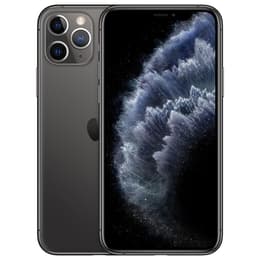

Galaxy S10+ • Unlocked vs iPhone 11 Pro • Unlocked

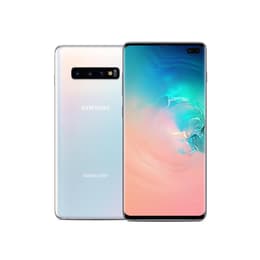
Galaxy S10+ • Unlocked
Starting at

Refurbished price:$166.00

Versus $719.00 new

See options
iPhone 11 Pro • Unlocked
Starting at

Refurbished price:$200.00

Versus $749.00 new

See options

Ratings

The Samsung Galaxy S10 Plus, released in March 2019, and the iPhone 11 Pro, launched in September 2019, represent flagship smartphones from their respective manufacturers. While both devices offer premium experiences, they diverge significantly in their operating systems, camera philosophies, and display characteristics. This comparison aims to highlight the practical differences to help users make an informed decision.

Scores

Durability

When considering the longevity of these devices, several factors come into play, including their release timelines, software support, and physical resilience.

  • Release Timeline and Software Support: The iPhone 11 Pro, being released several months after the Galaxy S10 Plus, generally benefits from a slightly longer period of software updates from its manufacturer. iPhones typically receive iOS updates for approximately 5-6 years from their release, with one user noting their iPhone 11 Pro was still receiving updates in early 2025. The Galaxy S10 Plus, launched with Android 9.0 (Pie), received major Android updates up to Android 12.
  • Build Materials and Durability: The Galaxy S10 Plus features Corning Gorilla Glass 6 on the front and Gorilla Glass 5 on the back, encased in an aluminum frame. The iPhone 11 Pro incorporates what Apple described as the "toughest glass ever in a smartphone" and a stainless steel frame. Both devices carry an IP68 rating for dust and water resistance, indicating protection against submersion.
  • Real-world Resilience: Independent durability tests indicated that the iPhone 11 Pro showed improvements in resilience, with one test noting it was the first iPhone to survive a tumble test with minimal damage, though significant drops could still cause damage. The robust glass protection on the Galaxy S10 Plus also contributes to its physical durability.

Release Year

2019

2019

Last OS Compatibility

No

Yes

OS

Android

iOS

Foldable

No

No

Performance

The performance of a smartphone is crucial for daily tasks, app usage, and multitasking, and both devices offer capable internal components.

  • Processing Power and Responsiveness: The iPhone 11 Pro is equipped with a hexa-core processor, which users often describe as providing a very fast and smooth experience for demanding applications and multitasking. The Galaxy S10 Plus features an octa-core processor, delivering strong performance for everyday use and handling various applications efficiently.
  • Memory and Storage Options: The Galaxy S10 Plus offers more flexible memory configurations, with options for 8GB or 12GB of RAM, and internal storage choices of 128GB, 512GB, or 1TB. It also supports expandable storage via a microSD card. The iPhone 11 Pro comes with 4GB of RAM and storage options of 64GB, 256GB, or 512GB, without expandable storage.
  • Battery Endurance: The Galaxy S10 Plus houses a 4100 mAh battery, which generally provides extended usage, with some tests reporting over 12 hours of web browsing. The iPhone 11 Pro, with its 3046 mAh battery, also demonstrated significant improvements in battery life compared to its predecessors, often lasting over 10 hours in various usage scenarios.

Memory (GB)

8 GB

4 GB

Screen quality

The display is a primary interface for smartphone interaction, and both models feature high-quality screens with distinct characteristics.

  • Display Technology and Size: The Galaxy S10 Plus boasts a larger 6.4-inch Dynamic AMOLED display, offering a resolution of 3040 x 1440 pixels and a pixel density of 522 ppi. This display features curved edges. The iPhone 11 Pro has a more compact 5.8-inch Super Retina XDR OLED display with a resolution of 2436 x 1125 pixels and a pixel density of 458 ppi.
  • Visual Clarity and Brightness: Both displays offer vibrant colors and deep blacks due to their AMOLED/OLED technology, with a 2,000,000:1 contrast ratio. The Galaxy S10 Plus supports HDR10+ and can reach up to 1200 nits of peak brightness. The iPhone 11 Pro's display supports HDR (Dolby Vision and HDR10) and achieves up to 800 nits typical brightness, with a peak of 1200 nits for HDR content.
  • Unique Display Features: The Galaxy S10 Plus integrates an ultrasonic in-screen fingerprint reader and features a punch-hole cutout for its front cameras. The iPhone 11 Pro includes True Tone technology, which adjusts the display's color temperature to match ambient lighting, and Haptic Touch for responsive feedback.

Resolution

1440 x 3040

1125 x 2436

Screen type

Dynamic AMOLED

Super Retina XDR OLED

Audiovisual

Both smartphones offer advanced camera systems designed to capture high-quality photos and videos, though with different strengths and features.

  • Rear Camera Systems: The Galaxy S10 Plus features a versatile triple-camera setup on the rear, consisting of a 12MP wide-angle lens with variable aperture, a 12MP telephoto lens, and a 16MP ultrawide lens. This configuration allows for a broad range of photographic styles. The iPhone 11 Pro also sports a triple-camera system, with three 12MP lenses: wide, ultrawide, and telephoto.
  • Photography Performance: The Galaxy S10 Plus is noted for its excellent color reproduction and exposure in bright lighting conditions, with its ultrawide lens being a significant advantage for capturing expansive scenes. However, its low-light performance can sometimes appear less vibrant. The iPhone 11 Pro is praised for its overall camera experience, including substantial improvements in low-light photography and consistent image quality across its lenses, supported by a dedicated Night Mode.
  • Video Recording and Front Cameras: Both devices are capable of recording 4K video at 60 frames per second. The Galaxy S10 Plus includes a dual front-facing camera system (10MP wide and 8MP depth sensor) that can also record 4K selfie videos. The iPhone 11 Pro features a single 12MP front camera, which is also highly regarded for its video recording capabilities.

Main camera

12 megapixels

12 megapixels

Front camera

10 megapixels

12 megapixels

Miscellaneous

Beyond core performance, several practical features and design elements differentiate these two devices, impacting daily usability.

  • Connectivity and Ports: Both smartphones support modern Wi-Fi standards (Wi-Fi 6 for iPhone 11 Pro, Wi-Fi ax for S10 Plus) and Bluetooth 5.0. A notable difference is the charging and data port: the Galaxy S10 Plus uses a USB-C port and retains a 3.5mm headphone jack. The iPhone 11 Pro utilizes Apple's proprietary Lightning port and does not include a headphone jack.
  • Biometric Security: The Galaxy S10 Plus incorporates an ultrasonic fingerprint sensor embedded within its display for secure unlocking, alongside 2D face recognition. The iPhone 11 Pro relies on Face ID, an advanced 3D facial recognition system, for biometric authentication.
  • Physical Design and Additional Features: The Galaxy S10 Plus measures 157.6 x 74.1 x 7.8 mm and weighs between 175g (glass back) and 198g (ceramic back). It also features Wireless PowerShare, allowing it to wirelessly charge other compatible devices. The iPhone 11 Pro is more compact at 144 x 71.4 x 8.1 mm and weighs 188g.

Weight

6 oz

7 oz

Screen size (inches)

6.4

5.8

Network

LTE

LTE

SIM card

Physical SIM

Physical SIM + eSIM

Carrier compatibility

Unlocked

Unlocked

Connector

USB-C + Jack 3.5mm

Lightning

Both the Samsung Galaxy S10 Plus and the iPhone 11 Pro were highly capable flagship smartphones at their respective launches, each garnering specific praise from users. The Galaxy S10 Plus was frequently lauded for its expansive and vibrant Dynamic AMOLED display, offering a visually immersive experience. Users also appreciated its versatile triple-camera system, particularly the inclusion of an ultrawide lens and a strong front-facing camera setup. Its battery life was often highlighted as a strong point, capable of lasting through a full day of heavy use.

Conversely, some criticisms of the S10 Plus included its low-light camera performance, which could sometimes appear less detailed. The iPhone 11 Pro received significant acclaim for its robust performance, ensuring smooth operation across applications and multitasking. Its battery life, a notable improvement over previous iPhone models, was also a frequent point of praise, allowing many users to comfortably get through a day. The iPhone 11 Pro's camera system, especially its enhanced low-light capabilities and high-quality video recording, was consistently well-regarded. Some users, however, found its screen size to be smaller compared to other flagships, and the base storage option could be limiting.

For users prioritizing a larger display, the Android ecosystem's flexibility, expandable storage, and the convenience of a headphone jack and reverse wireless charging, the Galaxy S10 Plus may be a more suitable choice. Conversely, individuals who value a more compact flagship, the long-term software support and integrated ecosystem of iOS, and a highly refined camera system for both photography and videography, might find the iPhone 11 Pro aligns better with their needs. Both devices remain viable options, especially when considering quality-assured refurbished alternatives, which offer an eco-friendly way to access these advanced technologies.


See all articles

Our recent comparisons