
Galaxy S20 FE 5G • Unlocked vs iPhone 15 • Locked AT&T

Galaxy S20 FE 5G • Unlocked
Starting at

Refurbished price:$135.00

Versus $903.28 new

See options
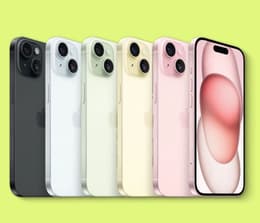
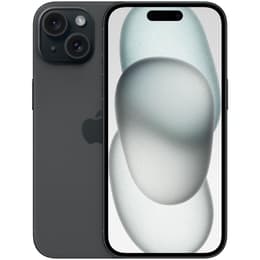
iPhone 15 • Locked AT&T
Starting at

Refurbished price:$349.43

Versus $729.00 new

See options

Ratings

The Samsung Galaxy S20 FE 5G, released in October 2020, and the iPhone 15, launched in September 2023, represent different approaches to smartphone design and functionality from their respective manufacturers. While the Galaxy S20 FE 5G aimed to deliver flagship features at a more accessible point within the Android ecosystem, the iPhone 15 offers Apple's latest advancements in its core smartphone line. Key differentiators include their operating systems, display technologies, and camera capabilities.

Scores

Durability

The longevity of a smartphone is significantly influenced by its release date and the manufacturer's software support policy. The Galaxy S20 FE 5G, being an older device, has a shorter remaining support window compared to the more recent iPhone 15.

  • Software Updates: The Galaxy S20 FE 5G launched with Android 10 and received three major OS updates, concluding with Android 13. Security updates for the S20 FE 5G transitioned to a quarterly schedule in late 2024 and are expected to have concluded by late 2025. The iPhone 15, released with iOS 17, is guaranteed to receive at least five years of security updates from its launch date, extending to September 2028, and typically receives 5-6 years of major iOS updates.
  • Practical Lifespan: Users of the Galaxy S20 FE 5G may find its software support nearing its end, potentially impacting access to the latest features and security patches. The iPhone 15, being a much newer device, offers a considerably longer period of guaranteed software and security updates, ensuring a more extended practical lifespan for users who prioritize up-to-date software.
  • Durability Features: Both devices offer a degree of protection against environmental elements. The Galaxy S20 FE 5G features Gorilla Glass 3 on the front and an IP68 rating for dust and water resistance. The iPhone 15 incorporates Ceramic Shield on the front and also carries an IP68 rating for dust and water resistance.

Release Year

2020

2023

Last OS Compatibility

No

Yes

OS

Android

iOS

Foldable

No

No

Performance

Performance is a critical aspect for daily smartphone use, influencing everything from app responsiveness to gaming experiences. The difference in release dates between these two models results in a notable gap in their processing capabilities.

  • Everyday Responsiveness: The iPhone 15, with its more recent internal components, delivers a highly fluid and responsive experience across general tasks, app loading, and multitasking. The Galaxy S20 FE 5G, while still capable for everyday use, may exhibit slower app launch times and less seamless transitions compared to the iPhone 15 due to its older processor.
  • Demanding Applications: For graphically intensive games or complex productivity applications, the iPhone 15 provides a smoother and more consistent performance, handling demanding workloads with greater efficiency. The Galaxy S20 FE 5G can run most applications and games, but users might experience occasional frame drops or longer processing times in very intensive scenarios.
  • Storage Options: The Galaxy S20 FE 5G offers 128GB or 256GB of internal storage and includes a microSD card slot for expandable storage up to 1TB, providing flexibility for users with large media libraries. The iPhone 15 is available with 128GB, 256GB, or 512GB of internal storage, but does not support expandable storage.

Memory (GB)

6 GB

6 GB

Screen quality

The display is the primary interface for smartphone interaction, and both devices offer distinct viewing experiences tailored to their respective platforms.

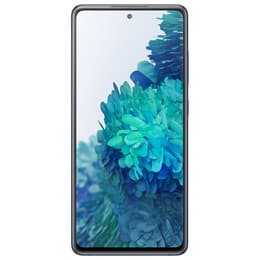
  • Display Technology and Clarity: The Galaxy S20 FE 5G features a 6.5-inch Super AMOLED display with a resolution of 1080 x 2400 pixels, offering vibrant colors and deep blacks. The iPhone 15 comes with a 6.1-inch Super Retina XDR OLED display, providing a resolution of 2556 x 1179 pixels, which translates to a higher pixel density for sharper text and images.
  • Refresh Rate and Smoothness: The Galaxy S20 FE 5G boasts a 120Hz refresh rate, contributing to a smoother scrolling experience and more fluid animations. The iPhone 15 features a standard 60Hz refresh rate, which is sufficient for most users but may not feel as fluid as the higher refresh rate display of the S20 FE 5G.
  • Brightness and Outdoor Visibility: The iPhone 15 offers higher peak brightness levels, particularly for HDR content and outdoor use, making it more easily viewable in bright sunlight. The Galaxy S20 FE 5G's display is bright for indoor use, but some users have noted that outdoor visibility can be challenging in direct sunlight.

Resolution

1080 x 2400

1179 x 2556

Screen type

Super AMOLED

Super Retina XDR OLED

Audiovisual

Camera capabilities are a significant factor for many users, and both the Galaxy S20 FE 5G and iPhone 15 offer versatile camera systems, though with different strengths and features.

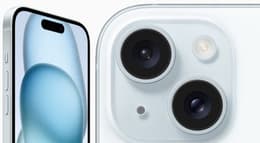
  • Rear Camera System: The Galaxy S20 FE 5G features a triple-camera setup with a 12 MP wide-angle lens, an 8 MP telephoto lens with 3x optical zoom, and a 12 MP ultrawide lens. The iPhone 15 has an advanced dual-camera system, including a 48 MP main camera with 2x telephoto capabilities (enabled by a quad-pixel sensor) and a 12 MP ultrawide camera.
  • Photography Performance: The iPhone 15's 48 MP main sensor allows for capturing highly detailed images, and its computational photography excels in various lighting conditions, including low light. The Galaxy S20 FE 5G provides good everyday photography, with its dedicated telephoto lens offering true optical zoom, which can be beneficial for distant subjects.
  • Video Recording and Features: Both devices are capable of recording 4K video. The iPhone 15 offers advanced video features like Cinematic mode and improved HDR video recording. The Galaxy S20 FE 5G also supports 4K video recording and includes features like Super Steady for stabilization.

Main camera

12 megapixels

48 megapixels

Front camera

32 megapixels

12 megapixels

Miscellaneous

Beyond core features, several practical elements contribute to the overall user experience, from connectivity to physical design.

  • Connectivity and Ports: Both devices support 5G connectivity. The Galaxy S20 FE 5G includes Wi-Fi 6 and Bluetooth 5.0, featuring a USB-C port for charging and data transfer. The iPhone 15 supports Wi-Fi 6E and Bluetooth 5.3, and notably features a USB-C port, marking a transition from Apple's proprietary Lightning connector. However, the iPhone 15's USB-C port operates at USB 2.0 speeds for data transfer, while the Galaxy S20 FE 5G's USB-C port supports faster speeds.
  • Biometric Security: The Galaxy S20 FE 5G utilizes an under-display optical fingerprint sensor for secure unlocking. The iPhone 15 relies on Face ID, Apple's facial recognition system, for biometric authentication.
  • Design and Handling: The Galaxy S20 FE 5G has a 6.5-inch display and weighs 190g, featuring a plastic back and an aluminum frame. The iPhone 15 is more compact with a 6.1-inch display and weighs 171g, featuring a color-infused glass back and an aluminum design. The iPhone 15 also introduces the Dynamic Island, a dynamic area around the front camera that displays alerts and activities.

Weight

6 oz

171 oz

Screen size (inches)

6.5

6.1

Network

5G

5G

SIM card

Physical SIM

eSIM

Carrier compatibility

Unlocked

AT&T

The Samsung Galaxy S20 FE 5G and the iPhone 15 cater to different user preferences, largely due to their release timelines and ecosystem differences. Users frequently praise the Galaxy S20 FE 5G for its vibrant 120Hz AMOLED display, capable camera system with optical zoom, and expandable storage, making it a compelling option for those who value display fluidity and storage flexibility within the Android ecosystem. Some common criticisms have included its plastic back, which some perceive as less premium, and the eventual conclusion of major OS updates.

The iPhone 15 is often lauded for its powerful performance, excellent camera capabilities, and the integration of the Dynamic Island for interactive notifications. Its compact size and premium build materials are also frequently highlighted. However, some users have noted the 60Hz refresh rate as a potential drawback compared to higher refresh rate displays on other devices, and the standard iPhone 15 models have slower USB-C data transfer speeds than the Pro models.

Users prioritizing a high refresh rate display, expandable storage, and a dedicated telephoto lens may find the Galaxy S20 FE 5G well-suited to their needs. Conversely, users who value the latest software experience, a more compact design, superior overall performance, and advanced computational photography will likely lean towards the iPhone 15. Both devices offer a quality-assured refurbished option, providing an eco-friendly alternative for consumers looking to make a sustainable choice.

See all articles

Our recent comparisons