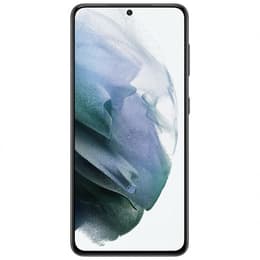
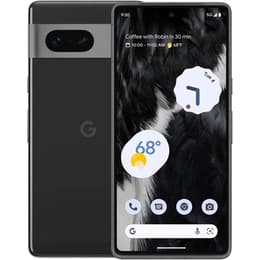

Galaxy S21 5G • Unlocked vs Google Pixel 7 • Unlocked

Galaxy S21 5G • Unlocked
Starting at

Refurbished price:$132.99

Versus $1,000.00 new

See options
Google Pixel 7 • Unlocked
Starting at

Refurbished price:$185.99

Versus $599.99 new

See options

Ratings

The Samsung Galaxy S21 5G, released in January 2021, and the Google Pixel 7, launched in October 2022, are both Android smartphones offering distinct user experiences. While the Galaxy S21 emphasizes a versatile camera system and a fluid display, the Pixel 7 focuses on Google's intelligent software features and a streamlined interface. Both devices operate on the Android platform, but they present different interpretations through Samsung's One UI and Google's native Android design.

Scores

Durability

The long-term usability of a smartphone is significantly influenced by its release date and the manufacturer's software support policies. These two devices offer different trajectories for how long they will remain current and secure.

  • Software Longevity: The Galaxy S21, released in 2021, has received its final major Android operating system update (Android 15-based One UI 7.0) in the first half of 2025, with security updates continuing quarterly until January 2026. The Pixel 7, launched in 2022, is expected to receive OS updates until Android 17 and security updates until October 2027, offering a longer period of current software support.
  • Physical Resilience: The Galaxy S21 features a glass front with Gorilla Glass Victus protection, a plastic back, and an aluminum frame. The Pixel 7 also uses Gorilla Glass Victus for its front and back panels, encased in an aluminum frame. Both devices carry an IP68 rating for dust and water resistance, providing protection against environmental elements.
  • Repair Accessibility: The Galaxy S21 has a repairability score of 7.5 out of 10, with its modular construction and ease of disassembly noted. The Pixel 7 has a repairability score of 6 out of 10, with screen replacements being relatively easy, though battery replacements can be more complex due to strong adhesive.

Release Year

2021

2022

Last OS Compatibility

Yes

Yes

OS

Android

Android

Foldable

No

No

Performance

Both the Galaxy S21 5G and the Google Pixel 7 deliver responsive performance for everyday tasks, though they approach system optimization differently.

  • System Responsiveness: The Galaxy S21 is known for its ability to handle multitasking smoothly, keeping multiple applications open without significant slowdowns. Its processor, depending on the region, provides a fluid experience for general use and gaming. The Pixel 7, powered by its custom-designed processor, focuses on intelligent performance, learning user habits to accelerate frequent tasks and enhance features like voice-to-text and real-time language translation.
  • Storage and RAM: Both devices offer 8GB of RAM, which supports efficient multitasking and app management. Storage options for both include 128GB and 256GB, providing ample space for applications, photos, and media.
  • Battery Behavior: The Galaxy S21 is equipped with a 4000 mAh battery, which generally provides a full day of use for many users, though heavy usage can lead to more frequent charging. The Pixel 7 has a slightly larger 4355 mAh battery, and users often report it lasting through a full day of moderate to heavy use.

Memory (GB)

8 GB

8 GB

Screen quality

The display is a key component for user interaction, and these two devices offer distinct characteristics that influence the visual experience.

  • Display Technology and Clarity: The Galaxy S21 features a 6.2-inch Dynamic AMOLED 2X display, offering vibrant colors and deep blacks. The Pixel 7 comes with a 6.3-inch AMOLED display, also providing good color reproduction and contrast. Both displays have a resolution of 1080 x 2400 pixels, ensuring sharp visuals for typical viewing distances.
  • Motion Smoothness: The Galaxy S21's display is capable of a 120Hz refresh rate, which results in exceptionally fluid scrolling and smooth animations. The Pixel 7 features a 90Hz refresh rate, which is smoother than standard 60Hz screens but slightly less fluid than the Galaxy S21 during fast-paced content or gaming.
  • Brightness for Outdoor Use: Both phones offer sufficient brightness for indoor viewing. For outdoor visibility, the Galaxy S21's Dynamic AMOLED 2X display generally performs well in various lighting conditions. The Pixel 7's display also provides good brightness, though some users have noted that it can be challenging to view in direct sunlight.

Resolution

1080 x 2400

1080 x 2400

Screen type

Dynamic AMOLED 2X

AMOLED

Audiovisual

Both smartphones offer capable camera systems, but they approach photography with different strengths and processing philosophies.

  • Rear Camera System: The Galaxy S21 features a triple-camera setup on the rear, including a 12MP wide-angle lens, a 12MP ultrawide lens, and a 64MP telephoto lens with 3x optical zoom. This configuration provides versatility for various shooting scenarios, including detailed zoomed-in shots. The Pixel 7 has a dual-camera system, consisting of a 50MP main lens and a 12MP ultrawide lens. The Pixel's strength lies in its computational photography, which enhances image quality across different modes.
  • Photography Performance: The Galaxy S21 delivers sharp photos with good color accuracy, and its telephoto lens allows for effective zooming. The Pixel 7 is highly praised for its consistent camera performance, especially in capturing natural colors and excellent detail, even in challenging lighting conditions. Its low-light performance is particularly strong, producing bright and clear images.
  • Video Recording and Front Camera: Both devices support 4K video recording at 60 frames per second. The Galaxy S21 also offers 8K video recording. For selfies, the Galaxy S21 has a 10MP front camera, while the Pixel 7 features a 10.8MP front camera, both capable of capturing detailed self-portraits.

Main camera

12 megapixels

50 megapixels

Front camera

10 megapixels

10.8 megapixels

Miscellaneous

Beyond core features, several practical elements contribute to the overall user experience and daily convenience of these devices.

  • Connectivity and Ports: Both the Galaxy S21 5G and the Google Pixel 7 support 5G for fast mobile data, along with modern Wi-Fi and Bluetooth standards for wireless connections. They both utilize a USB-C port for charging and data transfer, aligning with current industry standards. The Galaxy S21 supports dual physical SIMs plus an eSIM, while the Pixel 7 supports a physical SIM and an eSIM.
  • Biometric Security: The Galaxy S21 features an ultrasonic under-display fingerprint scanner for secure unlocking. The Pixel 7 also includes an under-display optical fingerprint scanner and adds face recognition for convenient unlocking.
  • Design and Handling: The Galaxy S21 is slightly lighter at 169 grams and has a compact form factor, making it comfortable for one-handed use. The Pixel 7 is a bit heavier at 197 grams and has a slightly larger screen, which some users prefer for media consumption, though it may feel more substantial in hand. The Galaxy S21 has a plastic back, while the Pixel 7 features a glass back, contributing to different tactile sensations.

Weight

7 oz

6 oz

Screen size (inches)

6.2

6.3

Network

5G

5G

SIM card

Physical SIM + eSIM

Physical SIM + eSIM

Carrier compatibility

Unlocked

Unlocked

The Samsung Galaxy S21 5G and the Google Pixel 7 each offer compelling features, catering to different user priorities. Users often praise the Galaxy S21 for its vibrant display with a high refresh rate and its versatile camera system, particularly the inclusion of a telephoto lens. Some users have noted that its battery life, while generally sufficient, can be a point of consideration for very heavy use.

The Google Pixel 7 receives consistent acclaim for its exceptional camera performance, driven by advanced computational photography, and its clean, user-friendly Android experience with timely software updates. Its battery life is generally considered reliable for a full day. Some criticisms have occasionally pointed to its 90Hz refresh rate being less fluid than some competitors, though it remains a smooth experience.

Users prioritizing a highly fluid display and a comprehensive, hardware-driven camera setup with a dedicated telephoto lens may find the Galaxy S21 5G well-suited to their needs. Conversely, those who value a streamlined software experience, extended software support, and a camera that excels through intelligent processing, particularly in low light, will likely lean towards the Google Pixel 7. Both devices represent solid choices within the Android ecosystem, and opting for a quality-assured refurbished option can provide an eco-friendly alternative for either model.
See all articles

Our recent comparisons