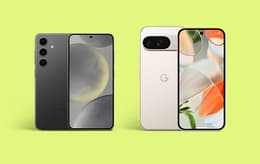
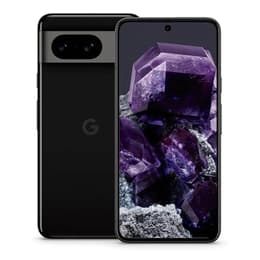
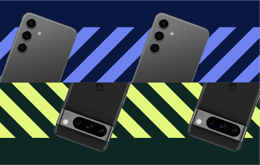
Galaxy S21 FE 5G • Locked AT&T vs Google Pixel 8 • Unlocked

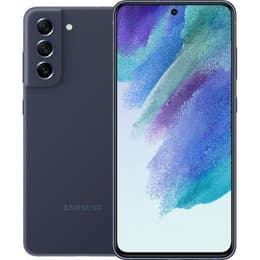
Galaxy S21 FE 5G • Locked AT&T
Starting at

Refurbished price:$135.00

Versus $699.99 new

See options
Google Pixel 8 • Unlocked
Starting at

Refurbished price:$254.00

Versus $699.99 new

See options

Ratings

The Samsung Galaxy S21 FE 5G, released in January 2022, and the Google Pixel 8, launched in October 2023, are both smartphones designed to offer a comprehensive user experience. While the Galaxy S21 FE 5G builds upon Samsung's established S-series design and features, the Pixel 8 emphasizes Google's advancements in artificial intelligence and camera technology. Both devices operate on the Android platform, but they offer distinct approaches to software integration and hardware capabilities.

Scores

Durability

The practical lifespan of a smartphone is influenced by its release timeline, software support, and physical durability.

  • Release Timeline: The Galaxy S21 FE 5G was released in January 2022, making it an older model compared to the Google Pixel 8, which launched in October 2023. This difference in release dates impacts their respective software support cycles.
  • Software Longevity: The Google Pixel 8 stands out with a commitment to seven years of operating system upgrades and security updates from its release. In contrast, the Galaxy S21 FE 5G, launched with Android 12, typically receives fewer major OS updates and security patches over its lifespan, aligning with Samsung's general policy for its devices.
  • Repairability: The Pixel 8 has received repairability scores around 7 out of 10 from some reviewers, indicating that self-repairs are possible for those with some experience, though battery replacement can be tricky due to adhesives. The Galaxy S21 FE 5G features a glass front with Gorilla Glass Victus and a plastic back, contributing to its durability, but specific repairability scores are less widely publicized.

Release Year

2022

2023

Last OS Compatibility

Yes

Yes

OS

Android

Android

Foldable

No

No

Performance

Both devices are equipped to handle daily tasks, but they differ in their underlying architecture and how they manage demanding applications.

  • Processing Capabilities: The Google Pixel 8 features a current-generation processor designed by Google, which focuses on efficiency and advanced AI capabilities, resulting in smooth performance for everyday use and complex tasks. The Galaxy S21 FE 5G is powered by a previous-generation processor, which still provides robust performance for multitasking and gaming, though it may not match the Pixel 8's specialized AI processing.
  • Battery Behavior: The Pixel 8 includes a 4575 mAh battery, offering reliable all-day power for most users, with some reports indicating 8-10 hours of screen-on time with mixed usage. The Galaxy S21 FE 5G has a 4500 mAh battery, which generally provides a full day of use for average users, though heavy usage might require an afternoon charge. Both support fast wired and wireless charging.
  • Storage and Responsiveness: Both phones offer internal storage options of 128GB and 256GB, with the Pixel 8 utilizing UFS 3.1 storage for faster data access. The Pixel 8 typically comes with 8GB of RAM, while the Galaxy S21 FE 5G is available with 6GB or 8GB of RAM, impacting how many applications can run simultaneously without slowdowns.

Memory (GB)

6 GB

8 GB

Screen quality

The visual experience on both smartphones is vibrant, though there are differences in display technology and features.

  • Display Technology and Clarity: The Galaxy S21 FE 5G features a 6.4-inch Dynamic AMOLED 2X display with a Full HD+ resolution (1080 x 2400 pixels), providing clear and colorful visuals. The Google Pixel 8 has a slightly smaller 6.2-inch Actua OLED display, also with a Full HD+ resolution (2400 x 1080 pixels), known for its color accuracy and brightness.
  • Brightness and Outdoor Visibility: The Pixel 8's Actua display can reach a peak brightness of up to 2000 nits in certain conditions, making it highly visible even in direct sunlight. The Galaxy S21 FE 5G's Dynamic AMOLED 2X display also offers satisfying brightness levels, suitable for various lighting environments.
  • Refresh Rate and Smoothness: Both devices offer a 120Hz refresh rate for smooth scrolling and responsive interactions. However, the Pixel 8 features an adaptive refresh rate that can dynamically adjust between 60Hz and 120Hz to optimize battery life, while the S21 FE 5G's 120Hz refresh rate is not adaptive, meaning it can be set to 120Hz or 60Hz manually.

Resolution

1080 x 2340

1080 x 2400

Screen type

Dynamic AMOLED 2X

OLED

Audiovisual

Both smartphones offer capable camera systems, but they excel in different areas of photography and videography.

  • Rear Camera Systems: The Google Pixel 8 features a dual-camera setup with a 50MP wide lens and a 12MP ultrawide lens, known for its computational photography and AI-enhanced image processing, which often results in detailed and color-accurate photos, especially in various lighting conditions. The Samsung Galaxy S21 FE 5G comes with a versatile triple-camera system, including a 12MP wide, 12MP ultrawide, and an 8MP telephoto lens with 3x optical zoom, providing flexibility for different shooting scenarios.
  • Low-Light and Video Performance: The Pixel 8's larger main sensor and advanced image processing contribute to strong low-light performance, capturing more detail and reducing noise. It also offers 4K video recording at 24, 30, or 60 frames per second. The Galaxy S21 FE 5G also performs well in low light and records 4K video at 30/60fps, with its telephoto lens offering additional versatility for zoomed shots.
  • Front Camera and Audio: For selfies and video calls, the Pixel 8 has a 10.5MP front camera, while the Galaxy S21 FE 5G features a higher-resolution 32MP front camera. Both devices include stereo speakers for media consumption and offer good microphone quality for calls and recordings.

Main camera

12 megapixels

50 megapixels

Front camera

32 megapixels

10.5 megapixels

Miscellaneous

Beyond core features, several practical elements differentiate these two devices in terms of connectivity, design, and user interaction.

  • Connectivity and Ports: Both the Galaxy S21 FE 5G and the Google Pixel 8 support 5G connectivity, Wi-Fi 6, and NFC. The Pixel 8 features Bluetooth 5.3, while the S21 FE 5G uses Bluetooth 5.0. Both devices utilize a USB Type-C port for charging and data transfer, and neither includes a 3.5mm headphone jack.
  • Physical Design and Materials: The Galaxy S21 FE 5G has dimensions of 155.7 x 74.5 x 7.9 mm and weighs 177g, featuring a glass front (Gorilla Glass Victus), a plastic back, and an aluminum frame. The Pixel 8 is slightly more compact and heavier at 150.5 x 70.8 x 8.9 mm and 187g, with a glass front and back (Gorilla Glass Victus) and an aluminum frame. Both devices carry an IP68 rating for dust and water resistance.
  • Biometric Security: Both smartphones incorporate an under-display optical fingerprint sensor for secure unlocking. The Pixel 8 also offers an enhanced Face Unlock system that meets higher Android biometric standards, allowing for secure authentication in apps.

Weight

7 oz

7 oz

Screen size (inches)

6.4

6.2

Network

5G

5G

SIM card

Physical SIM

Physical SIM + eSIM

Carrier compatibility

AT&T

Unlocked

User feedback for the Google Pixel 8 often highlights its exceptional camera performance, particularly its computational photography features and AI-driven enhancements, which are frequently praised for producing high-quality images. Users also appreciate its long-term software support, with Google promising seven years of updates. Some common criticisms, however, point to its battery life being good but not outstanding compared to some competitors, and its processor, while efficient for AI tasks, may not always match the raw performance of other flagship chips in certain benchmarks.

The Samsung Galaxy S21 FE 5G is generally lauded for its vibrant AMOLED display, reliable overall performance for daily tasks, and its versatile camera system, including a telephoto lens. Users often find it to be a well-rounded device that delivers a near-flagship experience. On the other hand, some users have noted that its battery life, while capable of lasting a full day for average use, can be a concern for heavy users, sometimes requiring a charge before the day ends. Its non-adaptive refresh rate is also a point of distinction compared to more recent devices.

Users prioritizing cutting-edge camera technology, long-term software support, and advanced AI features may find the Google Pixel 8 well-suited to their needs. Its compact size and bright display also appeal to those seeking a premium Android experience in a manageable form factor. Conversely, users who value a slightly larger display, a dedicated telephoto camera for optical zoom, and a familiar Samsung ecosystem might lean toward the Galaxy S21 FE 5G. Both devices offer robust performance for everyday use, making the choice dependent on individual preferences for camera capabilities, software longevity, and design. For those considering either device, exploring quality-assured refurbished options can be an eco-friendly alternative.

See all articles

Our recent comparisons