Galaxy S21 FE 5G • Locked Verizon vs iPhone SE (2022) • Locked AT&T

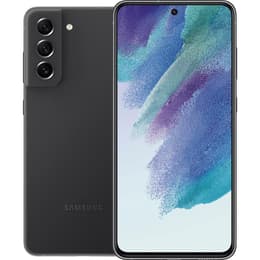
Galaxy S21 FE 5G • Locked Verizon
Starting at

Refurbished price:$143.00

Versus $699.99 new

See options
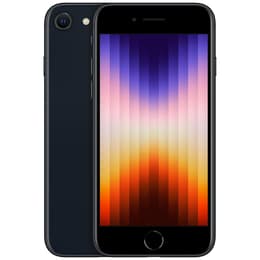
iPhone SE (2022) • Locked AT&T
Starting at

Refurbished price:$102.00

Versus $429.00 new

See options

Ratings

The Samsung Galaxy S21 FE 5G, released in January 2022, and the Apple iPhone SE (2022), launched in March 2022, are both smartphones designed to offer a blend of modern features and established designs. While the Galaxy S21 FE presents a larger display and a versatile multi-camera system, the iPhone SE (2022) focuses on a compact form factor and robust internal processing. Both devices support 5G connectivity and run on their respective contemporary operating systems, Android and iOS.

Scores

Durability

When considering the practical lifespan of these devices, several factors come into play, including their release timelines, software support, and physical resilience.

  • Release Timeline and Software Support: The Galaxy S21 FE 5G, launched in January 2022, typically receives several years of Android updates, with users currently able to update to Android 14. The iPhone SE (2022), released in March 2022, benefits from Apple's reputation for extended iOS support, often receiving updates for five to six years from its launch, ensuring a longer period of access to the latest software features and security patches.
  • Physical Durability: The Galaxy S21 FE features a glass front protected by Gorilla Glass Victus, a plastic back, and an aluminum frame, offering IP68 dust and water resistance, allowing submersion up to 1.5 meters for 30 minutes. The iPhone SE (2022) also uses a glass front and back, described as stronger glass similar to the iPhone 13 series, with an aerospace-grade aluminum frame, and carries an IP67 rating, protecting against submersion up to 1 meter for 30 minutes.
  • Repairability: The iPhone SE (2022) has an average repairability score, with components like the battery and screen being relatively accessible for replacement, though some functions like True Tone may be affected by third-party screen repairs. Information on the specific repairability score for the Galaxy S21 FE is less commonly detailed, but Samsung devices generally offer moderate repairability.

Release Year

2022

2022

Last OS Compatibility

Yes

Yes

OS

Android

iOS

Foldable

No

No

Performance

The performance of a smartphone is largely determined by its internal components, influencing how smoothly applications run and how efficiently it handles demanding tasks.

  • Processing Power: The iPhone SE (2022) is equipped with a powerful current-generation processor, enabling it to handle demanding applications, complex games, and intensive multitasking with notable responsiveness. The Galaxy S21 FE 5G also features a high-performance processor from its release year, providing smooth operation for everyday tasks, gaming, and multimedia consumption.
  • Multitasking and Storage: The iPhone SE (2022) comes with 4GB of RAM, which supports efficient multitasking for typical user scenarios. Storage options include 64GB, 128GB, and 256GB. The Galaxy S21 FE 5G offers more RAM, with configurations of 6GB or 8GB, which can provide a slight advantage in managing a large number of open applications simultaneously. It is available with 128GB or 256GB of internal storage. Neither device offers expandable storage via a microSD card.
  • System Responsiveness: Both devices deliver a responsive user experience. The iPhone SE (2022)'s optimized software and powerful processor ensure quick app launches and fluid navigation. The Galaxy S21 FE 5G, with its capable processor and higher refresh rate display, also provides a very smooth and immediate response to user input.

Memory (GB)

6 GB

4 GB

Screen quality

The display is a primary interface for user interaction, and differences in technology and specifications can significantly impact the viewing experience.

  • Display Technology and Size: The Galaxy S21 FE 5G features a larger 6.4-inch Dynamic AMOLED 2X display, which offers deep blacks, high contrast, and vibrant colors. In contrast, the iPhone SE (2022) has a more compact 4.7-inch Retina HD LCD display, known for its color accuracy and brightness.
  • Resolution and Clarity: The Galaxy S21 FE provides a Full HD+ resolution of 2340x1080 pixels, resulting in a pixel density of approximately 401 pixels per inch (ppi), offering sharp and detailed visuals. The iPhone SE (2022) has a resolution of 1334x750 pixels, with a pixel density of 326 ppi, which still delivers clear text and images for its screen size.
  • Refresh Rate and Brightness: A key difference is the refresh rate; the Galaxy S21 FE boasts a 120Hz refresh rate, contributing to smoother scrolling and more fluid animations, especially noticeable in gaming and fast-paced content. The iPhone SE (2022) maintains a standard 60Hz refresh rate. Both displays offer good brightness levels for outdoor visibility, with the Galaxy S21 FE supporting HDR10+ for enhanced dynamic range in compatible content.

Resolution

1080 x 2340

750 x 1334

Screen type

Dynamic AMOLED 2X

Retina IPS LCD

Audiovisual

Camera capabilities are a significant consideration for many users, and both devices offer distinct photographic experiences.

  • Rear Camera Systems: The Galaxy S21 FE 5G features a versatile triple-camera setup on the rear, including a 12MP wide-angle lens with optical image stabilization (OIS), a 12MP ultrawide lens with a 123-degree field of view, and an 8MP telephoto lens offering 3x optical zoom and OIS. This allows for a range of photographic perspectives, from expansive landscapes to detailed zoomed-in shots. The iPhone SE (2022) utilizes a single 12MP wide-angle rear camera with OIS, relying heavily on its advanced image processing for photo enhancement.
  • Photography Features and Low Light: The Galaxy S21 FE's camera system performs well in various lighting conditions, with its multiple lenses providing flexibility. The iPhone SE (2022), despite its single lens, produces good images in adequate lighting, benefiting from features like Smart HDR 4 and Deep Fusion. However, it lacks a dedicated Night Mode, which can result in darker and grainier photos in very low-light environments compared to devices that include this feature.
  • Video Recording and Front Camera: Both phones are capable of recording 4K video at up to 60 frames per second. The Galaxy S21 FE includes a 32MP front-facing camera, suitable for high-resolution selfies and video calls. The iPhone SE (2022) has a 7MP front camera, which also supports Portrait Mode and delivers clear results in good lighting.

Main camera

12 megapixels

12 megapixels

Front camera

32 megapixels

7 megapixels

Miscellaneous

Beyond core features, several practical elements contribute to the overall user experience and daily convenience of a smartphone.

  • Connectivity and Ports: Both the Galaxy S21 FE 5G and the iPhone SE (2022) support 5G connectivity, enabling faster mobile data speeds where available. They also feature Wi-Fi 6 and Bluetooth 5.0 for robust wireless connections. The Galaxy S21 FE uses a USB-C port for charging and data transfer, while the iPhone SE (2022) retains Apple's proprietary Lightning port. Neither device includes a 3.5mm headphone jack.
  • Biometrics and Sensors: The Galaxy S21 FE incorporates an optical in-display fingerprint sensor for secure unlocking. The iPhone SE (2022) features Touch ID, an integrated fingerprint sensor within its physical home button. Both devices also include standard sensors such as accelerometers, gyroscopes, and proximity sensors.
  • Design and Handling: The Galaxy S21 FE has dimensions of 155.7 x 74.5 x 7.9 mm and weighs 177g, offering a larger screen experience. The iPhone SE (2022) is more compact at 138.4 x 67.3 x 7.3 mm and lighter at 144g, making it easier for one-handed use and pocketability. The Galaxy S21 FE has a plastic back, while the iPhone SE (2022) features a glass back.

Weight

6 oz

3 oz

Screen size (inches)

6.4

4.7

Network

5G

5G

SIM card

Physical SIM

Physical SIM + eSIM

Carrier compatibility

Verizon

AT&T

User sentiment for both the Galaxy S21 FE 5G and the iPhone SE (2022) highlights their respective strengths and areas for consideration. Users often praise the Galaxy S21 FE for its vibrant AMOLED display, versatile camera system with optical zoom, and generally strong performance for its category. Criticisms sometimes point to its battery life when the 120Hz refresh rate is consistently enabled, and some users note that its camera performance, while good, might not represent a significant leap over previous models.

The iPhone SE (2022) is frequently lauded for its powerful internal processor, ensuring smooth and fast operation, and its compact design which appeals to those preferring a smaller phone. The inclusion of 5G and extended software support are also common praise points. However, its dated design with large bezels, the absence of a Night Mode for its camera, and its relatively smaller battery capacity leading to more frequent charging for heavy users are often mentioned as drawbacks.

For users prioritizing a larger, high-refresh-rate display and a flexible multi-camera system with optical zoom, the Galaxy S21 FE 5G may be a more suitable choice. Its Android ecosystem offers greater customization. Conversely, users who value a compact form factor, long-term software support, and the robust performance of Apple's ecosystem, even with a more traditional design and single rear camera, might find the iPhone SE (2022) better aligns with their needs. Both devices are available as quality-assured refurbished options, providing an eco-friendly alternative for consumers.


See all articles

Our recent comparisons