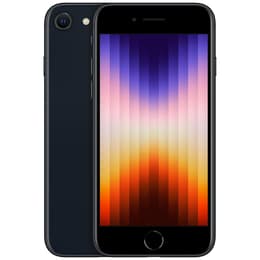
iPhone 11 • Unlocked vs iPhone SE (2022) • Locked AT&T

iPhone 11 • Unlocked
Starting at

Refurbished price:$152.00

Versus $499.00 new

See options
iPhone SE (2022) • Locked AT&T
Starting at

Refurbished price:$102.00

Versus $429.00 new

See options

Ratings

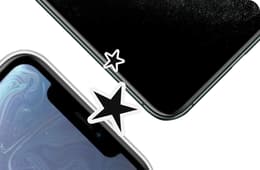
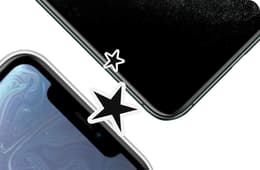
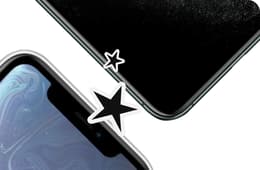
The iPhone 11, released in September 2019, and the iPhone SE (2022), launched in March 2022, represent different approaches within Apple's smartphone lineup. While the iPhone 11 offers a larger display and a dual-camera system, the iPhone SE (2022) prioritizes a compact form factor and integrates a more recent processor. Both devices operate on Apple's iOS, providing a consistent software experience, but their hardware differences cater to distinct user preferences.

Scores

Durability

The expected lifespan and software support differ between these two models due to their respective release dates.

  • Software Longevity: The iPhone 11, released in 2019, is anticipated to receive major iOS updates until approximately Fall 2026, with security updates potentially extending beyond that period. The iPhone SE (2022), being a newer device from 2022, is expected to receive major iOS updates for a longer duration, potentially until around 2033.
  • Repairability: Both devices generally offer a moderate level of repairability. The iPhone 11 has an iFixit repairability score of 6 out of 10, with critical display and battery repairs being prioritized in its design. The iPhone SE (2022) also scores around 5.5 to 6 out of 10 for repairability, with its screen and battery being relatively straightforward to replace.
  • Practical Lifespan: Users can expect both phones to remain functional and receive essential security updates for several years. The iPhone SE (2022) will likely offer a longer period of access to the latest iOS features due to its newer processor and later release.

Release Year

2019

2022

Last OS Compatibility

Yes

Yes

OS

iOS

iOS

Foldable

No

No

Performance

Performance is a key differentiator, with the iPhone SE (2022) benefiting from a more advanced internal component.

  • Processing Power: The iPhone SE (2022) incorporates a more recent generation processor, which allows it to handle demanding applications and multitasking with greater efficiency and responsiveness compared to the iPhone 11. This translates to smoother app launches, faster content rendering, and improved performance in graphically intensive games.
  • Multitasking and Responsiveness: While both devices offer a fluid user experience for everyday tasks, the iPhone SE (2022)'s newer processor provides more headroom for future software updates and more complex applications, ensuring it maintains its responsiveness over a longer period. The iPhone 11, with its slightly older processor, still performs well for most common uses but may show its age sooner with very demanding workloads.
  • Storage Options: Both models are available with internal storage options of 64 GB, 128 GB, and 256 GB, providing flexibility for users to choose based on their storage needs for apps, photos, and videos.

Memory (GB)

4 GB

4 GB

Screen quality

The display experience varies significantly between the two models, primarily in size and overall design.

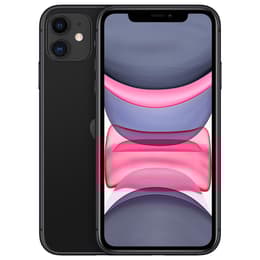
  • Display Technology and Size: The iPhone 11 features a 6.1-inch Liquid Retina HD display, which is an IPS LCD panel. The iPhone SE (2022) has a smaller 4.7-inch Retina HD display, also an IPS LCD. The larger screen on the iPhone 11 provides a more expansive viewing area for media consumption and browsing.
  • Resolution and Clarity: Both displays offer a resolution that results in a pixel density of 326 pixels per inch (ppi), meaning individual pixels are not easily discernible at typical viewing distances. The iPhone 11 has a resolution of 1792x828 pixels, while the iPhone SE (2022) has 1334x750 pixels. Both screens provide clear visuals for text and images.
  • Brightness and Refresh Rate: Both devices feature a typical maximum brightness of 625 nits, offering good visibility in various lighting conditions. Both displays also operate at a standard 60 Hz refresh rate, providing a smooth experience for general navigation and content.

Resolution

828 x 1792

750 x 1334

Screen type

Liquid Retina IPS LCD

Retina IPS LCD

Audiovisual

The camera systems present notable differences, particularly in the number of rear lenses and available features.

  • Rear Camera System: The iPhone 11 is equipped with a dual 12-megapixel camera system, featuring a wide-angle lens and an ultra-wide-angle lens. This allows for more versatile photography, including capturing broader landscapes. The iPhone SE (2022) has a single 12-megapixel wide-angle camera.
  • Photography Features: The iPhone 11 includes Night mode for improved low-light photography on its wide lens, and Deep Fusion for enhanced detail in medium-to-low light. While the iPhone SE (2022) benefits from computational photography improvements due to its newer processor, it does not offer a dedicated Night mode or an ultra-wide lens.
  • Video Recording: Both devices are capable of recording 4K video at up to 60 frames per second, offering high-quality video capture. The iPhone 11's dual-camera setup provides more flexibility for video framing.
  • Front Camera: The iPhone 11 features a 12-megapixel front-facing camera, while the iPhone SE (2022) has a 7-megapixel front camera. Both are suitable for video calls and selfies.

Main camera

12 megapixels

12 megapixels

Front camera

12 megapixels

7 megapixels

Miscellaneous

Beyond core features, several practical elements distinguish these two iPhone models.

  • Connectivity: A significant difference is the cellular connectivity. The iPhone SE (2022) supports 5G networks, offering faster download and upload speeds in areas where 5G is available. The iPhone 11 supports 4G LTE. Both devices support Wi-Fi 6 and Bluetooth 5.0.
  • Biometric Authentication: The iPhone 11 uses Face ID for secure facial recognition, while the iPhone SE (2022) retains the traditional Home button with Touch ID for fingerprint authentication.
  • Physical Design and Handling: The iPhone 11 has a larger form factor, measuring 150.9 x 75.7 x 8.3 mm and weighing 194 grams. The iPhone SE (2022) is more compact and lighter at 138.4 x 67.3 x 7.3 mm and 144 grams, making it easier for one-handed use and pocketability.
  • Water and Dust Resistance: The iPhone 11 has an IP68 rating, allowing it to withstand submersion in up to 2 meters of water for 30 minutes. The iPhone SE (2022) has an IP67 rating, meaning it can handle submersion in up to 1 meter of water for the same duration.

Weight

7 oz

3 oz

Screen size (inches)

6.1

4.7

Network

LTE

5G

SIM card

Physical SIM + eSIM

Physical SIM + eSIM

Carrier compatibility

Unlocked

AT&T

Connector

Lightning

Lightning

User feedback for the iPhone 11 often praises its capable dual-camera system, particularly the inclusion of an ultra-wide lens and Night mode, which were significant upgrades at its release. Users also appreciate its larger display for media consumption. Common criticisms sometimes point to its LCD display technology compared to OLED screens on more premium models, and its 4G-only connectivity in an evolving 5G landscape.

For the iPhone SE (2022), users frequently commend its powerful, current-generation processor, which delivers smooth performance for all tasks, and its compact design, appealing to those who prefer a smaller phone. The continued presence of Touch ID is also a positive for many. However, its smaller screen with larger bezels, single rear camera without Night mode, and relatively shorter battery life compared to larger iPhones are often noted as drawbacks.

Users prioritizing a larger display, a more versatile camera system with an ultra-wide lens and Night mode, and Face ID may find the iPhone 11 better suited to their needs. Conversely, users who value a compact design, the latest processing power for long-term performance, 5G connectivity, and Touch ID will likely lean towards the iPhone SE (2022). Both devices offer a reliable iOS experience, and choosing between them often comes down to these specific feature preferences. Considering a quality-assured refurbished option for either model can be an eco-friendly alternative.

See all articles

Our recent comparisons