Galaxy S22 5G • Locked AT&T vs iPhone SE (2022) • Locked AT&T

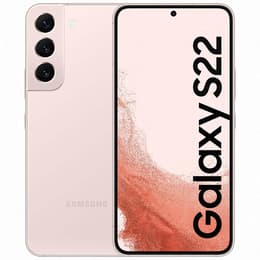
Galaxy S22 5G • Locked AT&T
Starting at

Refurbished price:$164.99

Versus $799.99 new

See options
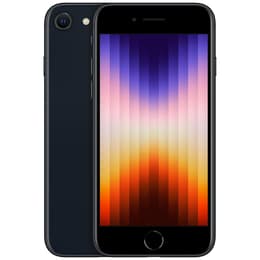
iPhone SE (2022) • Locked AT&T
Starting at

Refurbished price:$102.00

Versus $429.00 new

See options

Ratings

The Samsung Galaxy S22 5G and the Apple iPhone SE (2022) are two smartphones released in early 2022, offering distinct approaches to mobile technology. While the Galaxy S22 presents a modern, full-screen Android experience, the iPhone SE (2022) maintains a classic iPhone design with a physical home button, powered by Apple's iOS. Key differentiators include their operating systems, display technologies, and overall form factors, catering to different user preferences.

Scores

Durability

The longevity of a smartphone is influenced by its release timeline, software support, and physical durability. Both devices offer robust build quality and are expected to receive software updates for several years, though their specific timelines and repairability aspects differ.

  • Software Support: The Samsung Galaxy S22, released in February 2022, is expected to receive four major Android OS upgrades, with security updates guaranteed until 2027. The iPhone SE (2022), launched in March 2022, typically receives iOS updates for approximately 5 to 7 years, potentially extending its software longevity until around 2028-2030.
  • Physical Durability: The Galaxy S22 features an aluminum frame and Gorilla Glass Victus+ on both the front and back, along with an IP68 rating for dust and water resistance, allowing submersion up to 1.5 meters for 30 minutes. The iPhone SE (2022) utilizes a Ceramic Shield front and an aerospace-grade aluminum and glass design, with an IP67 rating for dust and water resistance, protecting against submersion up to 1 meter for 30 minutes.
  • Repairability: The Galaxy S22 has received varying repairability scores, with some assessments noting a score of 3 out of 10 due to the extensive use of strong adhesive, making battery and screen replacements challenging. Other assessments give it a 7.5 out of 10, indicating that while components are accessible, adhesive remains an issue. The iPhone SE (2022) generally scores higher in repairability, with ratings around 5.5 to 7 out of 10, as common parts like the screen and battery are considered relatively easier to replace, though adhesive is still present.

Release Year

2022

2022

Last OS Compatibility

Yes

Yes

OS

Android

iOS

Foldable

No

No

Performance

Both smartphones are equipped with powerful processors designed to handle demanding applications and multitasking, but they approach performance from different ecosystems and with varying hardware configurations.

  • Processing Power: The iPhone SE (2022) is powered by a current-generation Apple processor, which enables smooth operation across applications, efficient multitasking, and capable handling of graphically intensive games. The Galaxy S22 features a contemporary Android processor, providing responsive performance for everyday tasks, complex applications, and high-fidelity gaming.
  • Multitasking and Storage: The Galaxy S22 typically comes with 8GB of RAM, supporting extensive multitasking and keeping more applications active in the background. It offers storage options of 128GB and 256GB. The iPhone SE (2022) includes 4GB of RAM and is available with 64GB, 128GB, or 256GB of internal storage.
  • Real-World Responsiveness: Users generally report that both devices offer a fluid and responsive experience. The iPhone SE's optimized software and hardware integration contribute to its consistent performance, even with less RAM. The Galaxy S22's higher RAM capacity allows for seamless transitions between numerous open applications.

Memory (GB)

8 GB

4 GB

Screen quality

The visual experience on these devices is a significant differentiator, with each employing distinct display technologies and design philosophies that impact clarity, brightness, and overall viewing.

  • Display Technology and Size: The Galaxy S22 features a 6.1-inch Dynamic AMOLED 2X display, known for its deep blacks, vibrant colors, and high contrast. The iPhone SE (2022) uses a 4.7-inch Retina HD IPS LCD display, which provides accurate colors and good viewing angles, though it does not offer the same contrast levels as an OLED panel.
  • Resolution and Clarity: The Galaxy S22 offers a resolution of 1080 x 2340 pixels, resulting in a pixel density of approximately 425 pixels per inch (ppi), providing sharp and detailed visuals. The iPhone SE (2022) has a resolution of 750 x 1334 pixels, with a pixel density of 326 ppi, which is clear for its size but less dense than the S22.
  • Brightness and Refresh Rate: The Galaxy S22's display can reach a peak brightness of 1300 nits, making it highly visible in bright outdoor conditions, and features a 120Hz refresh rate for smoother scrolling and animations. The iPhone SE (2022) has a maximum brightness of 625 nits and a standard 60Hz refresh rate.

Resolution

1080 x 2340

750 x 1334

Screen type

Dynamic AMOLED 2X

Retina IPS LCD

Audiovisual

Photography capabilities vary significantly between these two models, with the Galaxy S22 offering a versatile multi-lens system and the iPhone SE (2022) relying on a single, yet capable, main camera enhanced by computational photography.

  • Rear Camera System: The Galaxy S22 features a triple-camera setup on the rear, including a 50 MP wide-angle lens with optical image stabilization (OIS), a 10 MP telephoto lens with 3x optical zoom and OIS, and a 12 MP ultrawide lens. This configuration allows for diverse photographic perspectives. The iPhone SE (2022) has a single 12 MP wide-angle rear camera with OIS.
  • Photography Features: The Galaxy S22 includes features like Night Portrait mode and can record video up to 8K resolution at 24 frames per second. The iPhone SE (2022) benefits from its advanced processor, enabling features like Smart HDR 4, Deep Fusion, and Photographic Styles, which enhance image quality. However, it lacks a dedicated Night Mode, which can impact low-light performance.
  • Front Camera and Video: For selfies, the Galaxy S22 is equipped with a 10 MP front camera. The iPhone SE (2022) has a 7 MP front camera. Both devices are capable of recording high-quality video, with the iPhone SE (2022) supporting 4K video recording at up to 60 frames per second.

Main camera

50 megapixels

12 megapixels

Front camera

10 megapixels

7 megapixels

Miscellaneous

Beyond core performance and display, several practical elements contribute to the overall user experience, from connectivity options to physical design and biometric security.

  • Connectivity and Ports: Both devices support 5G connectivity and Wi-Fi 6 for fast wireless internet. The Galaxy S22 uses a USB-C port for charging and data transfer, while the iPhone SE (2022) utilizes Apple's proprietary Lightning port. Neither device includes a traditional 3.5mm headphone jack.
  • Biometrics and Design: The Galaxy S22 features an in-display ultrasonic fingerprint sensor for secure unlocking. The iPhone SE (2022) retains the classic home button with Touch ID for fingerprint recognition. The Galaxy S22 has a more contemporary, edge-to-edge display design, while the iPhone SE (2022) maintains a design with bezels above and below the screen.
  • Dimensions and Handling: The Galaxy S22 measures 146 x 70.6 x 7.6 mm and weighs 167 grams, offering a compact yet modern form factor. The iPhone SE (2022) is smaller and lighter at 138.4 x 67.3 x 7.3 mm and 144 grams, making it particularly appealing to users who prefer a more pocketable device and one-handed use.

Weight

7 oz

3 oz

Screen size (inches)

6.1

4.7

Network

5G

5G

SIM card

Dual Physical SIM + eSIM

Physical SIM + eSIM

Carrier compatibility

AT&T

AT&T

Connector

USB-C

Lightning

The Samsung Galaxy S22 5G and the iPhone SE (2022) cater to different user priorities, as reflected in their design, features, and operating systems. User feedback often highlights the Galaxy S22's modern aesthetic, vibrant AMOLED display, and versatile multi-camera system as strong points. However, some users have expressed concerns regarding its battery life, noting that it may require more frequent charging for heavy use.

Conversely, the iPhone SE (2022) is frequently praised for its compact size, powerful processor, and the familiarity of its classic design, including the Touch ID home button. Users appreciate its ease of one-handed use and its suitability for those who prefer a less distracting device. Criticisms often point to its dated design with larger bezels, the LCD screen technology, and the absence of a dedicated Night Mode for its camera.

Users prioritizing a modern, expansive display, a comprehensive camera system with multiple lenses, and the Android ecosystem will likely find the Galaxy S22 5G more aligned with their needs. Those who value a compact form factor, the iOS ecosystem, a physical home button, and robust performance in a smaller package may prefer the iPhone SE (2022). Both devices offer a quality-assured refurbished option, providing an eco-friendly alternative for consumers seeking reliable technology.


See all articles

Our recent comparisons