
Compare models
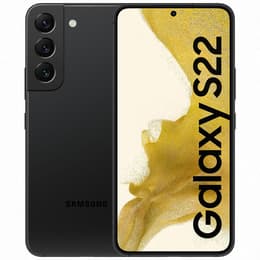
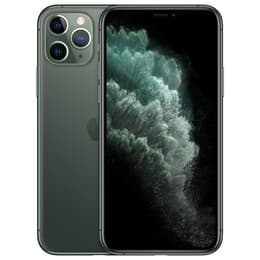
Galaxy S22 5G • Unlocked vs iPhone 11 Pro • Unlocked
- 1-year warranty
- Free standard shipping
- Free 30-day returns
Differences at a glance
The Samsung Galaxy S22 5G, released in February 2022, and the iPhone 11 Pro, launched in September 2019, represent different generations and operating systems within the smartphone market. While both devices offer premium experiences, they cater to distinct user preferences through their respective Android and iOS platforms. Key differences lie in their display technology, camera capabilities, and long-term software support, reflecting the advancements made in smartphone technology over their release gap.
Available Models
Color
Storage (GB)
Scores
Durability
The practical lifespan of a smartphone is significantly influenced by its release date and the manufacturer's commitment to software updates and repairability.
- Release Timeline: The iPhone 11 Pro, released in September 2019, is an older device compared to the Galaxy S22 5G, which launched in February 2022. This age difference directly impacts their remaining software support window.
- OS Support: Apple typically provides major iOS updates for iPhones for approximately five to six years from release, with security updates often extending longer. The iPhone 11 Pro is expected to receive iOS updates until around late 2026, with security patches potentially continuing for another year or two. The Galaxy S22 5G, launched with Android 12, was promised four years of Android OS upgrades and five years of security updates. This means it will receive major OS updates until Android 16 (around late 2025/early 2026) and security updates until 2027.
- Repairability: The Galaxy S22 5G received a low repairability score of 3 out of 10 from iFixit, primarily due to the extensive use of strong adhesive for the back cover and battery, making repairs challenging. The iPhone 11 Pro, while not without its challenges due to adhesive, is generally considered to have a more accessible internal layout for certain repairs compared to some newer models, though iFixit has retroactively lowered scores for iPhones due to software-related repair restrictions.
Release Year
2022
2019
Last OS Compatibility
Yes
Yes
OS
Android
iOS
Foldable
No
No
Performance
Both devices were flagship models at their respective launches, offering robust performance for everyday tasks, though the newer Galaxy S22 benefits from more recent hardware advancements.
- Processor Capabilities: The Galaxy S22 5G features a more current-generation processor, enabling it to handle demanding applications and multitasking with greater efficiency. This translates to smoother operation and faster processing for complex tasks. The iPhone 11 Pro, powered by its A13 Bionic chip, still offers responsive performance for most applications and general usage, a testament to its optimized software and hardware integration.
- Battery Behavior: The Galaxy S22 5G has a 3700mAh battery, which some users have noted can lead to more frequent charging, especially with heavy use. The iPhone 11 Pro, with a 3046mAh battery, was praised at its release for its improved battery life, often lasting a full day for many users.
- Storage and Responsiveness: Both devices offer various internal storage options, but neither supports expandable storage via microSD cards. The Galaxy S22 5G typically comes with 8GB of RAM, contributing to its multitasking capabilities. The iPhone 11 Pro features 4GB of RAM, which, combined with iOS optimization, allows for smooth app switching and overall system responsiveness.
Screen quality
The visual experience on both smartphones is a key consideration, with differences in display technology and refresh rates impacting smoothness and clarity.
- Display Technology: The Galaxy S22 5G features a 6.1-inch Dynamic AMOLED 2X display, known for its vibrant colors, deep blacks, and high contrast. The iPhone 11 Pro comes with a 5.8-inch Super Retina XDR OLED display, which also delivers excellent color accuracy and contrast.
- Refresh Rate: A significant difference is the refresh rate; the Galaxy S22 5G offers an adaptive 120Hz refresh rate, providing a noticeably smoother scrolling experience and more fluid animations. The iPhone 11 Pro has a standard 60Hz refresh rate, which is still clear but does not offer the same level of visual fluidity.
- Brightness and Clarity: Both displays offer high peak brightness levels, with the Galaxy S22 reaching up to 1300 nits and the iPhone 11 Pro up to 1200 nits, ensuring good visibility in various lighting conditions. Both provide sharp images and text, with the S22 having a resolution of 1080 x 2340 pixels and the 11 Pro at 1125 x 2436 pixels.
Resolution
1080 x 2340
1125 x 2436
Screen type
Dynamic AMOLED 2X
Super Retina XDR OLED
Audiovisual
Both smartphones feature versatile triple-camera systems, designed to capture high-quality photos and videos in various scenarios.
- Camera System Capabilities: The Galaxy S22 5G boasts a triple camera setup with a 50MP wide, 12MP ultrawide, and a 10MP telephoto lens offering 3x optical zoom. The iPhone 11 Pro also has a triple 12MP camera system, including wide, ultrawide, and telephoto lenses with 2x optical zoom.
- Low-Light and Everyday Photography: The Galaxy S22's 50MP main sensor uses pixel binning for improved low-light performance, and its night mode is effective. The iPhone 11 Pro introduced a significant Night Mode feature at its launch, which greatly enhanced its low-light photography capabilities, bringing it closer to competitors at the time. Both devices deliver excellent image quality in good lighting conditions.
- Video Recording and Audio: Both phones are capable of recording 4K video at 60 frames per second. The iPhone 11 Pro was noted for its high-quality video with good dynamic range and accurate colors. The Galaxy S22 also offers 8K video recording at 24fps. Both provide good microphone quality for calls and recording, and their speakers offer a capable media consumption experience.
Main camera
50 megapixels
12 megapixels
Front camera
10 megapixels
12 megapixels
Miscellaneous
Beyond core features, several practical elements contribute to the overall user experience and daily convenience of these devices.
- Connectivity Options: The Galaxy S22 5G supports 5G networks, Wi-Fi 6, and Bluetooth 5.2, offering faster cellular data speeds and modern wireless connectivity. The iPhone 11 Pro supports 4G LTE, Wi-Fi 6, and Bluetooth 5.0.
- Port Types and Sensors: The Galaxy S22 5G uses a USB-C port for charging and data transfer and features an in-display fingerprint sensor for biometric authentication. The iPhone 11 Pro utilizes Apple's proprietary Lightning port and relies on Face ID for secure unlocking.
- Dimensions and Build Materials: The Galaxy S22 5G measures 146 x 70.6 x 7.6 mm and weighs 167g, featuring Gorilla Glass Victus+ on the front and back with an Armor Aluminum frame. The iPhone 11 Pro is slightly smaller at 144 x 71.4 x 8.1 mm but heavier at 188g, constructed with a stainless steel frame and a textured matte glass back. Both devices carry an IP68 rating for dust and water resistance.
Weight
6 oz
7 oz
Screen size (inches)
6.1
5.8
Network
5G
LTE
SIM card
Physical SIM + eSIM
Physical SIM + eSIM
Carrier compatibility
Unlocked
Unlocked
What the community thinks
The choice between the Galaxy S22 5G and the iPhone 11 Pro depends heavily on individual priorities and preferred ecosystem. Users often praise the Galaxy S22 for its compact size, vibrant 120Hz display, and versatile camera system, particularly its 3x optical zoom. However, some users have noted concerns regarding its battery life, which can be a significant factor for heavy users. The iPhone 11 Pro, despite its age, is frequently lauded for its robust performance, excellent camera capabilities (especially its pioneering Night Mode at the time), and solid battery endurance for its generation. Criticisms often point to its 60Hz display, which feels less fluid compared to newer devices, and the proprietary Lightning port.
Users prioritizing the latest Android features, a high refresh rate display, and 5G connectivity may find the Galaxy S22 5G more aligned with their needs. Its more recent release also means a longer period of guaranteed software updates. Conversely, individuals deeply integrated into the Apple ecosystem, who value consistent performance, a proven camera system, and a compact form factor, might lean towards the iPhone 11 Pro. Its long-term software support, while nearing its end, has historically been reliable. For those seeking a quality-assured refurbished option, both devices offer a sustainable choice to access premium smartphone technology.