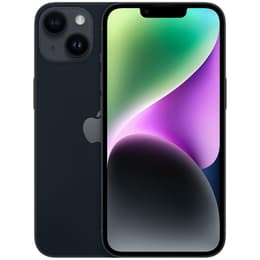
Galaxy S22+ 5G • Locked T-Mobile vs iPhone 14 • Unlocked

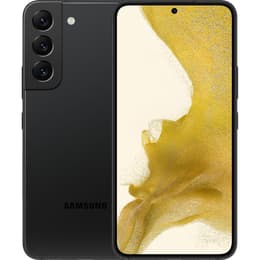
Galaxy S22+ 5G • Locked T-Mobile
Starting at

Refurbished price:$212.82

Versus $959.99 new

See options
iPhone 14 • Unlocked
Starting at

Refurbished price:$254.00

Versus $629.00 new

See options

Ratings

The Samsung Galaxy S22+ 5G, released in February 2022, and the Apple iPhone 14, launched in September 2022, are both prominent smartphones that offer distinct user experiences. While the Galaxy S22+ operates on the Android platform, the iPhone 14 runs on iOS, representing the core difference in their software ecosystems. These devices primarily differentiate themselves through their display technologies, camera systems, and overall design philosophies, catering to varying user preferences.

Scores

Durability

When considering the longevity of these devices, several factors come into play, including software support and physical durability.

  • Software Support: The Samsung Galaxy S22+ 5G launched with Android 12 and is guaranteed to receive four major Android OS updates and five years of security patches. This means its major OS updates concluded with Android 16. The iPhone 14, released with iOS 16, typically receives software updates for approximately five to six years from its release date, potentially offering a slightly longer period of major OS support.
  • Repairability: The iPhone 14 initially received a favorable repairability score due to an internal redesign that made components like the back glass more accessible. However, this score was later downgraded due to software locks and part-pairing procedures that complicate unauthorized repairs. The Galaxy S22+ 5G received a lower repairability score, partly due to the use of strong adhesives for components like the battery, making disassembly more challenging.
  • Physical Durability: Both devices feature IP68 ratings for dust and water resistance, indicating a similar level of protection against environmental elements. The Galaxy S22+ utilizes Gorilla Glass Victus+ for screen protection, while the iPhone 14 features a Ceramic Shield front cover.

Release Year

2022

2022

Last OS Compatibility

Yes

Yes

OS

Android

iOS

Foldable

No

No

Performance

The performance of a smartphone is crucial for daily tasks, from navigating applications to demanding multimedia use.

  • Processing Power: The Galaxy S22+ 5G is powered by a current-generation processor, either a Qualcomm Snapdragon 8 Gen 1 or an Exynos 2200, depending on the region. This hardware enables smooth handling of demanding applications and efficient multitasking. The iPhone 14 features an A15 Bionic chip, which provides responsive performance for everyday use and gaming.
  • Multitasking and Storage: The Galaxy S22+ 5G typically comes with 8GB of RAM, supporting fluid transitions between multiple open applications. It offers storage options of 128GB, 256GB, and 512GB. The iPhone 14 is equipped with 6GB of RAM, which contributes to its smooth multitasking capabilities, and is available in 128GB, 256GB, and 512GB storage configurations.
  • Battery Behavior: The Galaxy S22+ 5G houses a 4500 mAh battery, which generally provides a full day of use for many users, though heavy usage might necessitate charging before the day ends. It supports 45W fast charging and 15W wireless charging. The iPhone 14 has a 3279 mAh battery, designed to last a full day for most users, with some reporting it typically ends a busy day with 10-15% remaining. It supports 20W wired charging and 15W MagSafe wireless charging.

Memory (GB)

8 GB

6 GB

Screen quality

The visual experience is a key aspect of smartphone usage, influenced by display technology, resolution, and brightness.

  • Display Technology and Size: The Galaxy S22+ 5G features a 6.6-inch Dynamic AMOLED 2X display, offering vibrant colors and deep blacks. The iPhone 14 comes with a 6.1-inch Super Retina XDR OLED display, also known for its rich colors and contrast.
  • Resolution and Clarity: The Galaxy S22+ 5G has a resolution of 1080 x 2340 pixels. The iPhone 14 offers a resolution of 2532 x 1170 pixels, resulting in a slightly higher pixel density. Both displays provide clear and sharp visuals for typical viewing distances.
  • Brightness and Refresh Rate: The Galaxy S22+ 5G boasts a peak brightness of up to 1750 nits and features an adaptive refresh rate that can go from 48Hz to 120Hz, with proprietary technology allowing it to minimize to 10Hz for power efficiency. The iPhone 14 has a typical brightness of 800 nits and a peak HDR brightness of 1200 nits, with a standard 60Hz refresh rate.

Resolution

1080 x 2340

1170 x 2532

Screen type

Dynamic AMOLED 2X

Super Retina XDR OLED

Audiovisual

Both smartphones offer advanced camera systems designed to capture high-quality photos and videos in various conditions.

  • Rear Camera System: The Galaxy S22+ 5G features a versatile triple-camera setup, including a 50MP wide-angle lens with optical image stabilization (OIS), a 10MP telephoto lens with 3x optical zoom and OIS, and a 12MP ultrawide lens. The iPhone 14 is equipped with a dual-camera system, comprising a 12MP main wide-angle lens with sensor-shift OIS and a 12MP ultrawide lens.
  • Low-Light Performance and Video: The Galaxy S22+ 5G offers enhanced low-light photography capabilities and can record video at up to 8K resolution at 24 frames per second. The iPhone 14's camera system also shows improved low-light performance compared to previous models, and it supports 4K Dolby Vision HDR video recording.
  • Front Camera: For selfies and video calls, the Galaxy S22+ 5G includes a 10MP front-facing camera. The iPhone 14 features a 12MP front camera.

Main camera

50 megapixels

12 megapixels

Front camera

10 megapixels

12 megapixels

Miscellaneous

Beyond core features, several practical elements contribute to the overall user experience of these devices.

  • Connectivity and Ports: Both the Galaxy S22+ 5G and the iPhone 14 support 5G connectivity for faster mobile data speeds. The Galaxy S22+ 5G includes Wi-Fi 6E and a USB Type-C port, offering modern connectivity and charging standards. The iPhone 14 uses a Lightning port for charging and data transfer.
  • Biometric Security: The Galaxy S22+ 5G incorporates an in-display fingerprint sensor for secure unlocking. The iPhone 14 relies on Face ID for biometric authentication.
  • Design and Handling: The Galaxy S22+ 5G weighs approximately 196 grams and measures 75.8 x 157.4 x 7.6 mm. The iPhone 14 is lighter at 172 grams and has dimensions of 146.7 x 71.5 x 7.8 mm. The iPhone 14 also includes an Emergency SOS via satellite feature.

Weight

7 oz

6 oz

Screen size (inches)

6.6

6.1

Network

5G

5G

SIM card

Physical SIM + eSIM

eSIM

Carrier compatibility

T-Mobile

Unlocked

Connector

USB-C

Lightning

Users often praise the Samsung Galaxy S22+ 5G for its vibrant display with a high refresh rate and its versatile camera system, particularly the inclusion of a telephoto lens. Some users have noted that while the battery life is generally sufficient for a day, heavy usage might require a midday charge. The iPhone 14 is frequently commended for its consistent performance, robust software ecosystem, and improved camera capabilities, especially in low-light conditions. However, some users have expressed concerns about battery degradation over time.

For individuals who prioritize a larger, high-refresh-rate display and a comprehensive camera setup with optical zoom, the Galaxy S22+ 5G may align well with their needs. Its Android operating system also offers a high degree of customization. Conversely, users who value a slightly more compact device, a streamlined user experience, and a strong emphasis on video capabilities and long-term software support might find the iPhone 14 to be a suitable choice. Both devices offer compelling features, and choosing between them often comes down to personal preference for operating system, camera versatility, and display characteristics.

For those considering either of these devices, exploring quality-assured refurbished options can be an eco-friendly alternative to purchasing new, providing access to these advanced technologies in a sustainable way.


See all articles

Our recent comparisons