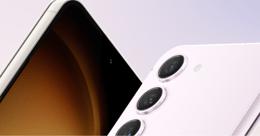
Galaxy S23 FE • Unlocked vs iPhone SE (2022) • Locked T-Mobile

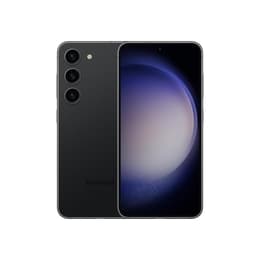
Galaxy S23 FE • Unlocked
Starting at

Refurbished price:$210.00

Versus $799.00 new

See options
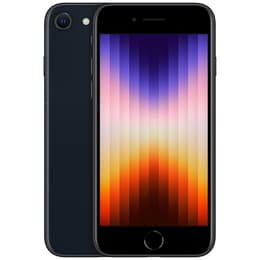
iPhone SE (2022) • Locked T-Mobile
Starting at

Refurbished price:$124.00

Versus $429.00 new

See options

Ratings

The Samsung Galaxy S23 FE, released in late 2023, and the Apple iPhone SE (2022), launched in early 2022, represent distinct approaches to smartphone design and functionality. While the Galaxy S23 FE offers a modern, expansive display and a versatile multi-camera system, the iPhone SE (2022) prioritizes a compact form factor and the long-term software support characteristic of its operating system. These devices cater to different user preferences, with one running on Android and the other on iOS.

Scores

Durability

When considering the longevity of these devices, both offer substantial software support and robust build quality, though their timelines differ.

  • Software Updates: The iPhone SE (2022) typically receives iOS updates for approximately five to seven years from its release, offering extended software longevity. The Galaxy S23 FE, running Android, generally receives around four years of major OS updates and five years of security updates from its launch.
  • Build Durability: Both phones feature glass fronts and backs with aluminum frames, contributing to a solid feel. The Galaxy S23 FE utilizes Gorilla Glass 5 for its display, while the iPhone SE (2022) features Ceramic Shield on the front, which is designed for enhanced drop performance.
  • Water and Dust Resistance: The Galaxy S23 FE boasts an IP68 rating, indicating resistance to dust and submersion in up to 1.5 meters of fresh water for 30 minutes. The iPhone SE (2022) has an IP67 rating, meaning it can withstand submersion in up to 1 meter of fresh water for 30 minutes.

Release Year

2023

2022

Last OS Compatibility

Yes

Yes

OS

Android

iOS

Foldable

No

No

Performance

Both devices deliver capable performance for everyday tasks, though they achieve this through different hardware and software optimizations.

  • Everyday Responsiveness: The iPhone SE (2022) offers smooth and quick performance across applications and multitasking, handling demanding apps with ease. The Galaxy S23 FE also provides a fluid user experience, adept at managing multiple applications and graphically intensive tasks.
  • Storage Configurations: The Galaxy S23 FE is available with 128GB or 256GB of internal storage, paired with 8GB of RAM. The iPhone SE (2022) offers storage options of 64GB, 128GB, or 256GB, typically with 4GB of RAM.
  • Battery Behavior: The Galaxy S23 FE is equipped with a 4500 mAh battery, supporting wireless charging. User experiences suggest its battery life is generally average, with heavy usage potentially leading to quicker drainage. The iPhone SE (2022) has a 2018 mAh battery and also supports wireless charging. Its battery life is considered average, and 5G connectivity can accelerate battery consumption.

Memory (GB)

8 GB

4 GB

Screen quality

The visual experience on these smartphones presents a clear distinction in display technology and design philosophy.

  • Display Technology and Size: The Galaxy S23 FE features a 6.4-inch Dynamic AMOLED 2X display, offering vibrant colors, deep blacks, and excellent contrast. In contrast, the iPhone SE (2022) comes with a more compact 4.7-inch Retina HD IPS LCD display.
  • Resolution and Clarity: The Galaxy S23 FE provides a Full HD+ resolution of 2340 x 1080 pixels, resulting in sharp images and text. The iPhone SE (2022) has a resolution of 1334 x 750 pixels, which delivers clear visuals on its smaller screen.
  • Brightness and Smoothness: The Galaxy S23 FE's display can reach a peak brightness of 1450 nits, making it highly visible in bright outdoor conditions, and features a 120Hz refresh rate for smooth scrolling and animations. The iPhone SE (2022) offers a typical maximum brightness of 625 nits and a standard 60Hz refresh rate.

Resolution

1080 x 2340

750 x 1334

Screen type

Dynamic AMOLED 2X

Retina IPS LCD

Audiovisual

The camera systems on these devices cater to different photographic needs, with one offering versatility and the other focusing on computational photography.

  • Rear Camera Setup: The Galaxy S23 FE features a triple-camera system on the rear, including a 50MP main sensor with optical image stabilization, a 12MP ultrawide lens, and an 8MP telephoto lens with 3x optical zoom. The iPhone SE (2022) has a single 12MP wide camera with optical image stabilization.
  • Photography Performance: The Galaxy S23 FE's main camera performs well in various lighting conditions, including low light, and its telephoto lens provides zoom capabilities. The iPhone SE (2022) leverages its processing power for features like Smart HDR 4, Deep Fusion, and Portrait mode for human subjects, producing clear photos in good lighting. However, it lacks a dedicated Night Mode, which can impact low-light image quality.
  • Video Recording: The Galaxy S23 FE is capable of recording 8K video at 24 frames per second and 4K video at 60 frames per second with its rear camera, and 4K at 30 frames per second with its front camera. The iPhone SE (2022) supports 4K video recording at up to 60 frames per second with its rear camera and 1080p at 30 frames per second with its front camera.

Main camera

50 megapixels

12 megapixels

Front camera

10 megapixels

7 megapixels

Miscellaneous

Beyond core features, several practical elements differentiate these two smartphones in terms of connectivity, physical design, and user interaction.

  • Connectivity and Ports: Both devices support 5G connectivity and Wi-Fi 6. The Galaxy S23 FE uses a USB-C port for charging and data transfer, while the iPhone SE (2022) utilizes Apple's proprietary Lightning port. Neither device includes a traditional 3.5mm headphone jack.
  • Biometric Security: The Galaxy S23 FE features an optical in-display fingerprint sensor and supports face recognition for unlocking. The iPhone SE (2022) relies on Touch ID, an integrated fingerprint sensor within its physical home button.
  • Physical Characteristics: The Galaxy S23 FE measures 158 x 76.5 x 8.2 mm and weighs 209 grams, offering a larger footprint. The iPhone SE (2022) is more compact at 138.4 x 67.3 x 7.3 mm and weighs 144 grams, making it easier for one-handed use.

Weight

6 oz

3 oz

Screen size (inches)

6.1

4.7

Network

5G

5G

SIM card

Physical SIM

Physical SIM + eSIM

Carrier compatibility

Unlocked

T-Mobile

Connector

USB-C

Lightning

User feedback for the Samsung Galaxy S23 FE frequently praises its vibrant display, capable multi-camera system, and overall feature set, often highlighting its strong performance for a device in its category. Some common criticisms include concerns about battery life for heavy users and occasional heating, particularly with the Exynos processor variant.

The iPhone SE (2022) is often lauded for its powerful internal components, ensuring smooth operation and long-term software support. Users appreciate its compact size and the familiar Touch ID home button. However, frequent criticisms point to its dated design with large bezels, the smaller screen size, and the absence of a dedicated Night Mode for its camera. Its battery life is also noted as being average.

Users prioritizing a modern, expansive display with a versatile camera system, including ultrawide and telephoto lenses, may find the Galaxy S23 FE better suited to their needs. Those who value a compact form factor, extended software longevity, and the familiar iOS ecosystem with Touch ID might lean towards the iPhone SE (2022). Both devices offer a quality-assured refurbished option, providing an eco-friendly alternative for consumers.

See all articles

Our recent comparisons