Compare models
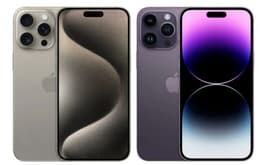
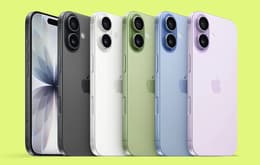
iPhone 14 • Locked Verizon vs iPhone Air • Unlocked
- 1-year warranty
- Free standard shipping
- Free 30-day returns
Differences at a glance
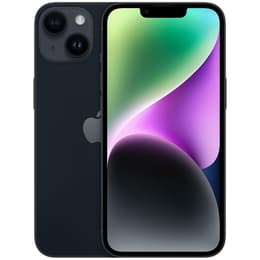
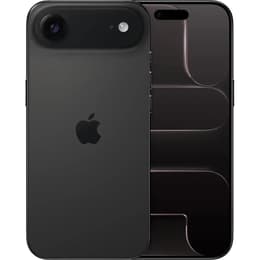
The iPhone 14 (Locked Verizon) released in 2022 and the iPhone Air (Unlocked) released in 2025 represent distinctly different approaches to smartphone design and carrier customization within Apple's ecosystem. While the iPhone 14 offers a traditional form factor tied to a specific network provider, the iPhone Air introduces a radically thin profile with carrier-free flexibility. Both run on iOS, but they differ significantly in release year, structural build, and internal hardware capabilities.
Available Models
Color
Storage (GB)
Scores
Durability
When evaluating hardware lifespan, software support longevity, and structural durability, these two devices display notable differences rooted in their respective launch years and build materials.
- Software support timeline: The iPhone Air benefits from a newer release date, meaning it will receive current iOS updates for several years longer than the iPhone 14.
- Build resilience: The iPhone Air utilizes a titanium frame and advanced glass protection coatings, whereas the iPhone 14 relies on aluminum and standard ceramic protection. Both maintain high build quality standards for long-term daily use.
- Practical lifespan: Users can expect solid multi-year operation from both models, though the newer processor and expanded memory in the iPhone Air provide additional headroom for future software demands.
Release Year
2022
2025
Last OS Compatibility
Yes
Yes
OS
iOS
iOS
Foldable
No
No
Performance
System responsiveness, multitasking capabilities, and battery endurance vary significantly due to the generation gap in their internal architecture and physical space constraints.
- App loading and multitasking: The iPhone Air handles demanding applications, heavy multitasking, and complex graphics smoothly thanks to its high-performance processor and generous memory capacity. The iPhone 14 handles everyday tasks, web browsing, and moderate multitasking reliably with its mature processing hardware.
- Battery behavior: The iPhone 14 delivers dependable day-to-day battery life for typical usage patterns. In contrast, the exceptionally thin profile of the iPhone Air houses a smaller battery capacity, which may require more frequent charging for users with heavy daily workloads.
- Storage configurations: The iPhone Air starts at higher baseline storage tiers to accommodate modern media and files, while the iPhone 14 is widely available in various legacy storage capacities.
Screen quality
Display technology and visual comfort differ notably between the two devices, impacting media consumption, outdoor legibility, and everyday interaction smoothness.
- Display refresh rate: The iPhone Air features an adaptive high refresh rate display that scales up to 120Hz for fluid scrolling and animations, while the iPhone 14 uses a standard 60Hz refresh rate panel.
- Brightness and outdoor clarity: The iPhone Air achieves higher peak outdoor brightness levels, making it easier to read content under direct sunlight compared to the iPhone 14 display.
- Screen dimensions: The iPhone Air offers a slightly larger viewing area within a slim bezel layout, while the iPhone 14 provides a more compact, traditional screen size that is easy to reach with one hand.
Resolution
1170 x 2532
2736x1260
Screen type
Super Retina XDR OLED
Super Retina XDR
Audiovisual
Media capture capabilities, audio output, and everyday photography tools reflect the specialized design choices of each smartphone model.
- Camera systems: The iPhone 14 features a dual-lens rear camera setup offering standard wide and ultra-wide perspectives. The iPhone Air streamlines the rear setup into a single high-resolution wide lens supplemented by advanced digital zoom processing.
- Video and low-light performance: Both devices capture crisp, detailed video and handle low-light environments effectively using automated image processing, though the newer sensor technology in the iPhone Air yields refined clarity in challenging lighting.
- Audio delivery: The iPhone 14 provides a standard stereo speaker arrangement for media playback, whereas the space-saving design of the iPhone Air incorporates a mono speaker configuration, making headphones or external speakers preferable for immersive listening.
Main camera
12 megapixels
48 megapixels
Front camera
12 megapixels
18 megapixels
Miscellaneous
Practical daily usability elements such as connectivity standards, physical dimensions, and network locks define how each device integrates into a user's routine.
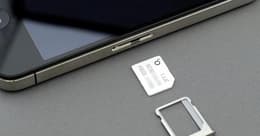
- Network flexibility: The iPhone Air comes completely unlocked for use with any compatible carrier and utilizes modern digital-only SIM technology. The iPhone 14 in this configuration is locked to Verizon, requiring specific carrier activation steps.
- Dimensions and weight: The iPhone Air stands out for its remarkably thin profile and light titanium chassis, whereas the iPhone 14 features a slightly thicker, heavier aluminum and glass body.
- Ports and connectivity: The iPhone Air adopts the reversible USB-C standard alongside advanced wireless and satellite connectivity features, while the iPhone 14 relies on the traditional Lightning connector and standard wireless protocols. Users looking for a sustainable choice can explore quality-assured refurbished options on Back Market to find thoroughly tested devices.
Weight
6 oz
185 oz
Screen size (inches)
6.1
6.5
Network
5G
5G
SIM card
eSIM
eSIM
Carrier compatibility
Verizon
Unlocked
Connector
Lightning
USB-C
What the community thinks
Community discussions and user feedback highlight distinct sentiments for both devices. Owners of the iPhone 14 frequently praise its reliable day-to-day performance, familiar ergonomics, and dependable battery longevity. However, some users note that its charging speeds and display refresh rate feel dated compared to newer models. On the other hand, users appreciate the iPhone Air for its striking thinness, featherlight feel in the pocket, and vibrant high-refresh-rate screen, though critics often point out the limitations of its single rear camera and mono speaker setup.
When deciding between these two smartphones, user priorities serve as the main guide. Users prioritizing network freedom, a featherlight physical profile, modern connectivity, and a high-refresh-rate display will find the iPhone Air well-suited to their daily routine. Conversely, users who prefer a traditional carrier-tied device, a dual-lens camera system, and standard stereo speakers may lean toward the iPhone 14. For those seeking an eco-friendly alternative, choosing a quality-assured refurbished model through Back Market provides a sustainable path to acquiring either device without compromising on performance or reliability.