Galaxy S23 Ultra • Unlocked vs iPhone 16 • Unlocked

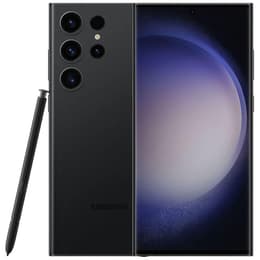
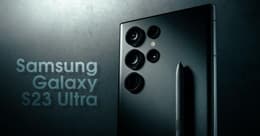
Galaxy S23 Ultra • Unlocked
Starting at

Refurbished price:$399.99

Versus $1,199.99 new

See options
iPhone 16 • Unlocked
Starting at

Refurbished price:$516.00

Versus $729.00 new

See options

Ratings

The Samsung Galaxy S23 Ultra, released in February 2023, and the Apple iPhone 16, launched in September 2024, represent two distinct approaches to high-end smartphone design and functionality. While both devices offer premium experiences, they cater to different user preferences through their respective Android and iOS operating systems. The Galaxy S23 Ultra distinguishes itself with its integrated S Pen and versatile camera system, whereas the iPhone 16 focuses on a refined user experience within the Apple ecosystem and enhanced computational photography.

Scores

Durability

When considering the long-term usability of a smartphone, factors like software support and physical resilience are key. The Galaxy S23 Ultra and iPhone 16 offer robust build quality, but their release timelines and software ecosystems lead to different longevity expectations.

  • Release Timeline: The Galaxy S23 Ultra was released in early 2023, while the iPhone 16 followed in late 2024. This difference means the iPhone 16 will likely receive software updates for a longer period, extending its functional lifespan.
  • Software Support: Samsung typically provides four generations of Android OS updates and five years of security updates for its flagship devices. Apple generally supports its iPhones with iOS updates for five to six years from their release date.
  • Physical Durability: Both devices feature advanced protective glass and are rated IP68 for dust and water resistance, indicating they can withstand submersion in up to 6 meters of water for 30 minutes. The Galaxy S23 Ultra uses Gorilla Glass Victus 2, while the iPhone 16 incorporates Ceramic Shield for screen protection.

Release Year

2023

2024

Last OS Compatibility

Yes

Yes

Foldable

No

No

Performance

Both the Galaxy S23 Ultra and the iPhone 16 are equipped with powerful internal components designed for demanding tasks, though they approach performance from different architectural standpoints.

  • Processing Power: The Galaxy S23 Ultra features a processor optimized for its Android ecosystem, enabling smooth multitasking and efficient handling of graphics-intensive applications and games. The iPhone 16 is powered by a newer generation chip, which provides responsive performance across iOS applications and is particularly efficient for video editing and advanced computational tasks.
  • Multitasking and Responsiveness: The Galaxy S23 Ultra typically offers configurations with 8GB or 12GB of RAM, supporting fluid transitions between numerous open applications. The iPhone 16, while often featuring 8GB of RAM, leverages iOS's optimization to maintain high responsiveness even with multiple apps running simultaneously.
  • Storage Options: The Galaxy S23 Ultra is available with 256GB, 512GB, or 1TB of internal storage, providing ample space for large files and extensive media libraries. The iPhone 16 offers storage capacities of 128GB, 256GB, and 512GB, catering to various user needs for app and media storage.

Memory (GB)

8 GB

8 GB

Screen quality

The visual experience on both devices is a highlight, with each offering a high-quality display tailored to its design philosophy and user base.

  • Display Technology and Size: The Galaxy S23 Ultra boasts a large 6.8-inch Dynamic AMOLED 2X display, providing expansive screen real estate for media consumption and productivity with its curved edges. The iPhone 16 features a 6.1-inch Super Retina XDR OLED display, known for its color accuracy and deep blacks within a more compact form factor.
  • Resolution and Clarity: The S23 Ultra offers a Quad HD+ resolution of 3088 x 1440 pixels, resulting in sharp and detailed visuals. The iPhone 16 provides a resolution of 2556 x 1179 pixels at 460 pixels per inch, delivering clear and crisp images.
  • Brightness and Refresh Rate: The Galaxy S23 Ultra's display can reach a peak brightness of 1750 nits and features an adaptive refresh rate that scales from 1Hz to 120Hz for smooth scrolling and gaming. The iPhone 16 offers a peak brightness of 2000 nits for excellent outdoor visibility but maintains a standard 60Hz refresh rate.

Resolution

1440 x 3088

1179 x 2556

Screen type

Dynamic AMOLED 2X

Super Retina XDR OLED

Audiovisual

Both smartphones offer advanced camera systems, but they differ in their hardware configurations and photographic approaches, catering to varied creative preferences.

  • Rear Camera Systems: The Galaxy S23 Ultra features a versatile quad-camera setup, including a 200MP main sensor, a 12MP ultrawide lens, and two 10MP telephoto lenses offering 3x and 10x optical zoom capabilities. The iPhone 16 comes with an advanced dual-camera system, featuring a 48MP main sensor that supports 2x optical-quality zoom and a 12MP ultrawide lens.
  • Photography Features: The S23 Ultra excels in capturing distant subjects with its extensive zoom range and offers detailed images, particularly in well-lit conditions and with its enhanced night shooting mode. The iPhone 16 focuses on computational photography, delivering consistent image quality across various lighting conditions, with features like Photonic Engine and Smart HDR 5.
  • Video Recording: The Galaxy S23 Ultra supports video recording up to 8K resolution at 30 frames per second, providing high-fidelity video capture. The iPhone 16 offers 4K Dolby Vision video recording at up to 60 frames per second, emphasizing dynamic range and color accuracy in its video output.

Main camera

200 megapixels

48 megapixels

Front camera

12 megapixels

12 megapixels

Miscellaneous

Beyond core performance, several practical features and design elements differentiate these two devices, influencing daily usability and overall experience.

  • Connectivity and Ports: Both devices support 5G connectivity, Wi-Fi 7 (for iPhone 16) or Wi-Fi 6E (for S23 Ultra), and Bluetooth 5.3. The iPhone 16 has adopted a USB-C port, aligning with the Galaxy S23 Ultra, which also uses USB-C.
  • Unique Features: The Galaxy S23 Ultra integrates the S Pen stylus, offering precise input for note-taking, drawing, and remote controls. The iPhone 16 introduces an Action Button, which can be customized for quick access to various functions, and continues to feature Face ID for secure authentication.
  • Dimensions and Build: The Galaxy S23 Ultra is a larger and heavier device, weighing 234 grams with dimensions of 163.4 x 78.1 x 8.9 mm, providing a substantial feel. The iPhone 16 is more compact and lighter at 170 grams, with dimensions of 147.6 x 71.6 x 7.8 mm, making it easier for one-handed use.

Weight

8 oz

6000 oz

Screen size (inches)

6.8

6.1

Network

5G

5G

SIM card

Physical SIM + eSIM

eSIM

Carrier compatibility

Unlocked

Unlocked

User feedback for the Galaxy S23 Ultra often highlights its exceptional battery life, the versatility of its camera system, particularly the zoom capabilities, and the unique productivity features offered by the integrated S Pen. Some users appreciate its large, immersive display, though the curved edges can sometimes lead to accidental touches or reflections. Criticisms occasionally point to its size and weight, which might be less comfortable for users preferring a more compact device.

For the iPhone 16, users frequently praise its improved battery life compared to previous generations, the seamless integration within the Apple ecosystem, and the consistent quality of its camera. However, some users express disappointment with the continued use of a 60Hz refresh rate display, considering it a limitation compared to competitors. The iPhone 16 is generally seen as a reliable and powerful device, though some perceive it as an incremental upgrade.

Users prioritizing a large display, advanced telephoto photography, and the precision of a stylus for creative or professional tasks may find the Galaxy S23 Ultra well-suited to their needs. Conversely, individuals who value a more compact form factor, the intuitive iOS experience, strong video capabilities, and consistent performance within the Apple ecosystem may lean towards the iPhone 16. Both devices are available as quality-assured refurbished options, providing an eco-friendly alternative for consumers seeking premium technology.


See all articles

Our recent comparisons