
Compare models
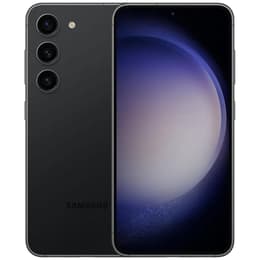
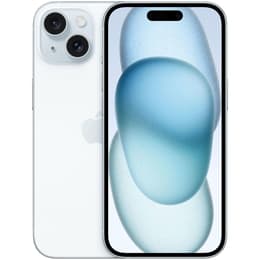
Galaxy S23 • Unlocked vs iPhone 15 • Locked T-Mobile
- 1-year warranty
- Free standard shipping
- Free 30-day returns
Differences at a glance
The Samsung Galaxy S23, released in February 2023, and the Apple iPhone 15, launched in September 2023, are both prominent smartphones offering distinct user experiences. While the Galaxy S23 operates on Android with Samsung's One UI, the iPhone 15 runs on Apple's iOS, providing different ecosystems and interfaces. Key differentiators include their display technologies, camera systems, and approaches to performance optimization, catering to varied user preferences.
Available Models
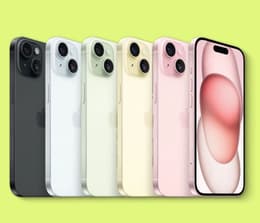
Color
Storage (GB)
Scores
Durability
When considering the long-term usability of these devices, both the Galaxy S23 and iPhone 15 offer robust support, though their timelines differ.
- Release and Software Support: The Galaxy S23 was released in February 2023, and Samsung typically provides at least four years of major Android updates and five years of security updates. The iPhone 15, released in September 2023, benefits from Apple's reputation for extended iOS support, often receiving major updates for five to six years from its launch.
- Repairability: The iPhone 15 initially received a repairability score of 4 out of 10, which was later promoted to 7 out of 10 due to software changes that facilitate part calibration. Information on the Galaxy S23's specific repairability score is less widely publicized, but both devices are designed with modern smartphone complexities.
- Practical Lifespan: Users can expect several years of reliable performance from either device. The iPhone 15 may offer a slightly longer period of software updates, potentially extending its practical lifespan for users who prioritize the latest OS features.
Release Year
2023
2023
Last OS Compatibility
Yes
Yes
OS
Android
iOS
Foldable
No
No
Performance
Both the Galaxy S23 and iPhone 15 deliver strong performance for daily tasks and demanding applications, though they achieve this through different hardware and software integrations.
- Processing Power: The Galaxy S23 is equipped with a processor optimized for Samsung devices, enabling smooth multitasking, rapid app launches, and efficient handling of graphics-intensive games. The iPhone 15 features a powerful chip that ensures fluid navigation, responsive application performance, and capable handling of advanced mobile gaming.
- Memory and Storage: The Galaxy S23 typically comes with 8GB of RAM, providing ample capacity for running multiple applications simultaneously without slowdowns. The iPhone 15 includes 6GB of RAM, which, combined with iOS optimization, allows for efficient multitasking. Both devices offer storage options up to 512GB, providing significant space for apps, photos, and media.
- Battery Behavior: The Galaxy S23 houses a 3900 mAh battery, designed to last through a full day of varied use, supporting fast wired, wireless, and reverse wireless charging. The iPhone 15 features a 3349 mAh battery, offering up to 20 hours of video playback and supporting fast charging, MagSafe, and Qi2 wireless charging.
Screen quality
The visual experience on both the Galaxy S23 and iPhone 15 is vibrant and clear, each utilizing advanced display technologies to present content.
- Display Technology and Size: The Galaxy S23 features a 6.1-inch Dynamic AMOLED 2X display, known for its deep blacks and rich colors. The iPhone 15 also has a 6.1-inch Super Retina XDR OLED display, which provides excellent contrast and color accuracy.
- Resolution and Brightness: The Galaxy S23 offers a 2340 x 1080 resolution with 425 pixels per inch (ppi) and can reach a peak brightness of 1750 nits, making it highly visible outdoors. The iPhone 15 provides a 2556 x 1179 resolution with 460 ppi and can achieve an impressive 2000 nits peak outdoor brightness.
- Refresh Rate: The Galaxy S23 boasts an adaptive refresh rate of up to 120Hz, contributing to smoother scrolling and more fluid animations. The iPhone 15 maintains a standard 60Hz refresh rate.
Resolution
1080 x 2340
1179 x 2556
Screen type
Dynamic AMOLED 2X
Super Retina XDR OLED
Audiovisual
Both smartphones offer advanced camera systems capable of capturing high-quality photos and videos, with specific strengths catering to different photographic needs.
- Rear Camera Systems: The Galaxy S23 features a versatile triple-camera setup, including a 50MP main sensor with optical image stabilization (OIS), a 10MP telephoto lens with 3x optical zoom, and a 12MP ultrawide lens. The iPhone 15 comes with an advanced dual-camera system, featuring a 48MP main sensor with sensor-shift OIS and a 12MP ultrawide lens. It also offers a 2x telephoto option through its main sensor.
- Photography Features: The Galaxy S23 excels in low-light conditions with its Nightography features and includes an AI Image Enhancer for refining photos. The iPhone 15 utilizes its Photonic Engine, Deep Fusion, and Smart HDR 5 for enhanced image processing, alongside next-generation portrait modes with focus and depth control.
- Video Recording: The Galaxy S23 supports 8K video recording at 30 frames per second (fps) and Super HDR video. The iPhone 15 offers 4K HDR video recording at up to 60fps, Cinematic mode in 4K HDR at 30fps, and Action mode for stabilized video. Both devices feature 12MP front-facing cameras, with the iPhone 15's offering autofocus.
Main camera
50 megapixels
48 megapixels
Front camera
12 megapixels
12 megapixels
Miscellaneous
Beyond core specifications, several practical elements contribute to the overall user experience of the Galaxy S23 and iPhone 15.
- Connectivity and Ports: Both devices support 5G connectivity for fast mobile data. The Galaxy S23 includes Wi-Fi 6E and Bluetooth 5.3, with a USB 3.2 Type-C port. The iPhone 15 features Wi-Fi 6 and Bluetooth 5.3, and notably transitioned to a USB-C port, though it operates at USB 2.0 speeds.
- Biometric Security and Sensors: The Galaxy S23 incorporates an ultrasonic in-screen fingerprint sensor for secure unlocking. The iPhone 15 relies on Face ID for facial recognition and includes a second-generation Ultra Wideband chip for enhanced spatial awareness.
- Design and Build: The Galaxy S23 measures 146.3 x 70.9 x 7.6 mm and weighs 168g, featuring Gorilla Glass Victus 2 for display protection. The iPhone 15 measures 147.6 x 71.6 x 7.8 mm and weighs 171g, with a Ceramic Shield front and color-infused glass back for durability. Both devices carry an IP68 rating for water and dust resistance.
Weight
6 oz
171 oz
Screen size (inches)
6.1
6.1
Network
5G
5G
SIM card
Physical SIM + eSIM
eSIM
Carrier compatibility
Unlocked
T-Mobile
What the community thinks
Users frequently praise the Samsung Galaxy S23 for its vibrant display, versatile camera system, and consistent performance, often highlighting its adaptive 120Hz refresh rate as a significant advantage for smooth interactions. Some users, however, note that while the battery life is good, it might not be exceptional for very heavy usage compared to larger devices. The iPhone 15 is commonly lauded for its camera improvements, the integration of the Dynamic Island, and the convenience of its new USB-C port. Initial concerns about overheating were largely addressed through software updates. Both devices are recognized for their premium build quality and robust ecosystems.
Users prioritizing a highly customizable Android experience with a faster refresh rate and a comprehensive camera setup, including a dedicated telephoto lens, may find the Galaxy S23 well-suited to their needs. Conversely, individuals who value Apple's long-term software support, a slightly brighter display, and the integrated iOS ecosystem with features like Face ID and Dynamic Island, will likely lean towards the iPhone 15. For those seeking a quality-assured refurbished option, both models are available, offering an eco-friendly alternative to purchasing new.