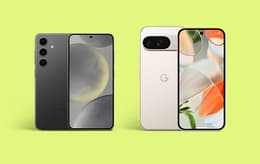
Galaxy S25 • Unlocked vs Google Pixel 8 • Unlocked

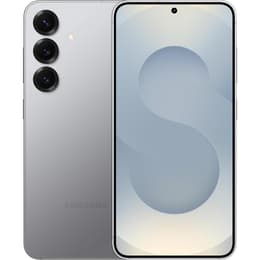
Galaxy S25 • Unlocked
Starting at

Refurbished price:$425.00

Versus $1,299.00 new

See options
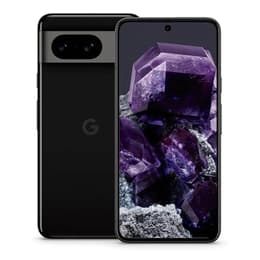
Google Pixel 8 • Unlocked
Starting at

Refurbished price:$245.00

Versus $899.99 new

See options

Ratings

The Samsung Galaxy S25, released in early 2025, and the Google Pixel 8, launched in late 2023, represent distinct approaches to the premium smartphone experience. While both devices operate on the Android platform, they offer different strengths in hardware and software integration. The Galaxy S25 emphasizes a refined design and a versatile camera system, while the Pixel 8 focuses on advanced computational photography and a streamlined software experience with extensive AI capabilities.

Scores

Durability

The longevity of a smartphone is influenced by its release timeline, software support, and physical durability. Both the Galaxy S25 and the Pixel 8 offer substantial software support, contributing to their practical lifespan.

  • Release Timeline: The Galaxy S25 was released in February 2025, making it a newer device compared to the Google Pixel 8, which launched in October 2023. This difference in release year means the Galaxy S25 will generally receive software updates for a longer period into the future.
  • OS Support Duration: Both Samsung and Google have committed to providing seven years of operating system upgrades and security updates for their respective devices. This means both the Galaxy S25 and the Pixel 8 are expected to receive updates up to Android 22, ensuring long-term software relevance and security.
  • Physical Durability: The Galaxy S25 features Gorilla Glass Victus 2 on both its front and back, paired with an aluminum frame, offering robust protection against drops and scratches. The Pixel 8 also uses Gorilla Glass Victus for its display and back panel, along with an aluminum frame. Both devices carry an IP68 rating for dust and water resistance, indicating they can withstand submersion in water up to 1.5 meters for 30 minutes.
  • Repairability: The Galaxy S25 generally scores well in repairability, with some models featuring pull tabs for easier battery replacement and modular camera designs. The Pixel 8 also achieves a decent repairability score, with good availability of parts and ease of screen replacement, though battery removal can be challenging due to adhesives.

Release Year

2025

2023

Last OS Compatibility

Yes

Yes

OS

Android

Android

Foldable

No

No

Performance

Performance in modern smartphones is about more than just raw speed; it encompasses how smoothly the device handles daily tasks, multitasking, and demanding applications, alongside efficient power management.

  • Processing Power: The Galaxy S25 is equipped with a current-generation processor, specifically optimized for the S25 series, which contributes to smooth operation across various applications and responsive user interactions. The Pixel 8 is powered by Google's Tensor G3, designed to enhance on-device artificial intelligence tasks and provide a fluid user experience.
  • Multitasking and Storage: The Galaxy S25 typically comes with 12GB of RAM, allowing for efficient multitasking and keeping more applications active in the background without slowdowns. The Pixel 8 features 8GB of RAM, which is sufficient for most everyday usage and app switching. Both devices offer storage options of 128GB and 256GB, with the Galaxy S25 also having a 512GB option for some variants, providing ample space for apps, photos, and media.
  • Battery Behavior: The Galaxy S25 houses a 4000 mAh battery, designed to provide reliable power for a full day of mixed usage. The Pixel 8 has a larger 4575 mAh battery, and its adaptive battery features learn user habits to optimize power consumption, often providing a full day of use for most users. However, some users have reported faster drain when consistently using mobile data or in areas with weaker signal.

Memory (GB)

12 GB

8 GB

Screen quality

The display is a primary interface for smartphone interaction, and both devices offer high-quality viewing experiences with distinct characteristics.

  • Display Technology and Clarity: The Galaxy S25 features a 6.2-inch Dynamic LTPO AMOLED 2X display, offering vibrant colors, deep blacks, and excellent contrast. Its FHD+ resolution (2340x1080 pixels) provides a sharp and clear image for everyday viewing. The Pixel 8 comes with a 6.2-inch OLED display, referred to as an Actua Display, which also delivers rich colors and deep blacks with an FHD+ resolution (2400x1080 pixels).
  • Brightness and Outdoor Visibility: The Galaxy S25 boasts a high peak brightness of up to 2600 nits, ensuring excellent visibility even in bright outdoor conditions. The Pixel 8 offers a peak brightness of up to 2000 nits, with a high brightness mode reaching 1400 nits, which also provides good readability outdoors.
  • Refresh Rate and Smoothness: Both smartphones feature a 120Hz refresh rate, contributing to smoother scrolling, more fluid animations, and a more responsive feel during gaming and general navigation. The Galaxy S25 utilizes LTPO technology for dynamic refresh rate adjustment, optimizing power consumption. The Pixel 8 also has a variable refresh rate that can adjust between 60Hz and 120Hz, adapting to content to balance smoothness and battery efficiency.

Resolution

1080x2340

1080 x 2400

Screen type

Dynamic LTPO AMOLED 2X

OLED

Audiovisual

Both the Galaxy S25 and the Pixel 8 offer advanced camera systems, though they differ in their hardware configurations and computational photography strengths.

  • Rear Camera System: The Galaxy S25 features a versatile triple-camera setup on the rear, including a 50MP main wide-angle sensor with optical image stabilization (OIS), a 12MP ultra-wide camera with a 120-degree field of view, and a 10MP telephoto lens offering 3x optical zoom and OIS. This configuration provides flexibility for various photographic scenarios, from expansive landscapes to detailed distant subjects. The Pixel 8 employs a dual-camera system, consisting of a 50MP main wide-angle camera with OIS and a brighter aperture (f/1.68), alongside a 12MP ultra-wide camera that includes autofocus, enabling macro photography.
  • Photography Performance: The Galaxy S25 focuses on hardware optimization and AI-driven enhancements to deliver crisp details and accurate color reproduction across its lenses. The Pixel 8 leverages its advanced computational photography, including features like Dual Exposure for improved video in challenging light, Night Sight for enhanced low-light photos and videos, and 'Best Take' for group photos. The Pixel 8's main camera offers improved light sensitivity for better low-light performance.
  • Video Recording and Audio: Both devices are capable of high-quality video recording. The Galaxy S25 can record video at up to 8K resolution at 30 frames per second. The Pixel 8 records 4K video at 60 frames per second from both its rear and front cameras. Both phones offer good microphone quality for calls and recordings, and stereo speakers for media consumption.

Miscellaneous

Beyond core features, several practical elements contribute to the overall user experience and daily utility of these smartphones.

  • Connectivity and Ports: Both the Galaxy S25 and Pixel 8 support modern connectivity standards, including 5G for fast mobile data, and advanced Wi-Fi standards (Wi-Fi 7 for Pixel 8, Wi-Fi 6e for S25). The Galaxy S25 features Bluetooth 5.4, while the Pixel 8 uses Bluetooth 5.3, both providing reliable wireless accessory connections. Both devices utilize a USB Type-C port for charging and data transfer.
  • Biometric Security: The Galaxy S25 incorporates an ultrasonic in-screen fingerprint sensor for secure and convenient unlocking. The Pixel 8 features an optical in-display fingerprint sensor and also offers secure facial recognition via its front camera.
  • Design and Handling: The Galaxy S25 maintains a refined flat-edge design with individual camera rings and is marginally slimmer and lighter than its predecessor, enhancing comfort in hand. The Pixel 8 features a familiar design language with rounded corners, making it comfortable to hold. The dimensions and weight of both devices are designed for single-handed use, with the Galaxy S25 weighing 187g and the Pixel 8 also at 187g.

Weight

8 oz

7 oz

Screen size (inches)

6.2

6.1

Network

5G

5G

SIM card

Physical SIM + eSIM

Physical SIM + eSIM

Carrier compatibility

Unlocked

Unlocked

Connector

USB-C

USB-C

The Samsung Galaxy S25 and Google Pixel 8 each present compelling options for users seeking a high-performance Android smartphone, though they cater to slightly different priorities. User feedback often highlights the Galaxy S25's polished hardware and comprehensive camera system as strong points, particularly its dedicated telephoto lens which offers greater zoom versatility. Its higher peak display brightness is also frequently praised for outdoor visibility. Some users appreciate the S25's slightly newer processor and increased RAM for future-proofing and demanding applications.

Conversely, the Google Pixel 8 receives consistent acclaim for its exceptional computational photography, with features like Night Sight and Video Boost often cited as delivering impressive results in challenging conditions. Its clean Android experience and the promise of seven years of software updates are significant advantages for users who prioritize long-term software support and a streamlined interface. However, some Pixel 8 users have noted that while battery life is generally adequate, it can be inconsistent, particularly with heavy mobile data usage. The absence of a dedicated telephoto lens on the base Pixel 8 model is also a point of consideration for those who frequently use zoom.

Users prioritizing a comprehensive and versatile camera hardware setup, along with a very bright display and slightly more RAM for intensive tasks, may find the Galaxy S25 well-suited to their needs. On the other hand, users who value cutting-edge computational photography, a pure Android experience with extensive AI features, and guaranteed long-term software support might lean towards the Google Pixel 8. Both devices offer robust durability and extended software support, making them solid choices for a quality-assured refurbished option, allowing consumers to make an eco-friendly choice without compromising on modern smartphone capabilities.
See all articles

Our recent comparisons