
Galaxy S25+ • Unlocked vs iPhone 16 Pro Max • Unlocked

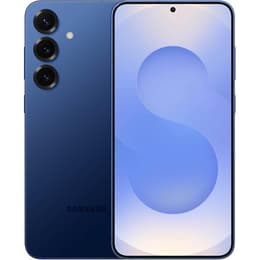
Galaxy S25+ • Unlocked
Starting at

Refurbished price:$570.79

Versus $999.99 new

See options
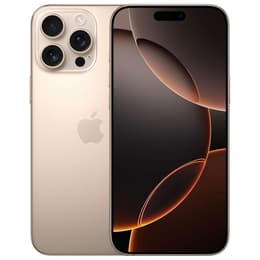
iPhone 16 Pro Max • Unlocked
Starting at

Refurbished price:$759.00

Versus $1,199.00 new

See options

Ratings

The Samsung Galaxy S25 Plus, released in early 2025, and the Apple iPhone 16 Pro Max, launched in late 2024, represent two prominent flagship smartphones from their respective manufacturers. Both devices offer advanced features and robust performance, but they differ in their operating systems, camera philosophies, and overall user experience. This comparison aims to highlight the practical distinctions between these two powerful devices.

Scores

Durability

Evaluating the long-term usability of a smartphone involves considering its release timeline, software support, and physical resilience.

  • Release Timeline: The iPhone 16 Pro Max was released in September 2024, making it slightly older than the Galaxy S25 Plus, which debuted in February 2025. This difference in launch dates can influence the duration of future software support.
  • Software Longevity: Samsung has committed to an extensive support policy for the Galaxy S25 Plus, promising seven years of operating system upgrades and security updates. The iPhone 16 Pro Max, running iOS 18 at launch, typically receives major iOS updates for five to six years, with security updates often extending beyond that period.
  • Physical Durability: Both devices feature premium materials and IP68 ratings for dust and water resistance. The Galaxy S25 Plus utilizes Gorilla Glass Victus 2 on its front and back, providing robust protection. The iPhone 16 Pro Max incorporates a Ceramic Shield front, which Apple states is more resilient than previous generations, alongside a titanium frame. However, some drop tests for the iPhone 16 Pro Max have shown mixed results, with thin bezels potentially posing a risk in certain impact scenarios.

Release Year

2025

2024

Last OS Compatibility

No

Yes

Foldable

No

No

Performance

Both the Galaxy S25 Plus and the iPhone 16 Pro Max are equipped with high-end internal components designed for demanding tasks and smooth daily operation.

  • Processing Power: The Galaxy S25 Plus is powered by a current-generation processor, which offers significant improvements in CPU performance and power efficiency compared to its predecessor, ensuring smooth handling of demanding applications and multitasking. The iPhone 16 Pro Max features Apple's A18 Pro chip, which is engineered to deliver enhanced performance, particularly for artificial intelligence tasks and complex computations.
  • System Responsiveness: Users can expect fluid navigation and quick app loading on both devices. The Galaxy S25 Plus comes with 12GB of RAM, facilitating efficient multitasking and app management. The iPhone 16 Pro Max includes 8GB of RAM, which, combined with its optimized operating system, provides a highly responsive user experience.
  • Battery Performance: The Galaxy S25 Plus houses a 4900 mAh battery, offering good endurance for typical daily usage, with some tests indicating over 19 hours of web browsing. The iPhone 16 Pro Max, with its 4685 mAh battery, is noted for its extended battery life, with reports of up to 33 hours of video playback and over 25 hours in continuous usage tests.

Memory (GB)

12 GB

8 GB

Screen quality

The visual experience on both smartphones is a key aspect, with each device offering a high-quality display tailored for vibrant and clear content consumption.

  • Display Technology and Clarity: The Galaxy S25 Plus features a 6.7-inch Dynamic AMOLED 2X display with a WQHD+ resolution of 3120 x 1440 pixels, providing sharp images and deep blacks. The iPhone 16 Pro Max sports a slightly larger 6.9-inch Super Retina XDR OLED display with a resolution of 2868 x 1320 pixels, also delivering excellent contrast and color accuracy.
  • Brightness and Refresh Rate: Both phones offer adaptive refresh rates up to 120Hz, ensuring smooth scrolling and fluid animations. The Galaxy S25 Plus can reach a peak brightness of 2600 nits, making it highly visible in bright outdoor conditions. The iPhone 16 Pro Max provides a typical brightness of 1000 nits and a peak outdoor brightness of 2000 nits, offering clear viewing even under direct sunlight.
  • Viewing Experience: The Galaxy S25 Plus features a flat display, which some users may prefer for its practicality and reduced accidental touches. The iPhone 16 Pro Max's display has rounded corners that follow a curved design, contributing to its overall aesthetic.

Resolution

1440x3120

1320 x 2868

Screen type

Dynamic LTPO AMOLED 2X

LTPO Super Retina XDR OLED

Audiovisual

Both devices offer advanced camera systems designed to capture high-quality photos and videos across various scenarios.

  • Rear Camera Systems: The Galaxy S25 Plus is equipped with a versatile triple-camera setup, including a 50MP main sensor, a 12MP ultra-wide lens, and a 10MP telephoto lens with 3x optical zoom. The iPhone 16 Pro Max also features a triple-camera system, comprising a 48MP main sensor, a new 48MP ultra-wide lens, and a 12MP telephoto lens with 5x optical zoom.
  • Photography Performance: The Galaxy S25 Plus delivers sharp and vibrant photos, with its main camera performing well in various lighting conditions. The iPhone 16 Pro Max is praised for its excellent baseline photography, sharpness, and color fidelity across all cameras, with notable improvements in its ultra-wide lens for more detail and better low-light performance.
  • Video Capabilities and Audio: The Galaxy S25 Plus supports 8K video recording from its main camera and 4K from all other lenses, including 10-bit HDR and Log video capture for more flexible post-production. The iPhone 16 Pro Max offers class-leading video recording, capable of 4K Dolby Vision video at up to 120fps, with excellent stabilization and studio-quality microphones for clear audio capture.

Miscellaneous

Beyond core performance and display, several other features contribute to the overall user experience and practical utility of these smartphones.

  • Connectivity and Ports: Both devices support 5G connectivity and the latest Wi-Fi 7 standard, ensuring fast and reliable wireless communication. The Galaxy S25 Plus features a USB-C port, while the iPhone 16 Pro Max also uses USB-C. The Galaxy S25 Plus supports dual SIM (Nano + eSIM), and the iPhone 16 Pro Max offers dual eSIM functionality in some regions, moving away from physical SIM cards.
  • Biometrics and Sensors: The Galaxy S25 Plus includes an ultrasonic in-screen fingerprint sensor for secure unlocking. The iPhone 16 Pro Max relies on Face ID for biometric authentication, utilizing its TrueDepth camera system. Both devices integrate a range of sensors for various functionalities, including accelerometers, gyroscopes, and proximity sensors.
  • Design and Handling: The Galaxy S25 Plus measures 158.4 x 75.8 x 7.3 mm and weighs 190g, offering a balanced feel in hand. The iPhone 16 Pro Max is slightly larger and heavier at 163 x 77.6 x 8.3 mm and 227g, which might impact one-handed use for some users. Both phones feature premium build materials, with the Galaxy S25 Plus having flat metal edges and the iPhone 16 Pro Max utilizing a titanium frame.

Weight

7 oz

7990 oz

Screen size (inches)

6.7

6.9

Network

5G

5G

SIM card

Physical SIM + eSIM

eSIM

Carrier compatibility

Unlocked

Unlocked

User feedback for the Samsung Galaxy S25 Plus often highlights its strong overall performance, bright and accurate display, and decent battery life as key strengths. Some users have noted that while its camera hardware remains consistent with previous generations, software enhancements contribute to good image quality, though some find the camera output can be a bit soft.

The iPhone 16 Pro Max receives praise for its exceptional battery life, large and vibrant display, and powerful processing capabilities. Its camera system, particularly the main and improved ultra-wide lenses, is frequently lauded for producing high-quality photos and class-leading video. Criticisms sometimes point to the secondary cameras being less remarkable than the main sensor and the telephoto lens having a notable minimum focus distance.

Users prioritizing extensive software support and a highly customizable Android experience, coupled with a robust display and strong battery life, may find the Galaxy S25 Plus well-suited to their needs. Conversely, individuals who value a powerful and highly optimized ecosystem, class-leading video capabilities, and a consistently long-lasting battery will likely lean towards the iPhone 16 Pro Max. Both devices offer premium experiences, and choosing between them often comes down to personal preference for operating system and specific feature priorities. For those considering these advanced devices, exploring quality-assured refurbished options can provide a sustainable choice.


See all articles

Our recent comparisons