Compare models

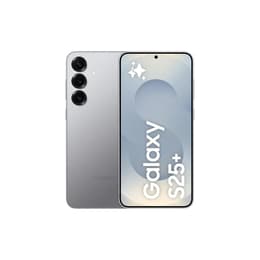
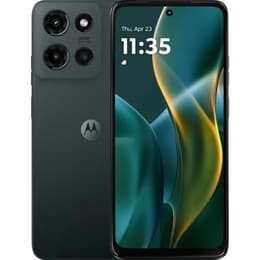
Galaxy S25+ • Unlocked vs Motorola Moto G (2025) • Unlocked

  • 1-year warranty
  • Free standard shipping
  • Free 30-day returns
Galaxy S25+ • Unlocked
Starting at

Refurbished price:$545.00

Versus $999.99 new

See options
Motorola Moto G (2025) • Unlocked
Starting at

Refurbished price:$144.00

Versus $399.00 new

See options

Differences at a glance

The Samsung Galaxy S25+ and the Motorola Moto G (2025) are unlocked smartphones released in 2025, representing distinct tiers of mobile technology. While the Galaxy S25+ targets users seeking flagship performance and advanced capabilities, the Motorola Moto G (2025) focuses on essential daily communication and dependable battery longevity. Both devices run on the Android operating system, yet they cater to entirely different preferences regarding everyday handling, hardware sophistication, and functional priorities.

Available Models

Color

Storage

Scores

Durability

Both models arrived on the market in early 2025, but they differ significantly in their long-term software support and expected hardware durability.

  • Software longevity: The Galaxy S25+ provides multi-year software updates designed to span several years of secure operation, whereas the Motorola Moto G (2025) follows a more concise update cycle typical of everyday devices.
  • Build resilience: The Galaxy S25+ utilizes high-grade armor glass and robust frame materials for structural protection, while the Motorola Moto G (2025) employs practical plastics and standard protective glass.
  • Expected lifespan: Users requiring prolonged software relevance and sustained hardware capabilities will find the Galaxy S25+ well-equipped for long-term daily service.

Release Year

2025

2025

OS

Android

Android

Foldable

No

No

Performance

Internal hardware configurations vary extensively between the two models, directly influencing how they handle demanding tasks and multi-application usage.

  • Multitasking and storage: The Galaxy S25+ includes substantial built-in memory paired with ample internal storage configurations, whereas the Motorola Moto G (2025) offers more modest memory paired with expandable storage via a microSD slot.
  • Processing capability: The Galaxy S25+ handles intensive games and complex applications smoothly, while the Motorola Moto G (2025) manages everyday tasks like messaging, web browsing, and media streaming reliably.
  • Energy behavior: Both devices manage daily power consumption effectively, though larger battery capacities in the Motorola Moto G (2025) complement its energy-efficient processor for extended use between charges.

Screen quality

Display technologies differ notably between the two options, affecting visual clarity, contrast, and outdoor visibility.

  • Panel technology: The Galaxy S25+ features an advanced OLED display delivering deep blacks and vibrant colors, while the Motorola Moto G (2025) uses an LCD panel with standard color reproduction.
  • Resolution and sharpness: The Galaxy S25+ provides a high-resolution screen for sharp text and detailed imagery, whereas the Motorola Moto G (2025) utilizes a lower resolution that suits casual media consumption.
  • Brightness and smoothness: Both models support rapid screen refresh rates for fluid scrolling, though the Galaxy S25+ achieves significantly higher peak brightness levels for clear visibility under direct sunlight.

Resolution

1440x3120

720x1604

Screen type

Dynamic LTPO AMOLED 2X

IPS LCD

Audiovisual

Imaging hardware and media capabilities reflect the distinct market positioning of each smartphone.

  • Camera versatility: The Galaxy S25+ equips a triple-lens setup including a dedicated telephoto lens for optical zoom, while the Motorola Moto G (2025) relies on a dual-camera system focused on primary and macro photography.
  • Low-light and video: The Galaxy S25+ captures detailed low-light photos and supports high-resolution video recording formats, whereas the Motorola Moto G (2025) handles casual snapshots and standard definition video adequately.
  • Audio and media: Stereo speaker output on the Galaxy S25+ provides an immersive sound profile for media playback, while the Motorola Moto G (2025) retains a traditional headphone jack for wired listening convenience.

Miscellaneous

Physical dimensions and connectivity standards shape the everyday handling and practical integration of each device.

  • Connectivity standards: Both smartphones support modern 5G networks and wireless connectivity, ensuring fast data transmission and stable accessory pairing.
  • Physical design: The Galaxy S25+ features a slim profile with a premium glass and metal construction, while the Motorola Moto G (2025) offers a slightly thicker, lightweight body designed for secure grip.
  • Security features: Both models integrate biometric authentication methods, including responsive fingerprint readers and facial recognition tools for quick access.

Weight

7 oz

7 oz

Screen size (inches)

6.7

6.7

Network

5G

5G

SIM card

Physical SIM + eSIM

Physical SIM + eSIM

Carrier compatibility

Unlocked

Unlocked

What the community thinks

User feedback highlights distinct patterns of satisfaction for each device. Owners of the Galaxy S25+ frequently praise its bright display, responsive system speed, and comprehensive camera versatility, though some note that advanced features exceed casual needs. Conversely, users of the Motorola Moto G (2025) appreciate its dependable battery duration, expandable storage convenience, and straightforward interface, while observing limitations in demanding graphical performance and screen sharpness under bright light. Choosing a quality-assured refurbished option provides an eco-friendly alternative for consumers seeking either flagship capabilities or essential everyday utility without compromise.

Users prioritizing high-end photography, vivid display fidelity, and long-term software support may prefer the Galaxy S25+, while users seeking a reliable communication tool with extended battery longevity and expandable memory will lean toward the Motorola Moto G (2025). Evaluating personal usage habits helps determine which device aligns best with daily requirements.


Our recent comparisons