Galaxy S25+ • Unlocked vs iPhone 14 • Unlocked

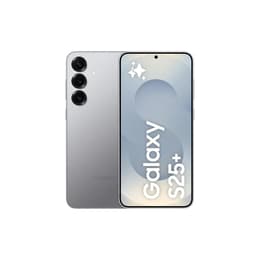
Galaxy S25+ • Unlocked
Starting at

Refurbished price:$570.79

Versus $999.99 new

See options
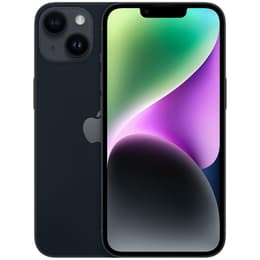
iPhone 14 • Unlocked
Starting at

Refurbished price:$254.00

Versus $629.00 new

See options

Ratings

The Samsung Galaxy S25 Plus, released in early 2025, and the Apple iPhone 14, launched in late 2022, represent distinct approaches to flagship smartphone design and functionality. While both devices offer premium experiences, they differ significantly in their operating systems, core hardware, and feature sets, reflecting the technological advancements over their respective release cycles. The Galaxy S25 Plus operates on Android, offering a customizable interface, whereas the iPhone 14 runs on Apple's iOS, known for its integrated ecosystem.

Scores

Durability

When considering the practical lifespan of these devices, several factors come into play, including software support, physical durability, and repairability.

  • Release Timeline and Software Support: The Galaxy S25 Plus, being a 2025 release, benefits from a longer projected period of major Android operating system updates and security patches compared to the iPhone 14, which was released in 2022. Apple typically provides iOS updates for 5-6 years from a device's launch, meaning the iPhone 14 will continue to receive updates for several more years. Samsung has also committed to extended software support for its recent flagships, positioning the S25 Plus for a long software life.
  • Physical Durability: Both devices are built with robust materials. The iPhone 14 features a Ceramic Shield front cover and an aerospace-grade aluminum frame, along with an IP68 rating for dust and water resistance. The Galaxy S25 Plus also boasts an IP68 rating and utilizes Gorilla Glass Victus 2 on both its front and back, encased in an aluminum frame, offering strong protection against everyday wear and tear.
  • Expected Practical Lifespan: Given the newer release of the Galaxy S25 Plus, it inherently offers a longer window for receiving the latest software features and security updates. However, both phones are designed for sustained use, with their respective manufacturers providing components and repair services for several years post-launch. The iPhone 14's battery is designed to retain 80% of its original capacity after 500 complete charge cycles.

Release Year

2025

2022

Last OS Compatibility

No

Yes

OS

Android

iOS

Foldable

No

No

Performance

The performance capabilities of a smartphone are central to its user experience, influencing everything from app responsiveness to demanding tasks like gaming and video editing.

  • Processing Power: The Galaxy S25 Plus is equipped with a current-generation processor, the Qualcomm Snapdragon 8 Elite, which is fabricated using an advanced 3nm process. This newer architecture translates to substantial improvements in overall processing speed, graphics rendering, and energy efficiency compared to the iPhone 14's A15 Bionic chip, which was a leading processor at its 2022 release.
  • Real-World Usage: Users engaging in graphically intensive gaming, complex video editing, or running multiple demanding applications simultaneously will likely experience smoother performance and faster load times on the Galaxy S25 Plus. The iPhone 14, while still capable for everyday tasks and many popular games, may show its age when faced with the most resource-intensive applications or future software updates designed for newer hardware.
  • Multitasking and Responsiveness: The Galaxy S25 Plus typically comes with 12GB of RAM, providing ample capacity for seamless multitasking and keeping numerous applications open in the background without performance degradation. The iPhone 14 features 6GB of RAM, which is efficient for iOS but offers less headroom for heavy multitasking compared to the S25 Plus.

Memory (GB)

12 GB

6 GB

Screen quality

The display is a primary interface for smartphone interaction, and both devices offer high-quality viewing experiences with notable differences.

  • Display Technology and Clarity: Both the Galaxy S25 Plus and the iPhone 14 feature OLED display technology, known for its deep blacks and vibrant colors. The Galaxy S25 Plus utilizes a Dynamic LTPO AMOLED 2X panel, offering a QHD+ resolution of 3120x1440 pixels on its 6.7-inch screen, resulting in a high pixel density of approximately 513 ppi. The iPhone 14 has a 6.1-inch Super Retina XDR OLED display with a resolution of 2532x1170 pixels, yielding around 460 ppi. The S25 Plus offers a noticeably sharper image due to its higher resolution and pixel density.
  • Brightness and Outdoor Visibility: The Galaxy S25 Plus can reach a peak brightness of up to 2600 nits, providing excellent visibility even in bright outdoor conditions. The iPhone 14 offers a typical brightness of 800 nits and a peak HDR brightness of 1200 nits. The higher peak brightness of the S25 Plus makes it more comfortable for use under direct sunlight.
  • Refresh Rate and Smoothness: A key differentiator is the refresh rate. The Galaxy S25 Plus features an adaptive 120Hz refresh rate, which can dynamically adjust from 1Hz to 120Hz. This results in smoother scrolling, more fluid animations, and a more responsive feel during gaming. The iPhone 14 has a standard 60Hz refresh rate. Users who prioritize a highly fluid visual experience will find the S25 Plus's higher refresh rate a significant advantage.

Resolution

1440x3120

1170 x 2532

Screen type

Dynamic LTPO AMOLED 2X

Super Retina XDR OLED

Audiovisual

Both smartphones offer capable camera systems, but their approaches and capabilities reflect their different release timelines.

  • Rear Camera Systems: The Galaxy S25 Plus features a versatile triple-camera setup, including a 50 MP main wide-angle lens with optical image stabilization (OIS), a 12 MP ultra-wide lens, and a 10 MP telephoto lens with 3x optical zoom and OIS. This telephoto lens provides greater flexibility for capturing distant subjects without significant loss of detail. The iPhone 14 comes with a dual-camera system, comprising a 12 MP main wide-angle lens with sensor-shift OIS and a 12 MP ultra-wide lens.
  • Photography Performance: The S25 Plus benefits from Samsung's newer 'Pro Visual Engine' for image processing, which enhances object recognition, color reproduction, and low-light performance. The iPhone 14 utilizes Apple's Photonic Engine, which also significantly improves low-light performance across its cameras. While both excel in good lighting, the S25 Plus's newer hardware and processing may offer an edge in challenging conditions and provide more detail, especially with its higher megapixel main sensor.
  • Video Recording Capabilities: The Galaxy S25 Plus supports video recording at up to 8K resolution at 30 frames per second (fps). The iPhone 14 offers 4K Dolby Vision video recording at up to 60 fps, along with features like Cinematic mode for depth-of-field effects and Action mode for enhanced stabilization during movement. Both provide high-quality video, but the S25 Plus offers higher resolution capture, while the iPhone 14 emphasizes advanced computational video features.
  • Front Camera: Both devices feature a 12 MP front-facing camera. The S25 Plus's front camera has an f/2.2 aperture, while the iPhone 14's has an f/1.9 aperture and includes autofocus. The iPhone 14's front camera may offer slightly better low-light performance and more consistent focus for selfies and video calls due to its wider aperture and autofocus.

Miscellaneous

Beyond core performance and camera, several practical features contribute to the overall user experience and daily convenience.

  • Connectivity Standards: The Galaxy S25 Plus supports the latest connectivity standards, including 5G and likely advanced Wi-Fi and Bluetooth versions, ensuring fast and reliable wireless communication. The iPhone 14 also supports 5G, Wi-Fi 6, and Bluetooth 5.3, providing robust connectivity for most users.
  • Ports and Biometrics: The Galaxy S25 Plus features a USB-C port, which is a widely adopted standard for charging and data transfer. It also incorporates an ultrasonic in-screen fingerprint sensor for secure unlocking. The iPhone 14 uses Apple's proprietary Lightning port and relies on Face ID for biometric authentication.
  • Design and Handling: The Galaxy S25 Plus has a 6.7-inch display and a refined design with flat metal edges, weighing around 190 grams. The iPhone 14 has a slightly smaller 6.1-inch display and an aluminum design, weighing 172 grams. The S25 Plus offers a larger screen for media consumption and productivity, while the iPhone 14 provides a more compact and lighter form factor.
  • Additional Features: The Galaxy S25 Plus includes stereo speakers and features like ProScaler, an AI-based upscaling technology designed to enhance lower-resolution content on its high-resolution display. Both devices offer robust haptic feedback systems for a tactile user experience.

Weight

7 oz

6 oz

Screen size (inches)

6.7

6.1

Network

5G

5G

SIM card

Physical SIM + eSIM

eSIM

Carrier compatibility

Unlocked

Unlocked

Choosing between the Samsung Galaxy S25 Plus and the iPhone 14 involves weighing the benefits of a newer, more technologically advanced Android device against a slightly older, but still highly capable, iOS experience.

The Galaxy S25 Plus is often praised by users for its vibrant, high-resolution 120Hz display, powerful processing capabilities, and versatile camera system with a dedicated telephoto lens. Some users appreciate its longer software support window and the flexibility offered by the Android ecosystem. Criticisms sometimes revolve around the camera hardware being similar to previous generations, with many improvements coming from software.

The iPhone 14 is generally lauded for its consistent performance, intuitive iOS interface, and strong ecosystem integration. Users frequently highlight its reliable camera performance, especially for video, and its robust build quality. Some common concerns among users have included the 60Hz display refresh rate and the use of the older A15 Bionic chip, which was also in the previous generation of Pro models. Battery degradation has also been a point of discussion for some iPhone 14 users.

Users prioritizing the latest in display technology, raw processing power for demanding applications, and a more versatile camera system with optical zoom may find the Galaxy S25 Plus better suited to their needs. Its newer release also means a longer period of guaranteed software updates. Conversely, users who value the streamlined experience of iOS, consistent camera performance with advanced video features, and a slightly more compact form factor might lean towards the iPhone 14. For those seeking an eco-friendly alternative, both models are available as quality-assured refurbished options, providing a sustainable choice for acquiring premium technology.


See all articles

Our recent comparisons